

🔧 If every tap is off and your water meter is still moving, you’ve most likely got a hidden burst pipe. It’s usually in one of three places: underground or under the slab, inside a wall, or up in the roof space or down in the subfloor. Here’s how each one shows itself, with photos from real jobs, and what to do straight away.
Mick runs through the three places
First, the meter test
Turn off every tap, and make sure nothing’s running: dishwasher, washing machine, irrigation, toilet cisterns filling. Then go out to the water meter, which on most Melbourne homes is near the front boundary. Lift the lid and watch the small dial or red star. If it keeps turning with everything off, water is going somewhere it shouldn’t. Not sure where your meter is? Here’s how to find your water meter.
1. Underground or under the slab
Sometimes the ground gives it away: a patch of lawn that’s always soggy, water pooling where it shouldn’t, or water bubbling up out of the grass. But when the pipe bursts deep down, you might see nothing at all on the surface.
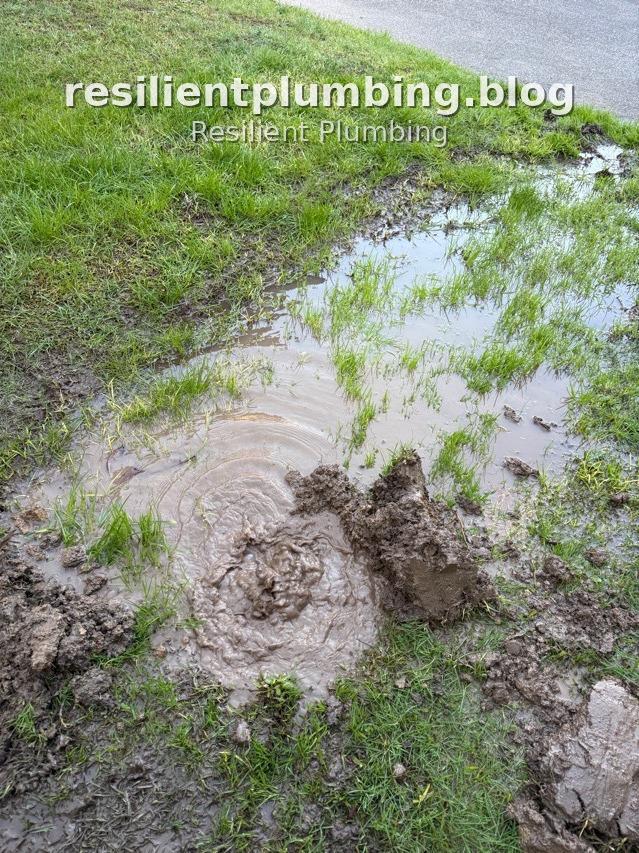
Water bubbling up through the lawn
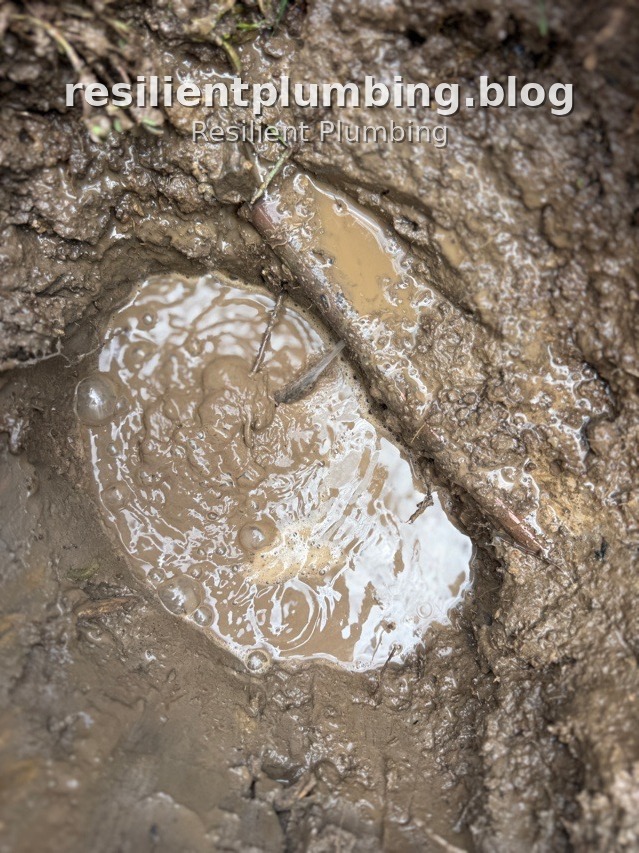
Digging down to the burst
Under a concrete slab it’s trickier. Water follows the easiest path, so it often comes up through the weakest spot or a crack in the slab, and that can be metres away from where the pipe actually burst. Dig in the wrong place and you’ve broken concrete for nothing.
That’s when we team up with specialist leak detection companies. They use tracer gas (usually a safe mix of about 5% hydrogen and 95% nitrogen pushed through the pipe, then picked up where it rises through the ground) or acoustic listening gear that hears the leak through the concrete. Once the spot is pinned down, we dig once and fix it right.
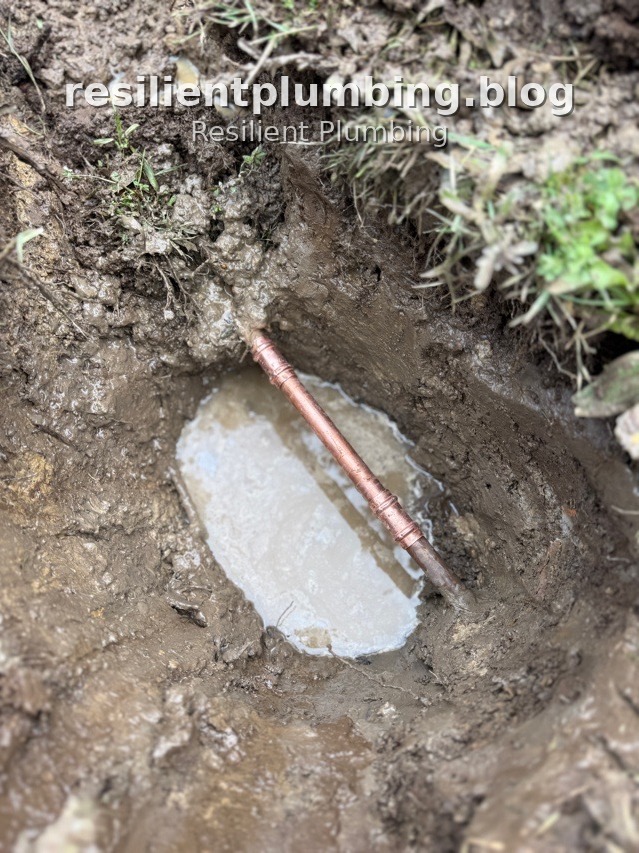
The copper line exposed in the dig
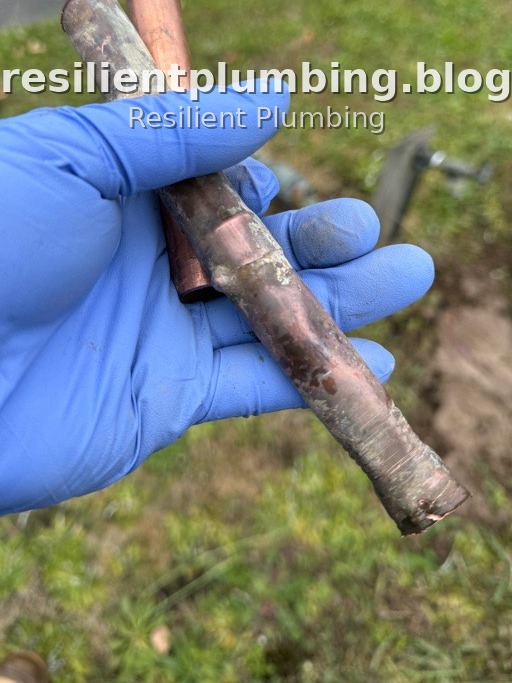
The section of pipe that came out
2. Inside a wall cavity
A pipe leaking inside a wall usually shows up as a damp patch, paint bubbling or peeling, a musty smell, or a faint hiss behind the plaster when the house is quiet. We follow those signs, then use a moisture meter and a thermal imaging camera to narrow it down, so we only open the wall where we need to.
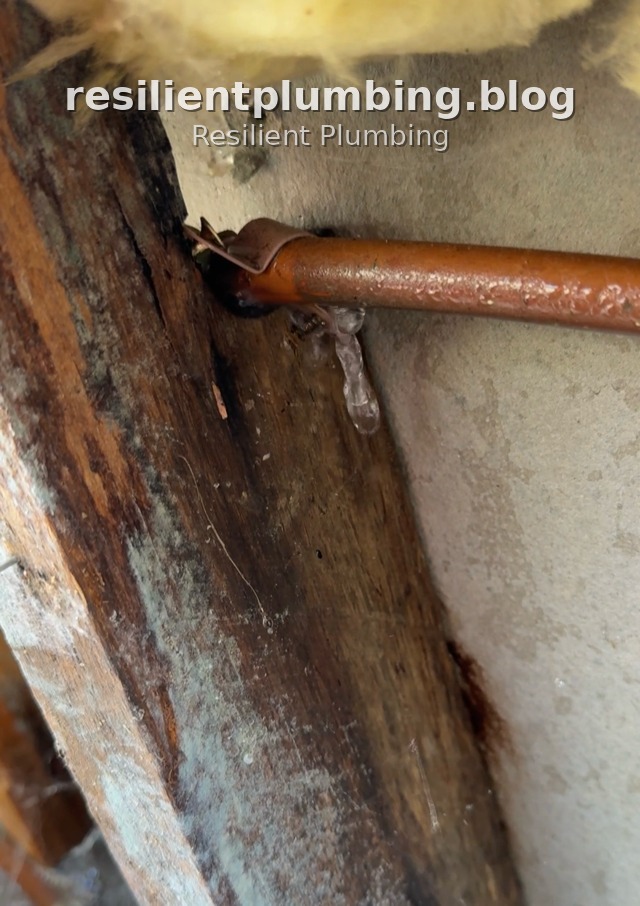
Inside the wall: water dripping off the pipe at the clip
3. Roof space or subfloor
Here it’s often your ears that find it first: the sound of running water when nothing’s on. Or you lift the subfloor access hatch and find a pond under the house. These spots can be tight and awkward to reach, so the repair takes real skill and the right gear.
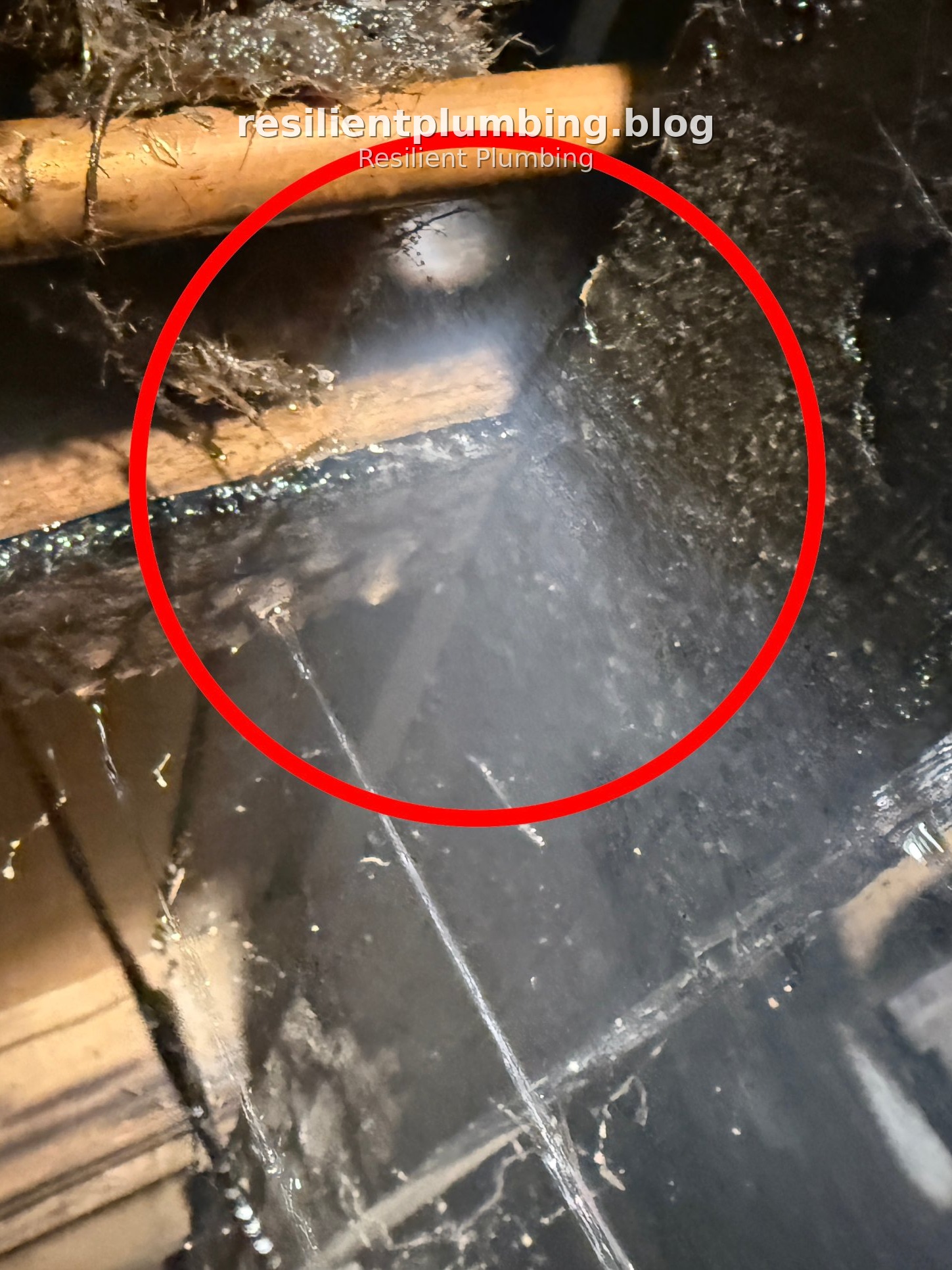
Spraying under the floor
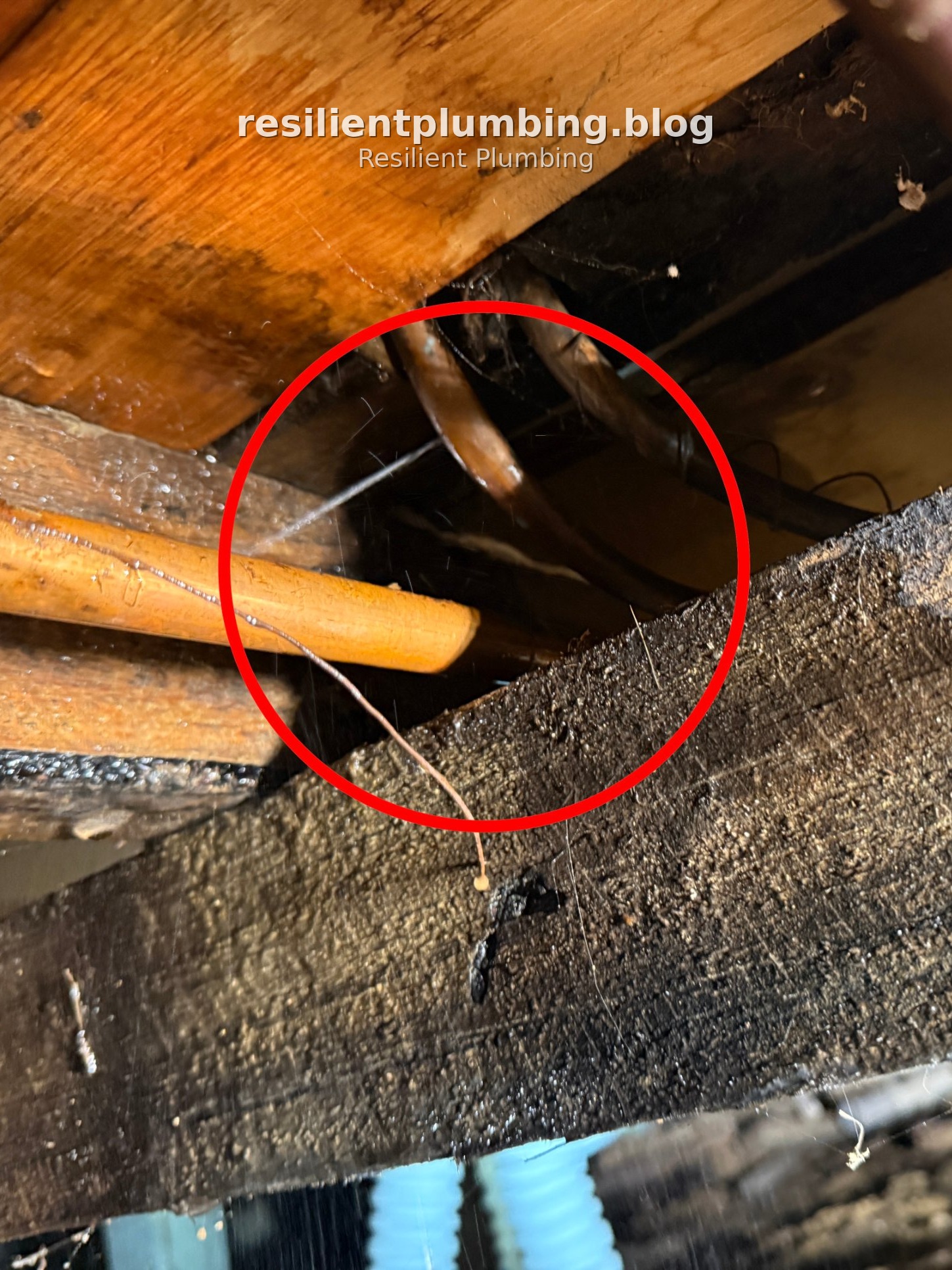
A pinhole spray between the bearers
💡 Turning off at the meter: go gently
If the valve at the meter turns easily, turn it off to stop the water. If it’s stiff, don’t force it. The meter and its valve belong to your water corporation, and an old valve can snap, which makes things worse. Leave it and call us. It also helps to know where your isolation valves are, so you can turn off one part of the house instead.
Don’t wait on it
A hidden burst keeps running day and night. The longer it goes, the more water damage to floors, walls and footings, and the bigger the water bill. As soon as you spot the signs, call a plumber as an emergency. While you wait, our guide on what to do before the plumber arrives walks you through the first steps.
🔧 How we find it
- Water meter test with everything off
- Moisture meter and thermal imaging
- Specialist tracer gas or acoustic detection for slabs
- Emergency burst pipe repair
📍 Where we work
Melbourne’s eastern suburbs since 2015, including Ringwood, Croydon, Mitcham, Blackburn, Box Hill, Camberwell, Vermont, Doncaster, Donvale, Nunawading and Balwyn.
Common questions
How do I know if I have a hidden water leak?
Turn every tap and water appliance off, then watch the small dial on your water meter. If it keeps moving, water is escaping somewhere. A sudden jump in your water bill, a soggy patch of lawn or the sound of running water are other signs.
Why is water coming up through a crack in my slab?
Water under a slab travels to the weakest point before it surfaces, so the crack where you see it may be metres from the actual burst. Leak detection specialists use tracer gas or acoustic equipment to pinpoint it before anything is dug up.
Should I turn off my water at the meter?
Yes, if the valve turns easily. If it’s stiff, don’t force it. The meter belongs to your water corporation and an old valve can break. Call a plumber instead.
Is a burst pipe an emergency?
Yes. Hidden bursts run around the clock, so water damage and water bills keep adding up. Call a plumber as soon as you notice the signs.
Video transcript
“No one’s using any water, so why’s the meter still ticking? Turn every tap off. If the meter’s still moving, you’ve likely got a hidden burst pipe. Here’s where it hides. One: underground. Look for water pooling or bubbling in the lawn. But a deep leak can show nothing at all. Under a slab, water can pop up at a crack metres away from the burst. That’s when we team up with leak detection specialists, using tracer gas or acoustic gear. Two: inside the wall. Damp patches, bubbling paint, or a hiss behind the plaster. A moisture meter and thermal camera show us where to open up. Three: roof space or subfloor. You might hear water running, or open the subfloor hatch to find a pond. Access can be tight, so the repair takes real skill. Whichever it is, don’t wait. Water damage and bills keep climbing. Turn off at the meter if the valve turns easily. Never force it. Then call an emergency plumber. Resilient Plumbing. Send us a video of your meter.”
Meter still ticking? Don’t wait.
Call us, and send a short video of your meter dial plus photos of any damp patches or pooling water. It helps us work out where to start.
📞 Call 0432 704 268 Send Us a Photo