
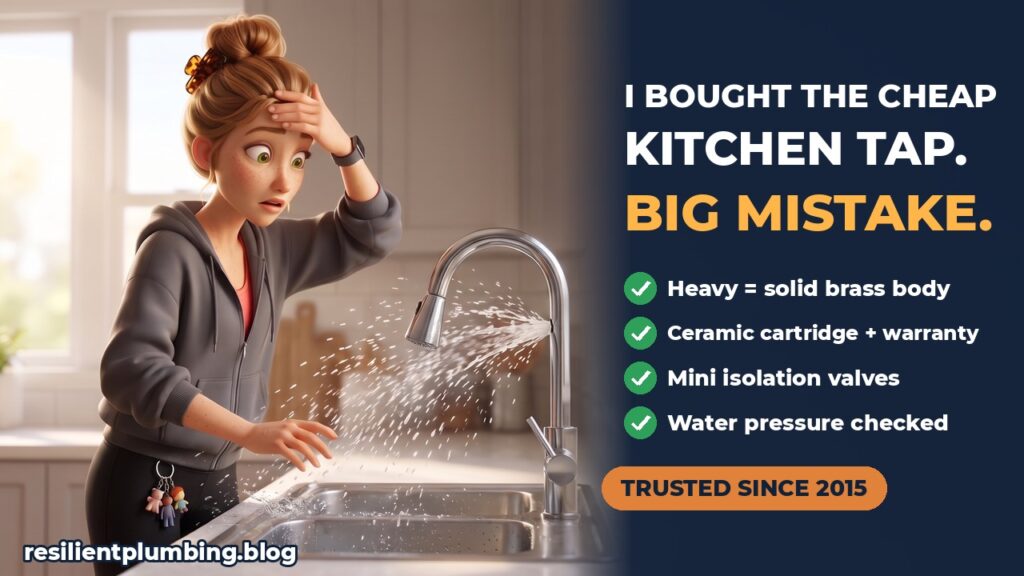
🔧 A good kitchen mixer tap is heavy (solid brass body), has a ceramic cartridge, comes from a known brand with a long written warranty, and has thick braided hoses and a solid mounting bracket. Most good ones cost around $250–$400. Before it goes in, make sure there are mini isolation valves under the sink and your water pressure suits the tap. Buy it in a shop where you can hold it, because you can’t check any of this through a screen.
Tracey learns the hard way, so you don’t have to
What can go wrong with the wrong tap
These photos are from a real kitchen. The tap looked lovely in the shop: shiny, modern, a good price. Not long after it went in, water started spraying out of a crack in the spout, every time it was turned on. The water hit the window frame and the benchtop, the paint started peeling and the timber began to swell. And when the owner tried to claim on the warranty, it wasn’t easy.
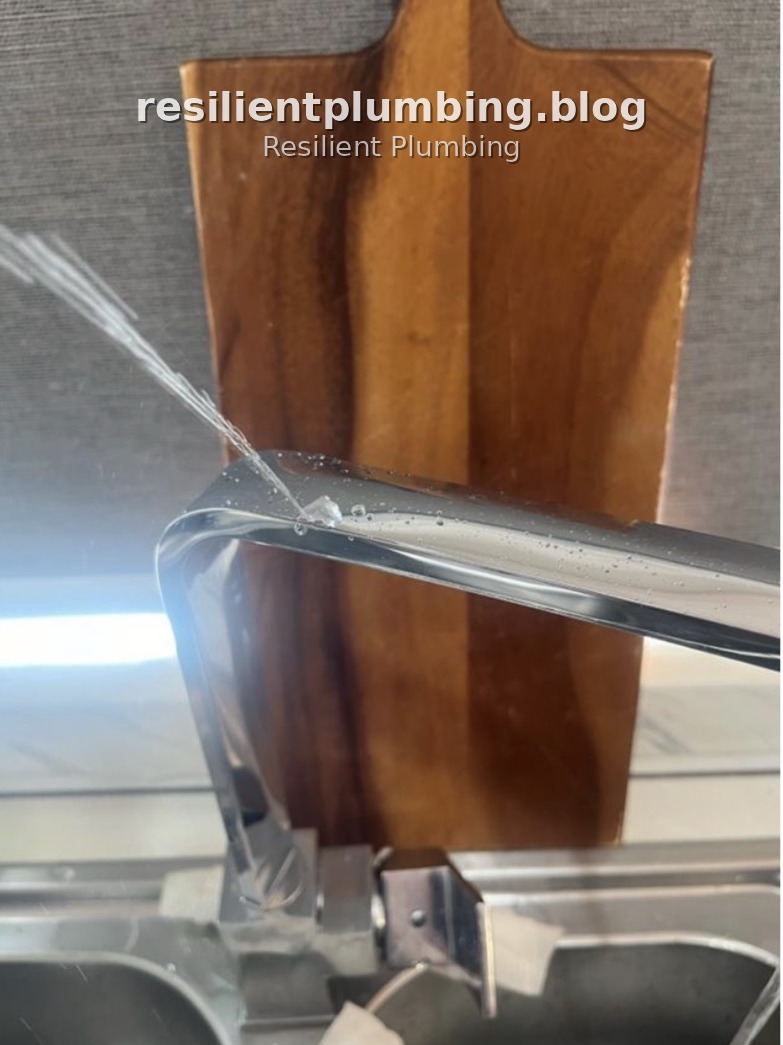
Water spraying out of the top of the spout
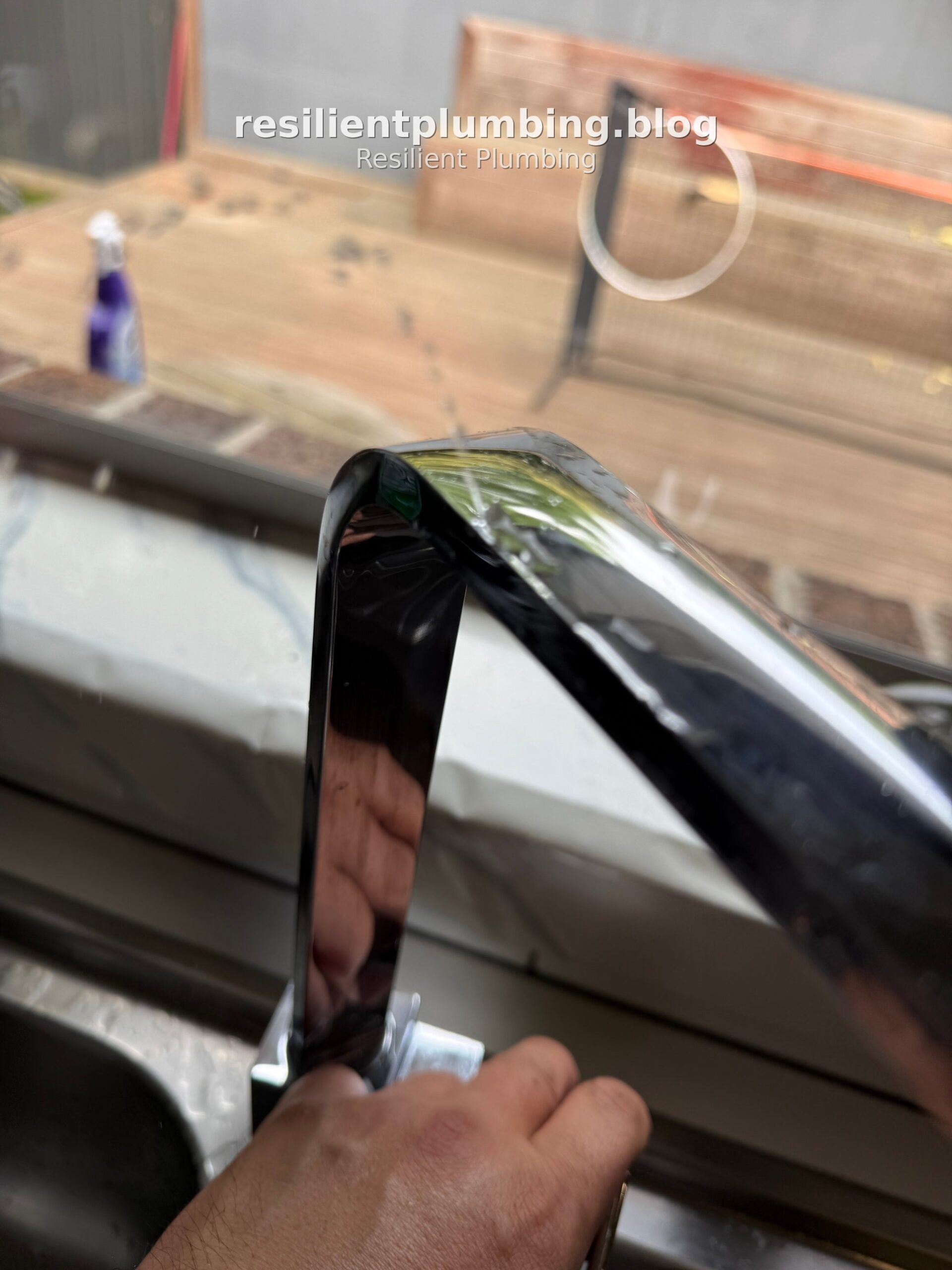
From the bend, straight at the window
The good news: you don’t need to be a plumber to avoid this. You just need to know what to look for. Here it is, step by step.
✅ The short version: 7 checks
- Heavy in your hand = solid brass body (not plastic or light alloy)
- Ceramic cartridge, with spare cartridges sold in Australia
- Known brand, long written warranty (check the years for body and cartridge separately)
- Thick braided hoses and a solid metal mounting bracket
- Simple design lasts longest (a fixed spout with one lever)
- Mini isolation valves under the sink
- Water pressure that suits the tap
Step 1: Buy it where you can hold it
Almost everything that tells a good tap from a poor one is something you feel or read on the box: the weight, how the lever moves, how thick the hoses are, what the bracket is made of, the small print on the warranty. A photo on a website can’t tell you any of that. Two taps can look identical online and be completely different in your hand.
Online marketplaces also sell imported taps that don’t carry the Australian WaterMark certification. A licensed plumber can’t legally install those, so you can end up paying twice.
Our advice: go to a shop, pick the taps up, and compare them side by side. If you’ve seen one you like online, find the same model in a store and hold it before you buy.
Step 2: The in-store checks
Take your time in the aisle. These checks take about as long as choosing a melon.
1. Pick it up: is it heavy?
Lift the display sample, then lift a cheaper one. A good tap feels surprisingly heavy for its size, because the body is solid brass (or stainless steel). A tap that feels light is usually made of a lighter alloy with plenty of plastic inside. Plastic parts are where cracks and leaks start.
On the box or spec sheet, look for the words “brass” or “stainless steel”. If it says “zinc alloy”, or doesn’t say what it’s made of at all, put it back.
2. Move the lever: is it smooth?
Inside every mixer is a small part called the cartridge. It’s what turns the water on and mixes hot and cold. You want a ceramic disc cartridge. Move the lever slowly from cold to hot: a good one feels smooth and steady, and the lever stays where you leave it. A cheap one feels gritty or loose, or jumps from cold to hot in a tiny movement.
Check that you can buy a replacement cartridge for that brand in Australia. If one small part wears out years from now, you can replace just that part instead of the whole tap.
3. Turn it over: hoses and bracket
Underneath the tap you’ll see the parts that will sit inside your sink cabinet:
- Flexible hoses: they should be thick, stainless steel braided hoses. Thin, flimsy ones are a warning sign. These hoses hold mains pressure 24 hours a day, so they matter more than people think.
- Mounting bracket: the piece that clamps the tap to your sink or benchtop. It should be solid metal and feel sturdy. A weak bracket lets the tap wobble, and a wobbling tap wears out its seals and hoses faster.
4. Read the warranty properly
A big number on the front of the box (“7 year warranty!”) doesn’t tell the whole story. Look at the small print:
- How many years for the body? For the cartridge? For the finish? For a pull-out hose? They’re often different.
- Is it parts only, or parts and labour?
- Does it have to be installed by a licensed plumber? (Most do.)
- Is there an Australian phone number or office to call?
With very cheap taps, a warranty claim can be hard work in practice: unclear contacts, parts that aren’t available, or conditions that weren’t met. A known brand with an Australian office is much easier to deal with.
5. WaterMark and WELS: the minimum, not the measure of quality
Every kitchen tap sold for drinking water in Australia should show the WaterMark logo and licence number, and from 1 May 2026 new taps need to be certified lead-free. It should also have a WELS water rating label. For a kitchen, around 4 stars is a good balance; very high star ratings save water but can make filling a big pot slow.
Remember: these are pass-or-fail minimums. A cheap tap and a quality tap can both have them. They don’t tell you how long it will last, which is why the checks above matter.
| Check | 👍 Good sign | 👎 Warning sign |
|---|---|---|
| Weight | Heavy and solid | Light, hollow feel |
| Body | Brass or stainless steel | “Zinc alloy”, lots of plastic, or material not listed |
| Cartridge | Ceramic disc, spare parts sold in Australia | Unknown, no spare parts |
| Lever | Smooth, stays put | Gritty, loose or jumpy |
| Hoses | Thick stainless braided | Thin or unbranded |
| Bracket | Solid metal | Thin or plastic |
| Warranty | Long, written, years listed for each part, Australian office | Short, vague, no local contact |
| Labels | WaterMark (lead-free) + WELS | No WaterMark: don’t buy it |
Step 3: For a tap that lasts, keep it simple
If you want a tap that will still be going strong in many years’ time, our advice as plumbers is simple: choose a simple design with a strong body. A fixed spout and a single lever have fewer parts, and fewer parts means fewer things that can wear out or leak.
💡 A word about pull-out taps
Pull-out and pull-down spray taps are handy for rinsing big pots. But the pull-out hose is the part that wears out first. It bends and slides in and out every day, and over time it can crack or start leaking. Because that hose sits inside your sink cabinet, a leak there often isn’t noticed until the cabinet floor is already wet or swollen.
If you’d still like a pull-out tap: check how many years the hose warranty is (it’s often much shorter than the body), make sure the brand sells a replacement hose, and have a quick look under the sink every month or so.
Step 4: Make sure it suits you and your kitchen
- A long single lever is easiest on sore hands, wrists or arthritis. You can nudge it with the back of your hand when your hands are messy.
- A high (gooseneck) spout fits tall pots under it. A swivel spout helps with a double sink.
- Measure before you go. The spout should reach about the middle of your sink bowl. If your sink sits under a window, check the tap and lever won’t hit the window frame.
- Check the tap hole. Most Australian sinks have a single hole of about 35 mm.
- Chrome is the most forgiving finish. Matte black and coloured finishes look beautiful but can show water marks and wear faster.
Step 5: What should you spend?
| Price (approx.) | What you usually get |
|---|---|
| Very cheap | Lighter body, more plastic, few spare parts, harder warranty claims. Risky for your own home. |
| Around $250–$400 | The sweet spot for most homes. Solid body, better cartridge, spare parts and proper support. |
| Above about $400 | Often you’re paying for the look (special finishes, designer shapes) more than a longer life. |
Prices change between stores and over time, so treat these as a rough guide. A tap you buy once and keep for years usually costs less in the end than a cheap one replaced again and again, plus the water damage when it fails.
Step 6: Before it goes in, two things under the sink
Mini isolation valves
Open your sink cabinet. On the hot and cold pipes, you should see two small valves, one on each pipe. These mini isolation valves let you (or your plumber) turn off the water to just the sink, instead of the whole house. If a hose ever leaks, that’s the difference between a quick turn of a valve and a flooded cabinet. If you don’t have them, have them fitted when the new tap goes in. Not sure? Here’s our room-by-room guide to isolation valves.
Water pressure
Every tap has a pressure range in its installation instructions. Many kitchen mixers list a maximum of 500 kPa. If your water pressure is higher than that, a new tap can wear out or leak early, and the warranty may not cover it, because the installation didn’t meet the manufacturer’s conditions. A plumber can measure your pressure and, if it’s too high, fit a pressure limiting valve.
This is also why most warranties ask for installation by a licensed plumber. Keep your receipt, the plumber’s invoice and a photo of the box with the model number, just in case.
While the old tap is coming out, it’s a good time to fit new braided hoses too. Here’s why flexible hoses need checking and replacing.
📋 In-store checklist (take a photo of this)
- ☐ Heavy in my hand, body is brass or stainless steel
- ☐ Ceramic cartridge, spare parts sold in Australia
- ☐ Lever moves smoothly and stays put
- ☐ Thick braided hoses and a solid metal bracket
- ☐ Known brand, written warranty (body, cartridge, finish, hose), Australian contact
- ☐ WaterMark (lead-free) logo and WELS label
- ☐ Simple design, or a pull-out with a replaceable hose
- ☐ Fits my sink, window and tap hole
- ☐ Isolation valves under my sink
- ☐ Water pressure checked, installed by a licensed plumber
🔧 How we can help
- Look at photos of your sink cabinet before you buy
- Fit mini isolation valves under the sink
- Check your water pressure
- Repair leaking sink pipework
📍 Where we work
Melbourne’s eastern suburbs since 2015, including Ringwood, Croydon, Mitcham, Blackburn, Box Hill, Camberwell, Vermont, Doncaster, Donvale, Nunawading and Balwyn.
Common questions
How do I tell a good kitchen tap from a cheap one in the shop?
Pick it up. A good tap feels heavy because the body is solid brass or stainless steel. Then check for a ceramic cartridge, thick braided hoses, a solid metal mounting bracket and a long written warranty from a brand with an Australian office.
Is it safe to buy a kitchen tap online?
It’s hard to judge quality online, because you can’t feel the weight, test the lever or check the hoses and bracket. Some marketplace taps also lack WaterMark certification, which means a licensed plumber can’t install them. Hold the same model in a store before you buy.
Are pull-out kitchen taps a good idea?
They’re convenient, but the pull-out hose is the part that wears out first and can leak inside the sink cabinet. If you choose one, check the hose warranty, make sure a replacement hose is available, and look under the sink regularly. For the longest life, a simple fixed-spout tap is best.
How much should a good kitchen mixer tap cost?
Around $250–$400 is the sweet spot for most homes. Below that you often get lighter bodies and fewer spare parts; above it you are often paying for the design and finish. Prices vary by store.
Can high water pressure damage a new tap?
Yes. Many taps list a maximum working pressure, often 500 kPa. Above that, the tap can wear out or leak early and the warranty may not cover it. A plumber can test your pressure and fit a pressure limiting valve if needed.
Video transcript
“I bought the cheap kitchen tap. Big mistake. Now it sprays everywhere. My window frame’s peeling, the benchtop’s swelling, and the warranty claim? Not easy. So I asked a plumber. In the shop, check three things. Weight: heavy usually means solid brass, not plastic. A ceramic cartridge. And a known brand with a long warranty. Look for thick braided hoses and a solid mounting bracket. Good ones are usually two-fifty to four hundred dollars. Then under the sink: you need mini isolation valves, so you can shut the water off right there. And if your water pressure’s too high, a new tap can fail early, and the warranty might not cover it. So get a plumber to check first. I sent them a photo.”
Buying a new kitchen tap? Send us a photo first.
A photo inside your sink cabinet (pipes, valves and hoses) and the tap you’re looking at helps us tell you what you’ll need before anything is installed.
📞 Call 0432 704 268 Send Us a Photo