
🚨 If water is actively flowing right now — go straight to your main shutoff and turn it off first. Come back and read this after.
A burst pipe is one of those things that feels completely overwhelming in the moment. Water’s going everywhere, you’re not sure what to touch, and you’re waiting on a plumber. The good news is that what you do in those first few minutes actually makes a real difference to how bad the damage ends up being.
Here’s a straightforward rundown of what to do — and what not to do — while you wait.
—First — Turn Off the Water
This is the only urgent step. Everything else can wait until the water is off.
If you know which isolation valve controls the affected fixture, turn that off first. If you’re not sure, or if the isolation valve isn’t accessible or isn’t stopping the flow, go straight to the main shutoff at your water metre out the front and turn that off instead.
Once the water’s off, the situation is no longer getting worse. Take a breath.
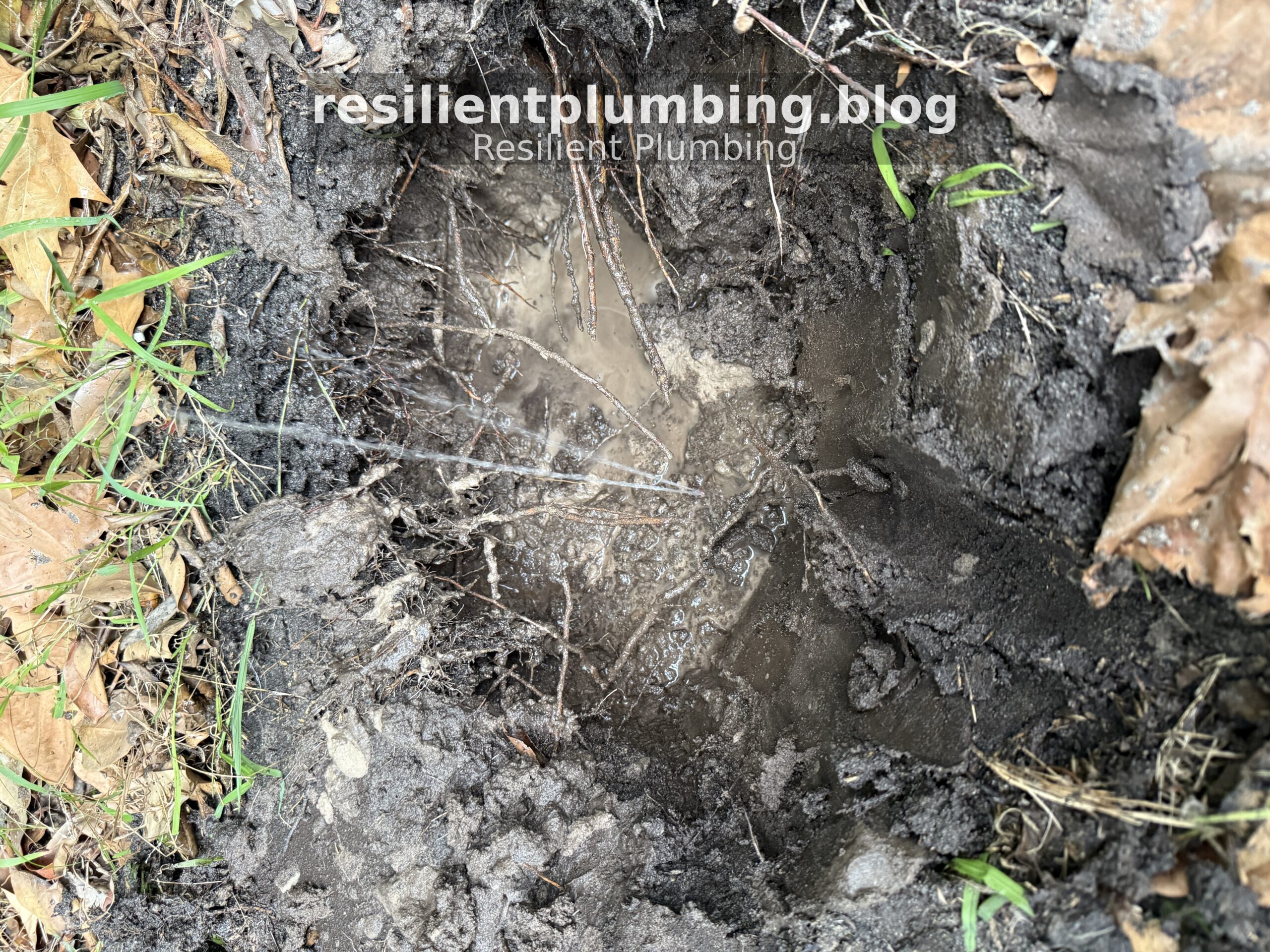
Underground water pipe burst in a Melbourne garden — water had been pooling for some time before it became visible at the surface.
What to Do While You Wait
📸 Take photos
Before you start mopping or moving anything, take photos of the damage — walls, floors, ceilings, the affected area. You’ll want these for your insurance claim, and your plumber will want to see what it looked like when they weren’t there.
🪣 Contain what you can
Towels, buckets, whatever you’ve got — use them to stop water spreading to other rooms or soaking into walls and flooring. The faster water is contained, the less secondary damage you end up with.
💡 Turn off electricity if needed
If water is near power points, light fittings, or has reached an area with electrical infrastructure, turn off the power to that area at the switchboard. Water and electricity is a serious risk — don’t wait to see what happens.
📞 Call your insurer
Get your home insurance claim started early — don’t wait until after the plumber has been. Most policies cover sudden and accidental water damage, and some insurers have preferred repairers they want you to use for building repairs.
🪟 Open windows if it’s safe
Getting airflow through the affected area straight away helps slow the rate at which moisture soaks into walls, floors, and ceiling cavities. It won’t dry anything out on its own, but it helps.
📋 Note what you know
Write down when you first noticed the issue, where the water appeared, and what you’ve done so far. This helps your plumber understand the situation quickly when they arrive, and it’s useful information for any insurance claim.
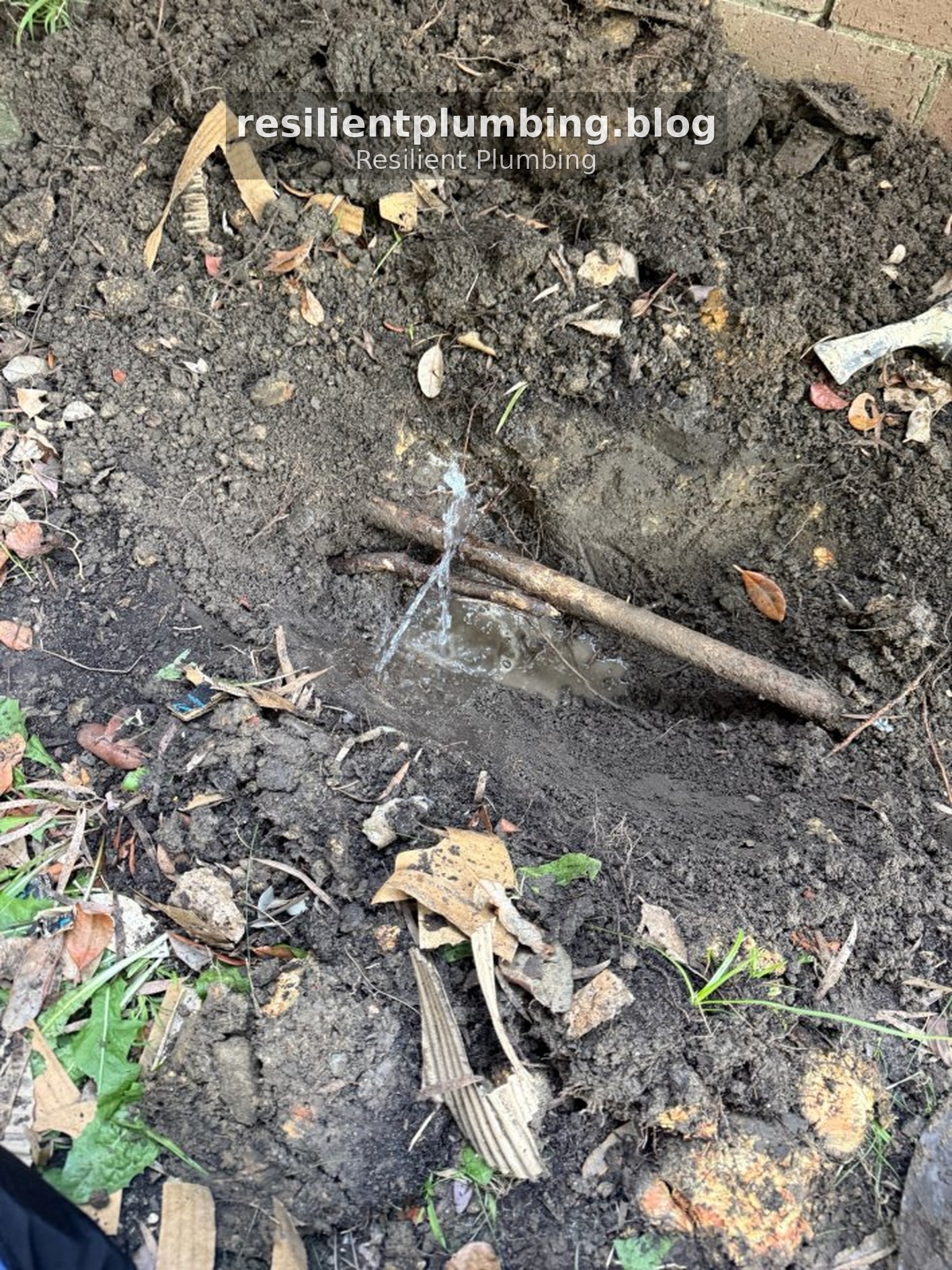
The burst point on an underground copper supply line — water pressure had been forcing water up through the soil before the pipe was located.
What Not to Do
- Don’t try to repair it yourself — tape, sealant, and temporary fixes on pressurised pipes rarely hold and can make the repair harder. Leave the pipe as it is and let the plumber assess it properly.
- Don’t turn the water back on to check if it’s still leaking — it is. You’ll just add more water to the situation.
- Don’t use electrical appliances in or near the affected area until you’re confident the area is safe and dry.
- Don’t start major clean-up before photos are taken — insurers need to see the damage as it was, not after you’ve tidied up.
- Don’t ignore a slow or intermittent leak — if you’re seeing wet patches, soft flooring, or unexplained dampness anywhere in or around your home, get it looked at. Underground leaks in particular can go undetected for a long time.
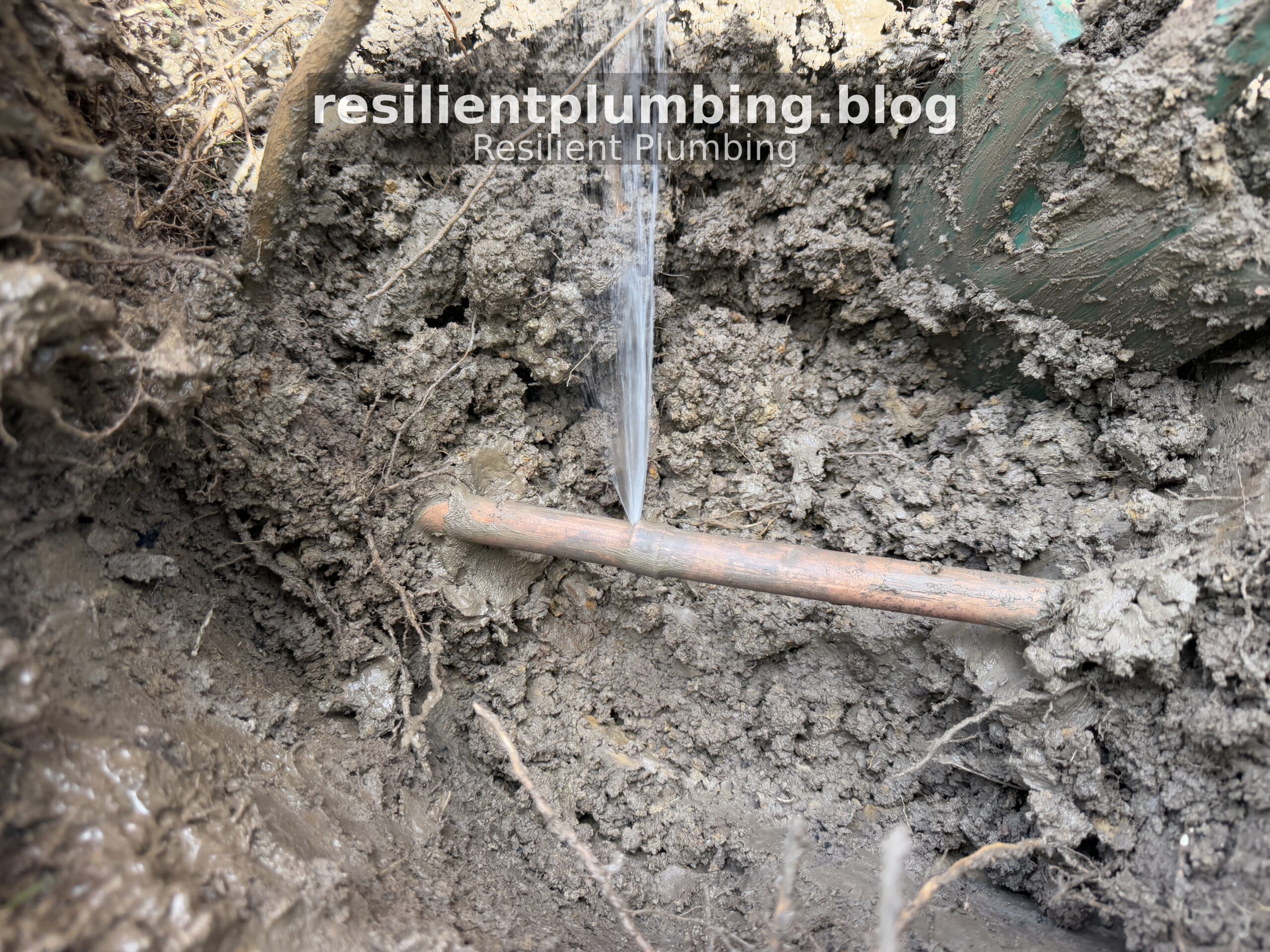
Water under mains pressure spraying from a split in a copper pipe — this kind of failure can release a significant amount of water before it’s noticed.
What the Plumber Will Need to Know
When your plumber arrives, the more information you can give them upfront, the better. Helpful things to have ready:
- Where the water first appeared and roughly when
- Whether it’s a sudden burst or something that’s been building up
- Which shutoff valve you used and where it is
- Any recent work done in the area — renovations, landscaping, digging
- Whether the water has reached any walls, flooring, or ceiling cavities
Underground Pipes — A Note for Melbourne Homes
A lot of Melbourne homes — particularly those built from the 1950s through to the 1980s — have original copper supply lines running underground through the garden. These pipes can develop pinhole leaks or split fittings over time, often without any obvious signs at the surface until there’s a significant amount of water movement underground.
Signs that you might have an underground leak include unexplained wet patches in the garden, soft or boggy ground in one area, a higher than usual water bill, or reduced water pressure inside the house. If any of those sound familiar, it’s worth getting it looked at before it becomes an emergency.
💡 Worth knowing
Most home insurance policies cover sudden and accidental water damage from burst pipes — but not gradual leaks that have been present for a while. If you’ve noticed something and ignored it, that can affect your claim. When in doubt, get it checked sooner rather than later.
Burst pipe in Melbourne?
We attend burst pipe jobs across Melbourne’s Eastern and South Eastern suburbs. Give us a call and we’ll get someone out to you.
📞 Call 0432 704 268 Get in Touch