
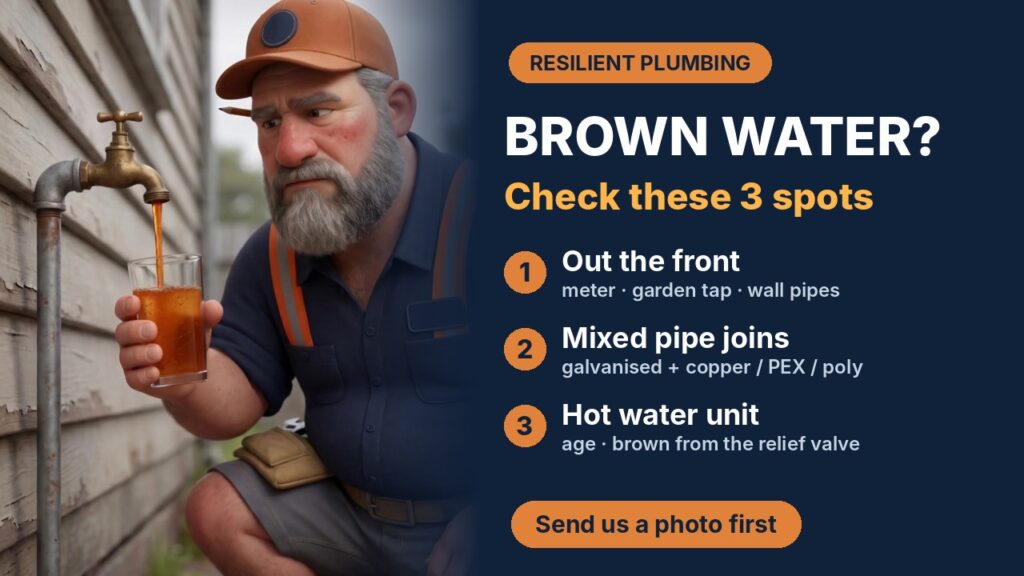
🔧 Brown water from the tap nearly always has a source we can find. In most homes it turns out to be one of three spots: something out the front, an old galvanised pipe joining newer pipe, or a rusting hot water unit. Here’s what we look at, with photos from real jobs.
Mick runs through the three spots
First things first: if the water’s brown, don’t drink it. Then have a think about where it shows up. Hot tap only? Cold only? Both? That alone tells us a lot about where to look.
1. Out the front: meter, garden tap and wall pipes
On a lot of older Melbourne homes, the line from the water meter to the house is still old galvanised steel. It’s often the first place we check: the meter, the garden tap and any pipe you can see on the outside wall.
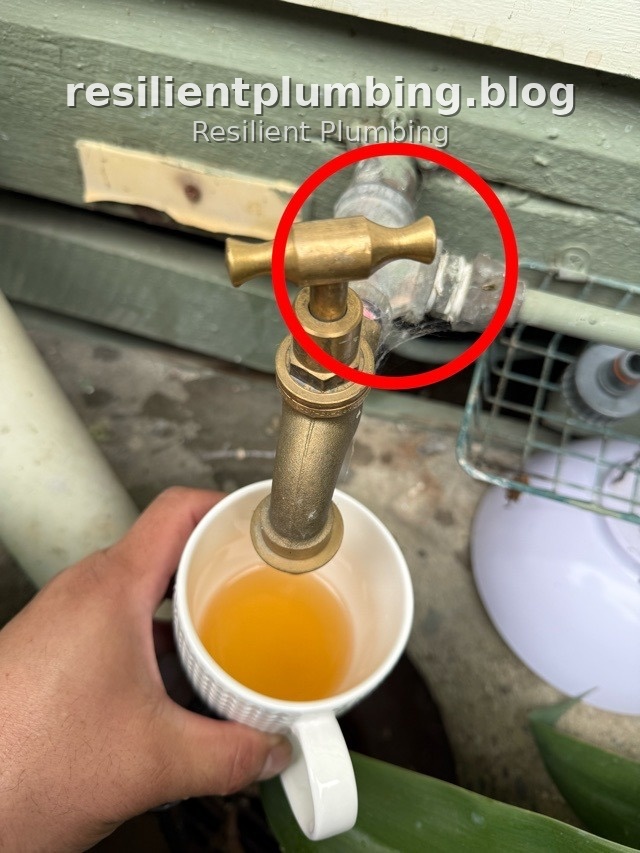
A garden tap off an old galvanised line. This is what came out.
On this job, the culprit was a single galvanised tee next to the tap. Once we cut it out, you could see why.
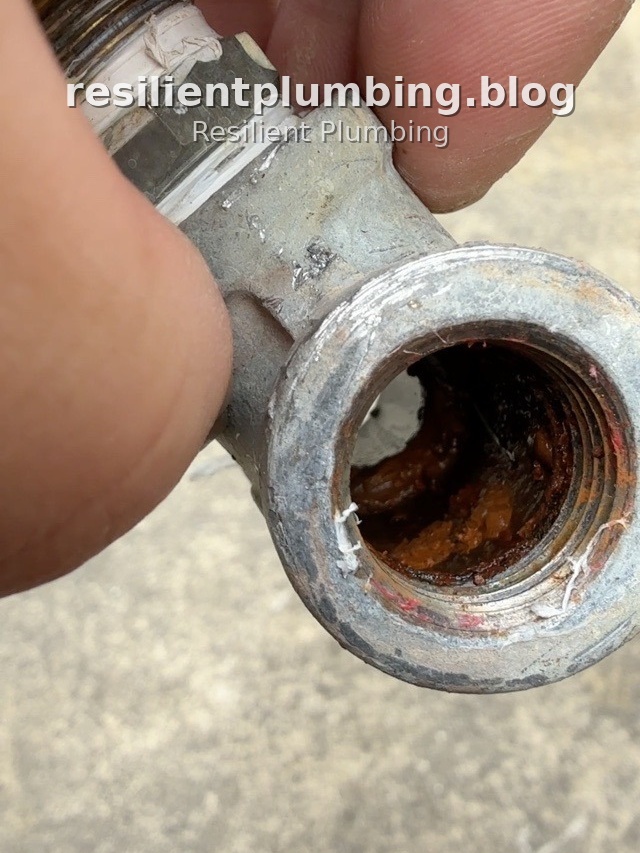
Rust built up inside the tee
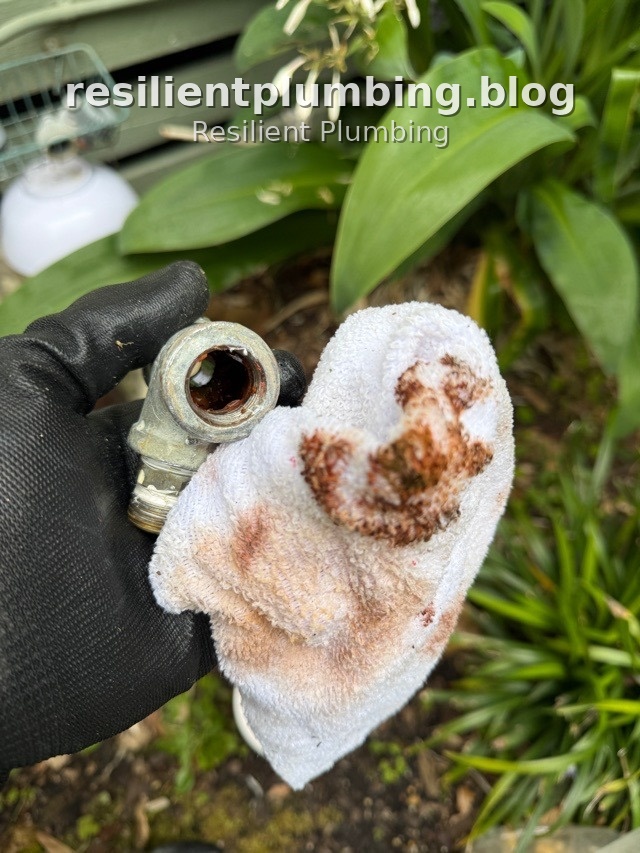
One wipe of the rag
2. Mixed pipe joins
Plenty of houses have been patched over the years: a bit of copper here, PEX or poly there, all joined onto the original galvanised pipe. Those joins between different materials are where rust likes to build up, usually on the inside where you can’t see it.
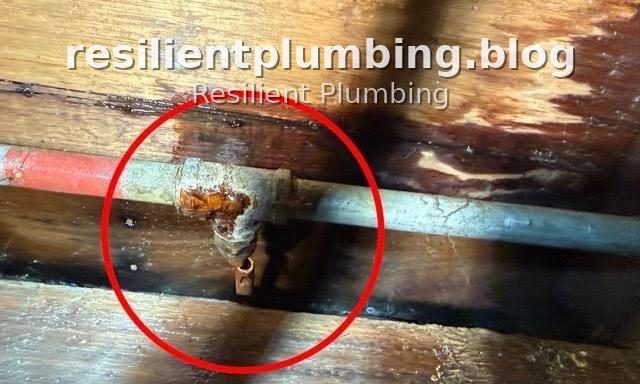
Under the house: a rusted galvanised tee with a copper branch
3. The hot water unit
If the brown water is mainly on the hot side, the storage hot water unit is the usual suspect. Two things give it away: its age (check the label on the side), and brown water coming from the relief valve drain.
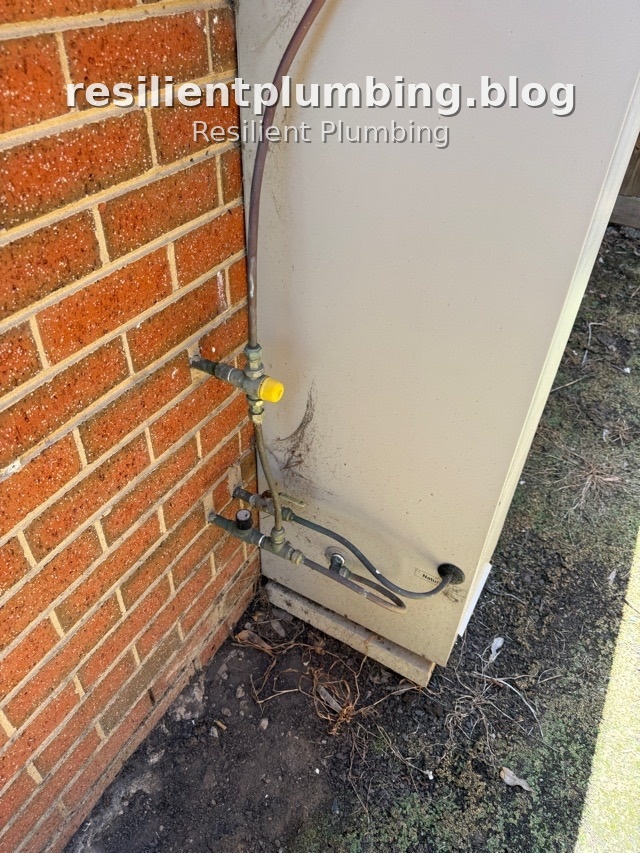
An older storage unit and its relief valve drain
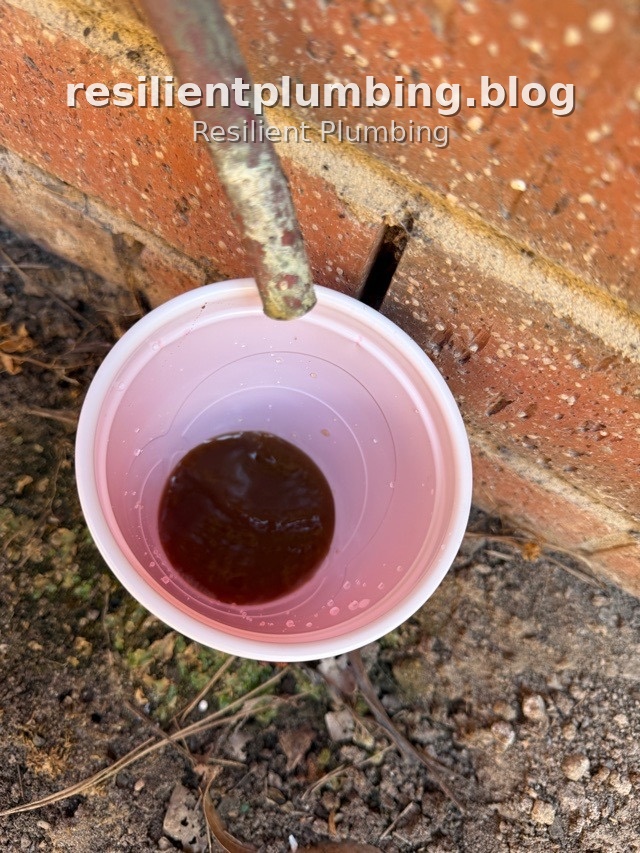
What came out of the relief valve
💡 Leave the relief valve to us
The water from the relief valve is very hot and can scald. If you suspect the tank, have a look at the label for its age and send us a photo. We’ll take it from there. There’s more on this in when to replace your hot water unit.
The quickest way back to clear water
Flushing the taps might clear it for a day, but if the rust is coming from a fitting, a section of pipe or the tank, it’ll be back. The fix depends on the source. Sometimes it’s one fitting, sometimes a run of old galvanised pipe, sometimes the hot water unit. Getting a plumber to find the source first means you only pay to fix what’s actually causing it.
🔧 What we check
- Water meter, garden tap and wall pipes
- Old galvanised pipe and mixed pipe joins
- Hot water unit age and relief valve
📍 Where we work
Melbourne’s eastern suburbs since 2015, including Ringwood, Croydon, Mitcham, Blackburn, Box Hill, Camberwell, Vermont, Doncaster, Donvale, Nunawading and Balwyn.
Common questions
Why is my tap water suddenly brown?
Usually rust: from old galvanised pipe or fittings, from joins between different pipe materials, or from a rusting hot water tank. If both hot and cold are brown and your neighbours have it too, it may be coming from the street mains, and your water company can tell you.
Is brown water safe to drink?
We wouldn’t. Run the tap into a glass to check, and use another water source until you know where it’s coming from.
Brown water only from the hot tap. What does that mean?
It often points to the hot water unit, especially an older storage tank. Check the label for its age and send us a photo.
Do I need to replace all my galvanised pipes?
Not always. Sometimes it’s one fitting or one section. That’s why we find the source first, then talk through the options.
Video transcript
“Brown water from your tap? Don’t drink it. Check these three spots. One: out the front. Water meter, garden tap, old pipes on the wall. This rusty galvanised tee was colouring a whole house’s water. Two: where old galvanised joins copper, PEX or poly. They rust inside. Three: the hot water unit. Check its age. Brown from the relief valve? The tank’s rusting. A plumber can find the source and the right fix. Fastest way back to clear water. Send us a photo first.”
Brown water? Send us a photo first.
A photo of the water, the tap and your hot water unit’s label helps us work out where it’s coming from before we come out.
📞 Call 0432 704 268 Send Us a Photo