
🔧 Sound familiar? You’ve replaced the tap washer. Maybe twice. Maybe three times. And within days, the drip comes back. The problem almost certainly isn’t the washer.
Most people — and honestly, even some plumbers — go straight for the washer when a tap drips. It makes sense: washers are cheap, easy to swap, and fix the majority of tap leaks. But when a tap keeps coming back to drip after multiple washer replacements, something more fundamental is wrong.
The answer is usually hidden deep inside the wall cavity, at a component most homeowners have never heard of — the tap seater.
—What Is a Tap Seater?
Inside every wall-mounted tap outlet — the brass fitting recessed into your bathroom tiles — sits a precisely machined brass ring called the tap seater (also called a tap seat or valve seat). Its job is to provide a perfectly flat, smooth surface for the rubber washer to press against and form a watertight seal when the tap is turned off.
When you turn off a tap, the spindle drives the washer down onto this seater with considerable force. Over years of use — and particularly in areas with hard water or sediment — the seater surface can become pitted, corroded, grooved, or cracked. Once that happens, even a brand-new washer can’t form a complete seal, no matter how tightly you turn the tap.
A damaged seater is like trying to seal a surface with a gap in it — no washer will plug a pitted, corroded seat.
What the Photos Show
These images are from a real job — a bathroom tap that had been through multiple washers before anyone looked at the seater.
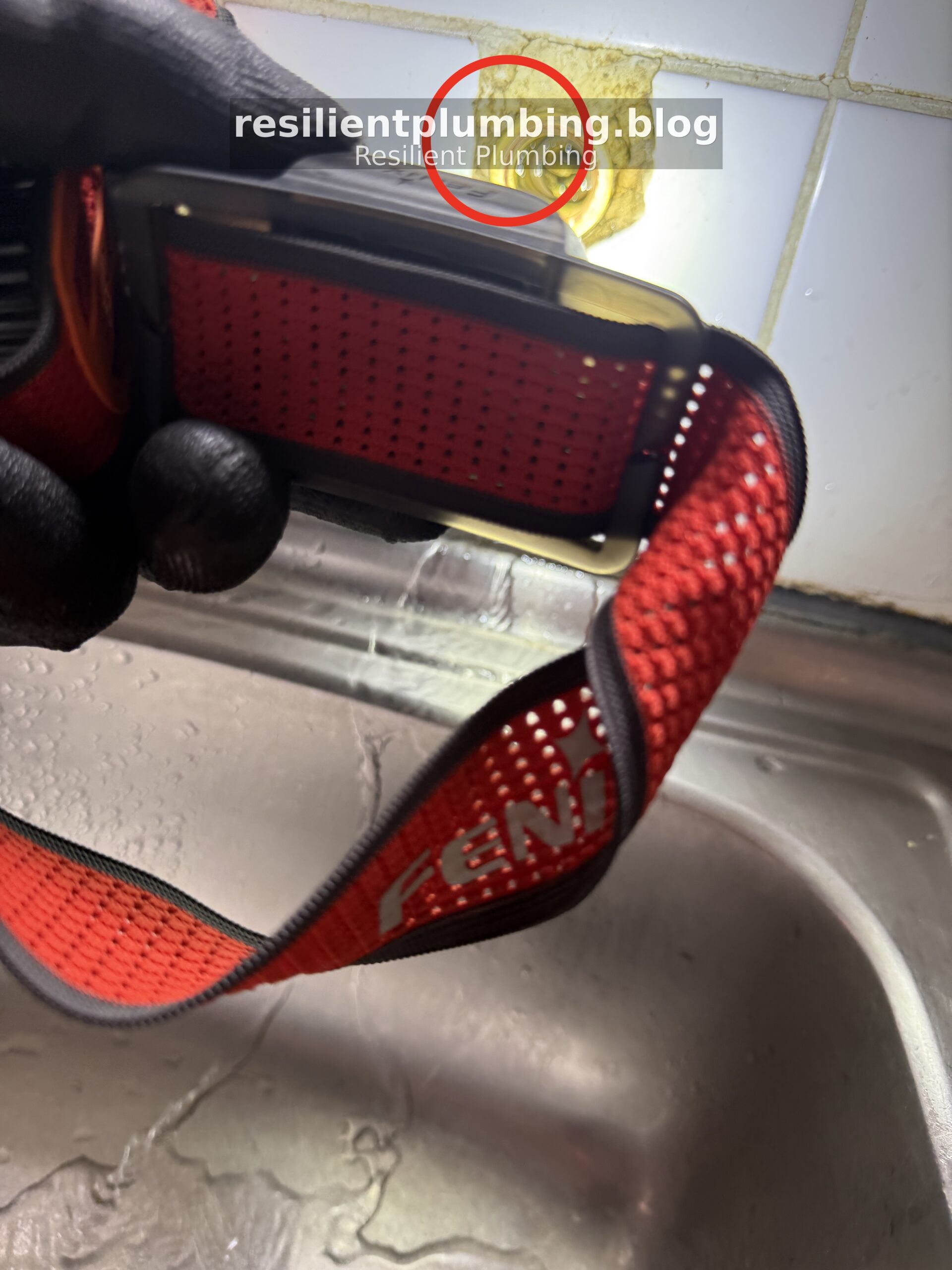
A headlamp shining into the wall cavity reveals water dripping from the brass tap seater (circled) — even with the tap fully off.
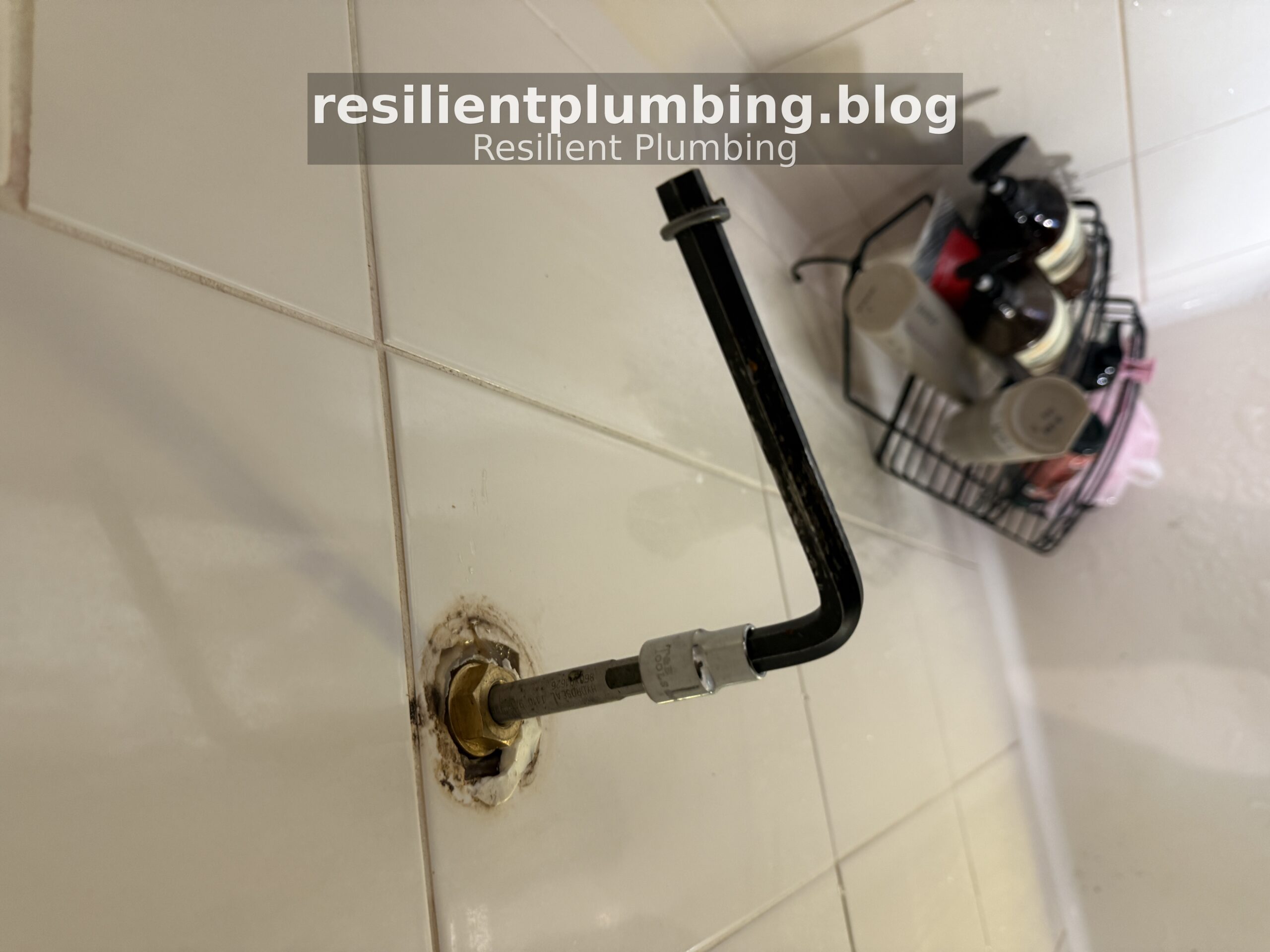
An L-shaped tap seater resurfacing tool at work — the cutting head grinds away damaged brass to reveal a fresh, flat surface.
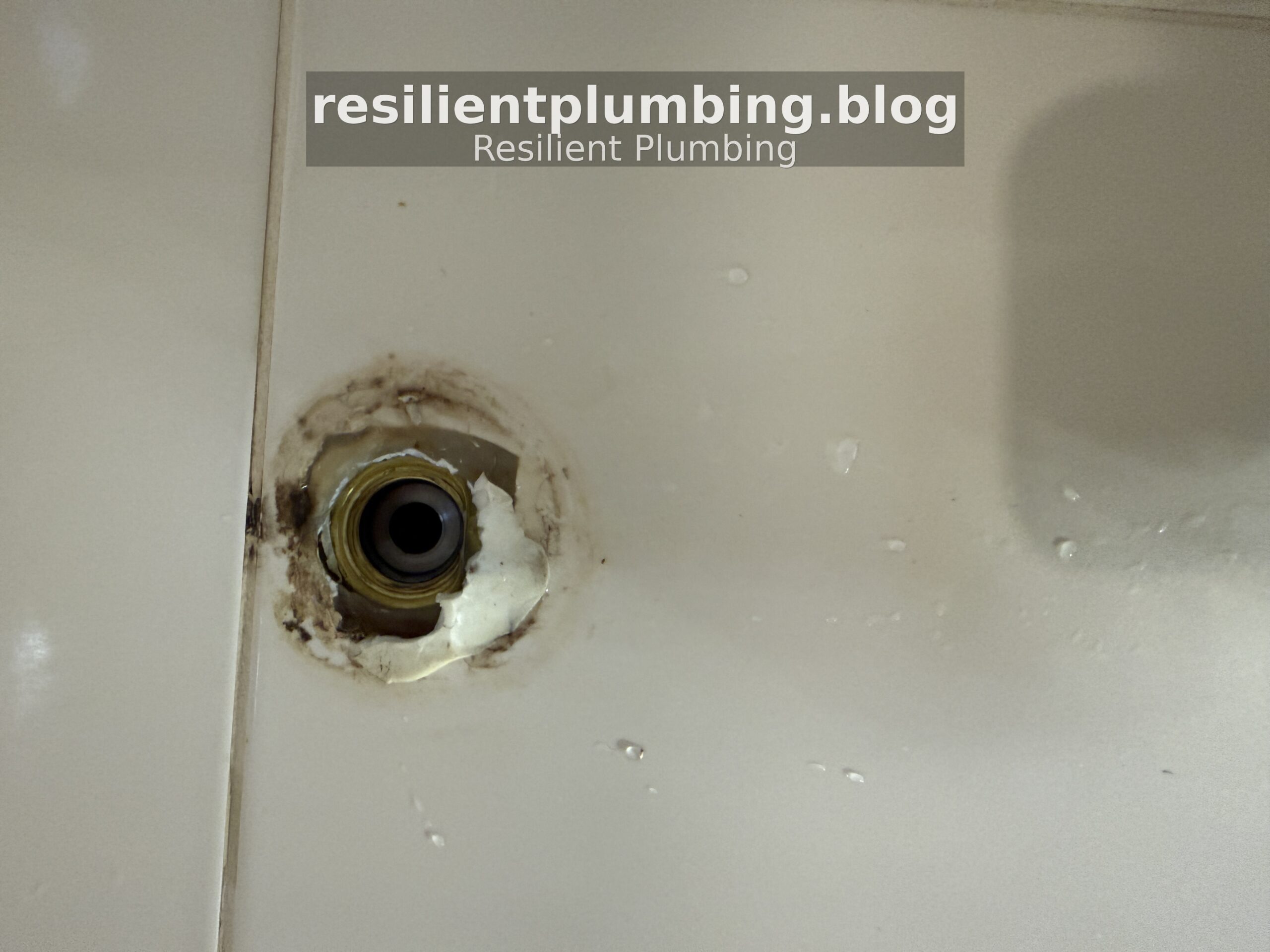
The tap seater housing exposed — note the deteriorated sealant, water staining, and existing moisture on the tile. This fitting had been leaking for some time.
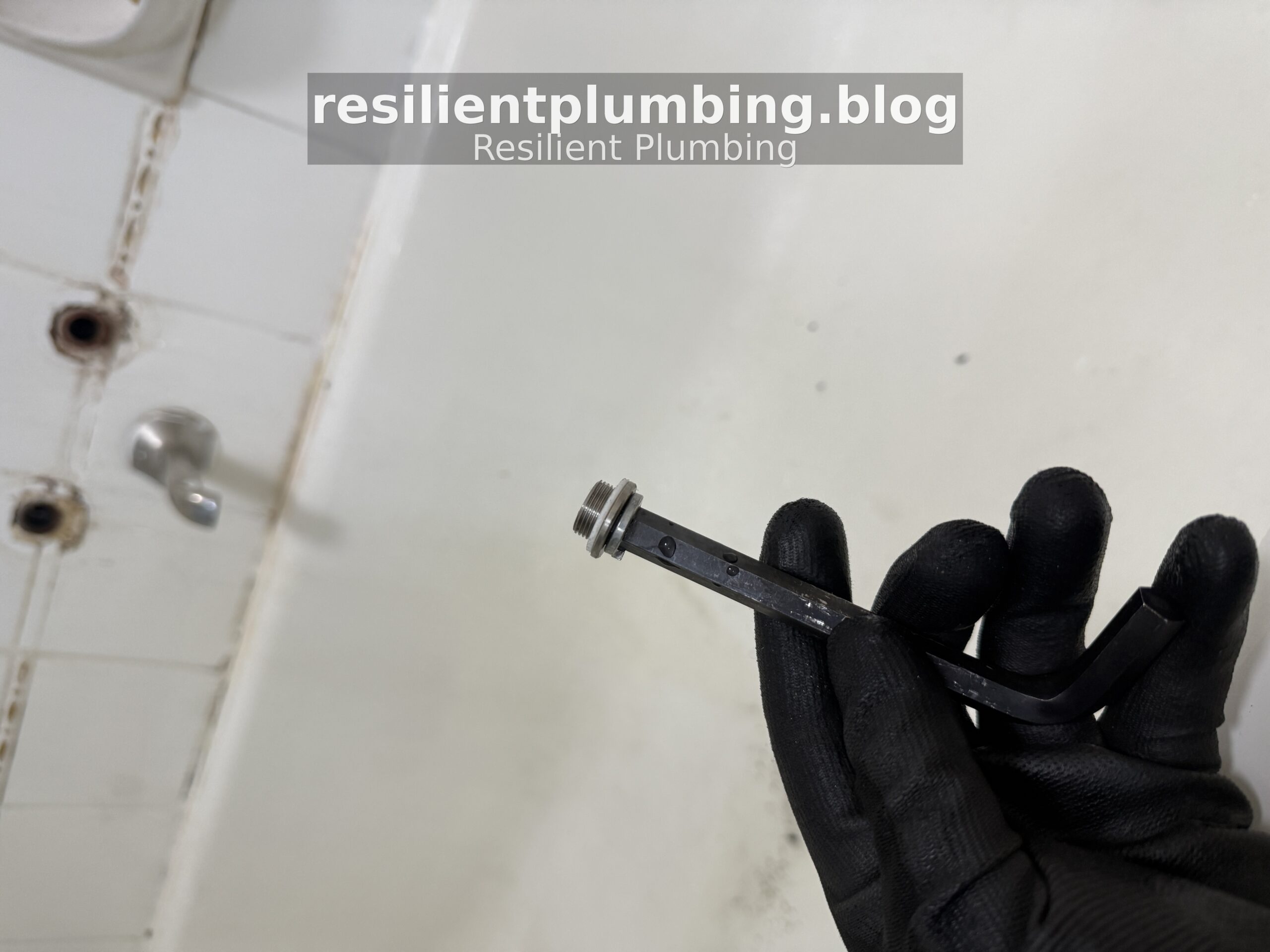
The tap spindle removed — with this out, the seater surface is fully accessible for inspection and resurfacing.
Signs the Seater Is the Problem
The Two Solutions
Once a damaged seater is confirmed, you have two options — resurface it, or replace it entirely.
Resurfacing
- Uses a tap seater resurfacing tool (also called a reseater or seat grinder)
- Inserts into the fitting and rotates to grind away pitted or corroded brass
- Reveals a fresh flat surface without replacing the fitting
- The tool is inexpensive and reusable
- Best for moderate pitting, minor corrosion, or grooving from wear
Seater Replacement
- The old brass seater insert is extracted using a seater removal tool
- A new tap seater insert is pressed or screwed into place
- Provides a guaranteed-fresh surface regardless of original condition
- Ideal for severely damaged, cracked, or deeply pitted seaters
- Best for older plumbing or fittings resurfaced multiple times
⚠️ Before you begin
Always turn off the water supply before removing any tap spindle. Find your isolation valve or turn off the main at the water metre. Open the tap fully to release residual pressure before removing the spindle or attempting any seater work.
How to Resurface a Tap Seater
Don’t Forget the Sealant
As visible in the photos, disturbing a wall-mounted tap fitting often means dealing with old silicone sealant around the escutcheon — the decorative cover plate. While the tap is apart, it’s worth removing all old sealant, cleaning the tile surface, and applying fresh silicone when reassembling. This stops water tracking behind tiles, which is a much more serious and expensive problem than a dripping tap.
When to Call a Plumber
Seater resurfacing is within reach of a confident DIYer, but there are situations where a licensed plumber is the right call — if the seater is too badly damaged to resurface, if the brass fitting itself is cracked, if you’re working with older threaded copper pipework, or if the fitting is buried deep in a wall cavity where access is difficult.
In Victoria, any work involving a permanent connection to water supply pipework requires a licensed plumber. Resurfacing an existing seater without disturbing the pipe connections is generally considered maintenance and is typically within DIY scope — but if you’re not sure, it’s always worth checking or giving us a call.
Tap still dripping after a new washer?
It’s probably the seater. We carry resurfacing tools on every job and can sort it out while we’re there — across Melbourne’s Eastern and South Eastern suburbs.
📞 Call 0432 704 268 Get in Touch