

🌧️ If water comes through your ceiling during heavy rain, the problem is usually up on the roof, not in the ceiling. On this job it was a roof valley blocked with leaves and mud, a downpipe emptying straight onto the roof tiles, and gutters packed with debris. A regular roof and gutter clean costs far less than repairing a ceiling.
Mick walks through the real call-out
The call: late at night, in a storm
Late one night during a downpour, we got a call. Water was dripping through the ceiling in several spots. The owner’s first thought was a burst pipe, or a hole in the ceiling itself. But once we were up on the roof, the real cause was clear: the water was coming in through the roof valley.

On the way to the call-out
What’s a roof valley?
Where two slopes of a tiled roof meet in a “V”, there’s a metal channel underneath called the valley flashing (or valley iron). Rain from both slopes runs into it and down to the gutter. If that channel blocks or overflows, the water has nowhere to go but sideways, under the tiles and into your ceiling.
What we found: 3 causes working together
1. Leaves and mud blocked the bottom of the valley
Eucalyptus leaves, gumnuts and mud had built up at the bottom of the valley where it meets the gutter. In normal rain, water trickles past. In a heavy storm, it can’t get out fast enough, so the valley flashing overflows and the water runs inside onto the ceiling plaster.
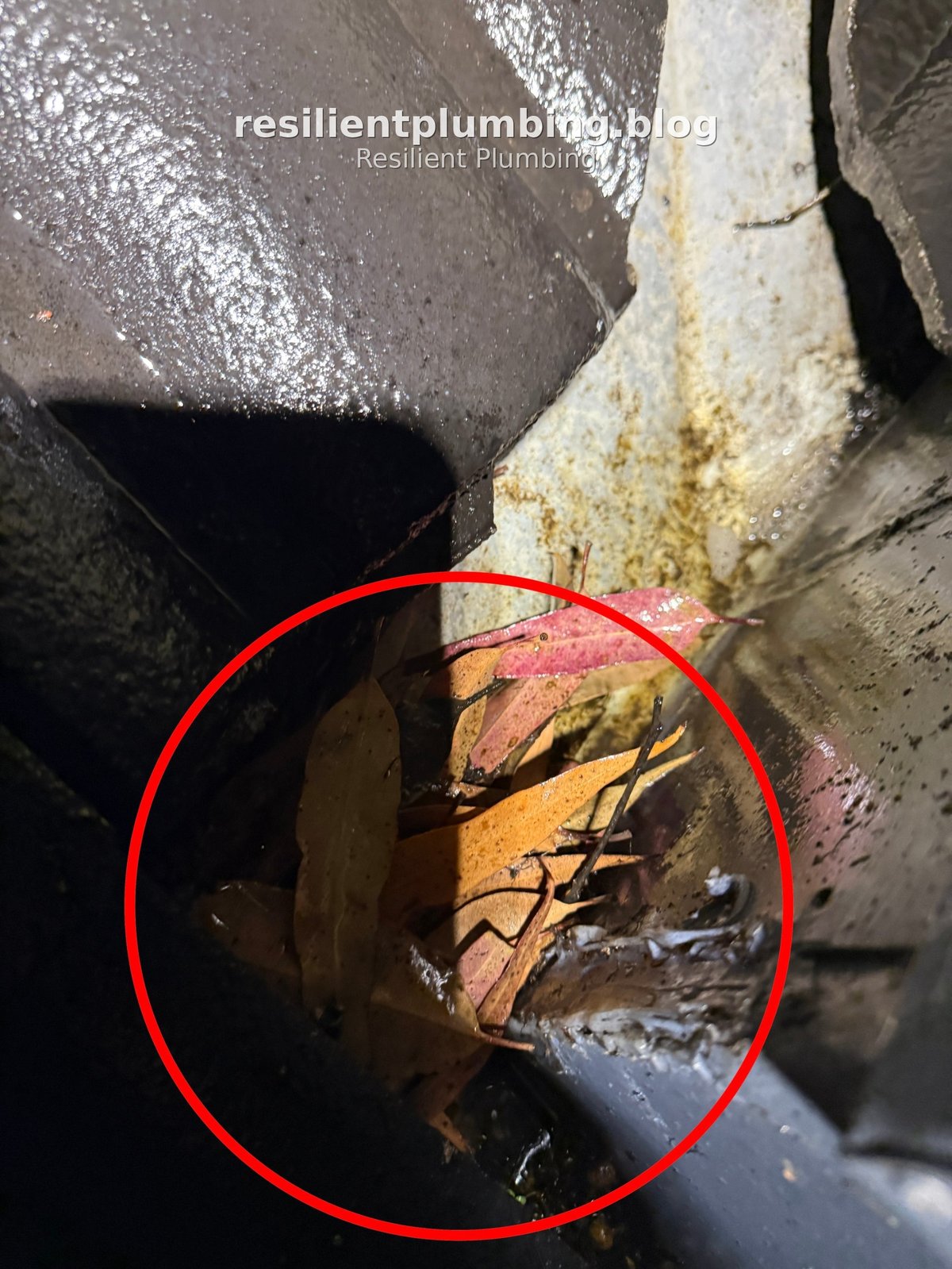
Leaves jammed at the bottom of the valley
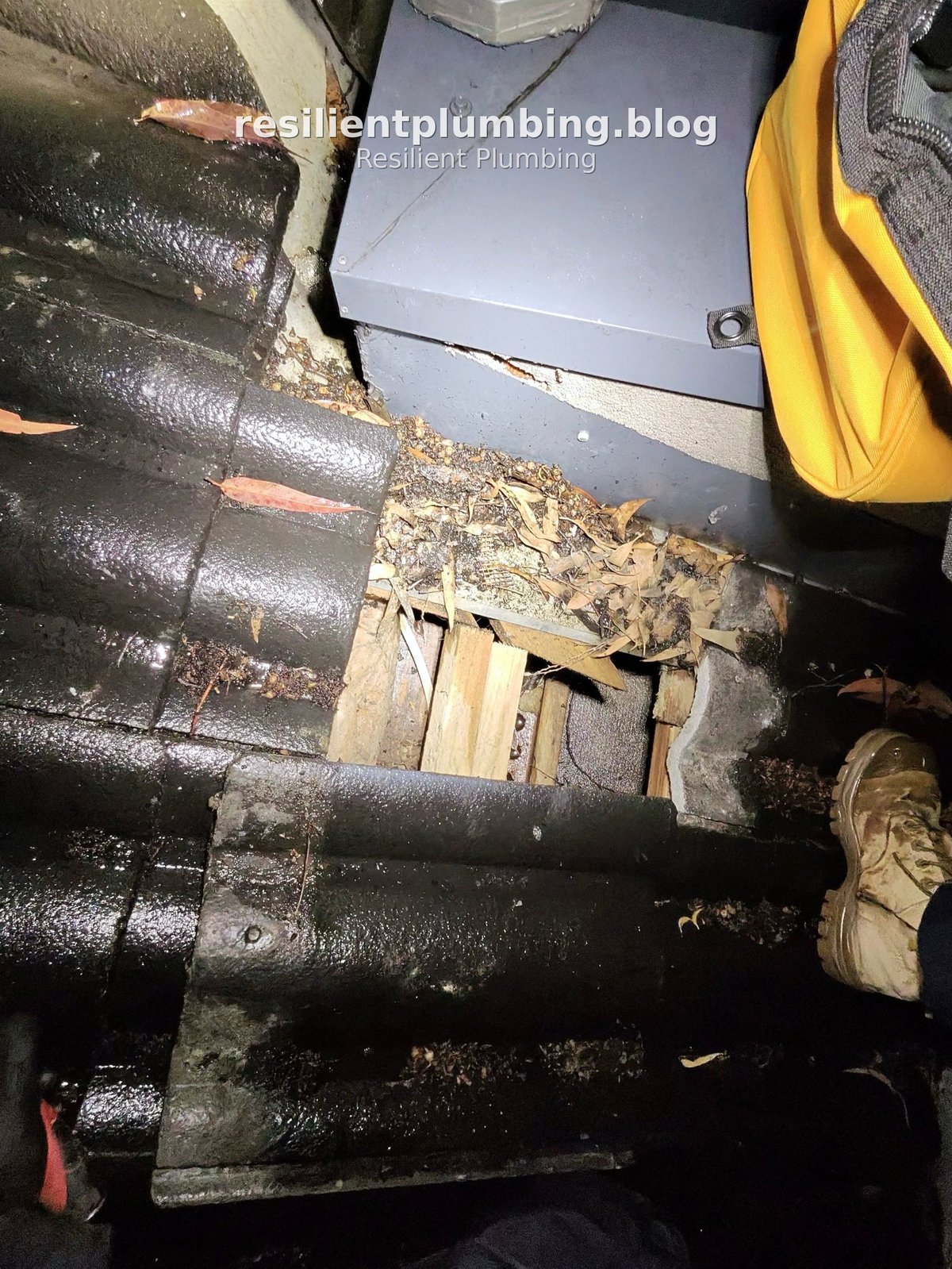
Tiles lifted: debris and wet timber underneath
2. A downpipe emptying straight onto the roof tiles
A downpipe from the upper roof was pointing onto the lower roof, right above the valley. In light rain that’s not obvious. In heavy rain, the whole upper roof’s water lands in one spot, floods the tiles and the valley, and gets underneath the valley tiles.
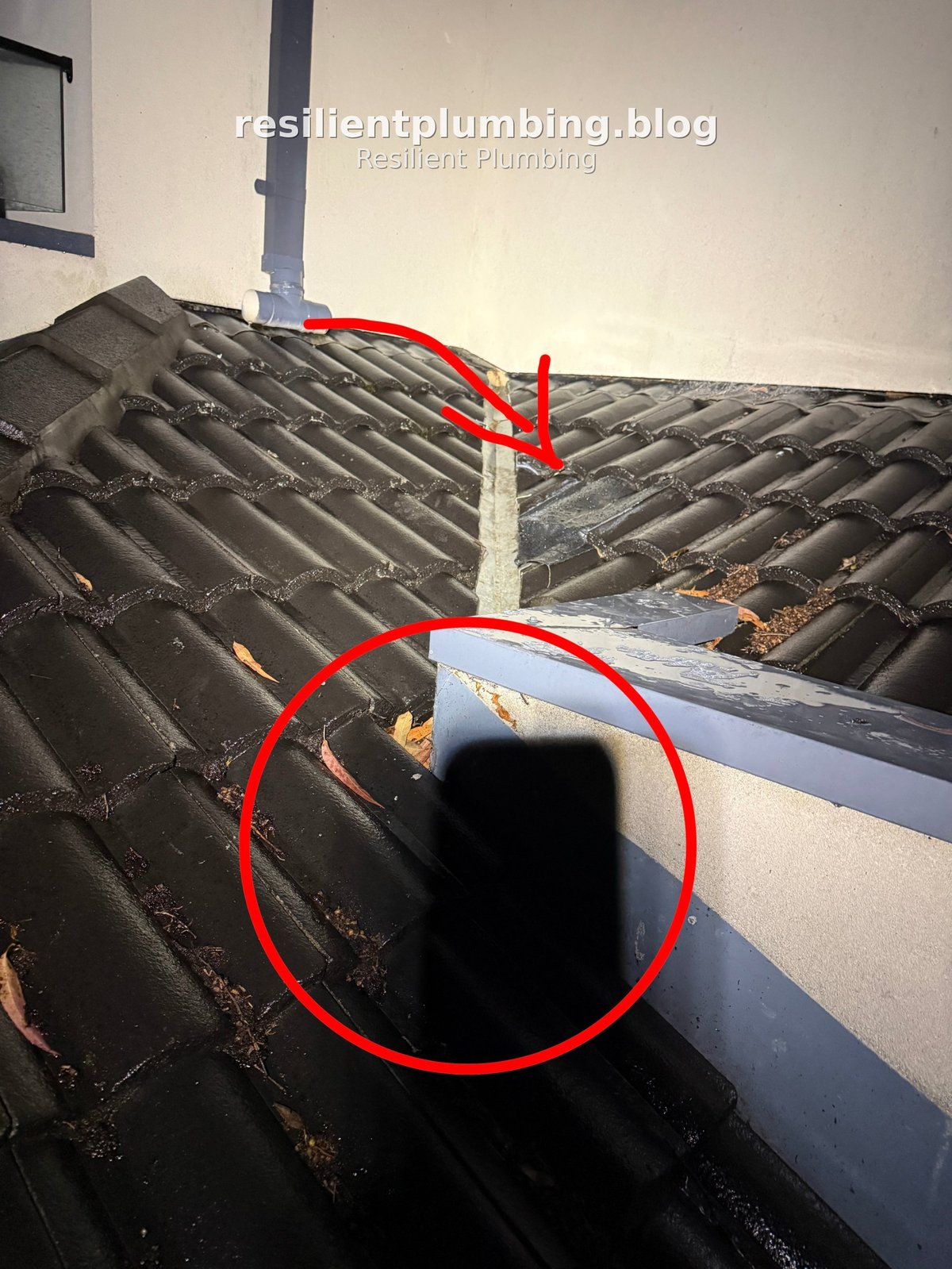
The downpipe outlet aims straight at the valley
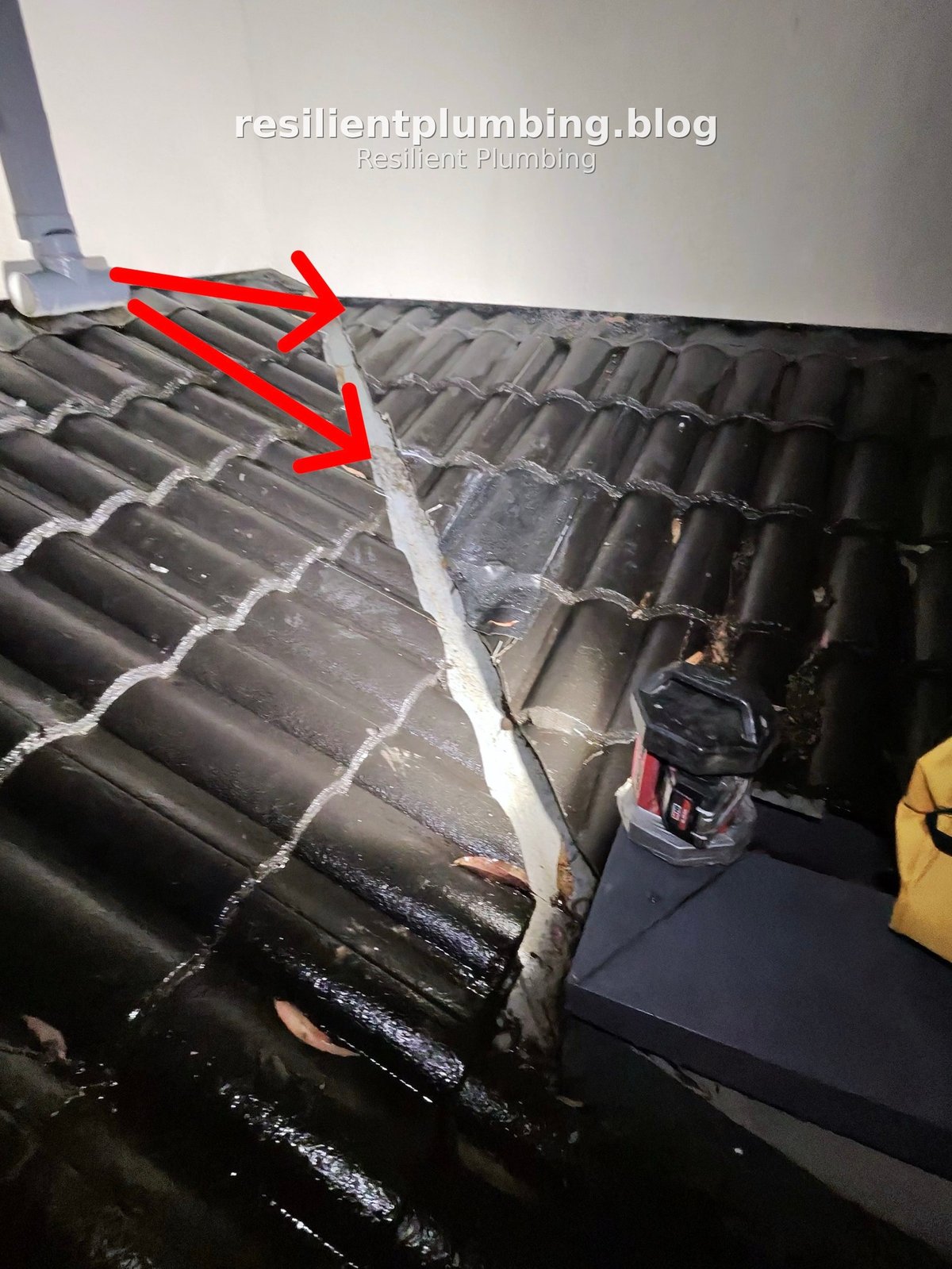
All that water heads down the valley
3. Flashing that narrows and turns, and gutters full of leaves
Partway down, the valley flashing narrowed and changed direction. That’s exactly where water needs room to flow, so it slowed down and built up. On top of that, the gutters were packed with leaves, so even the water that made it down had nowhere to go.
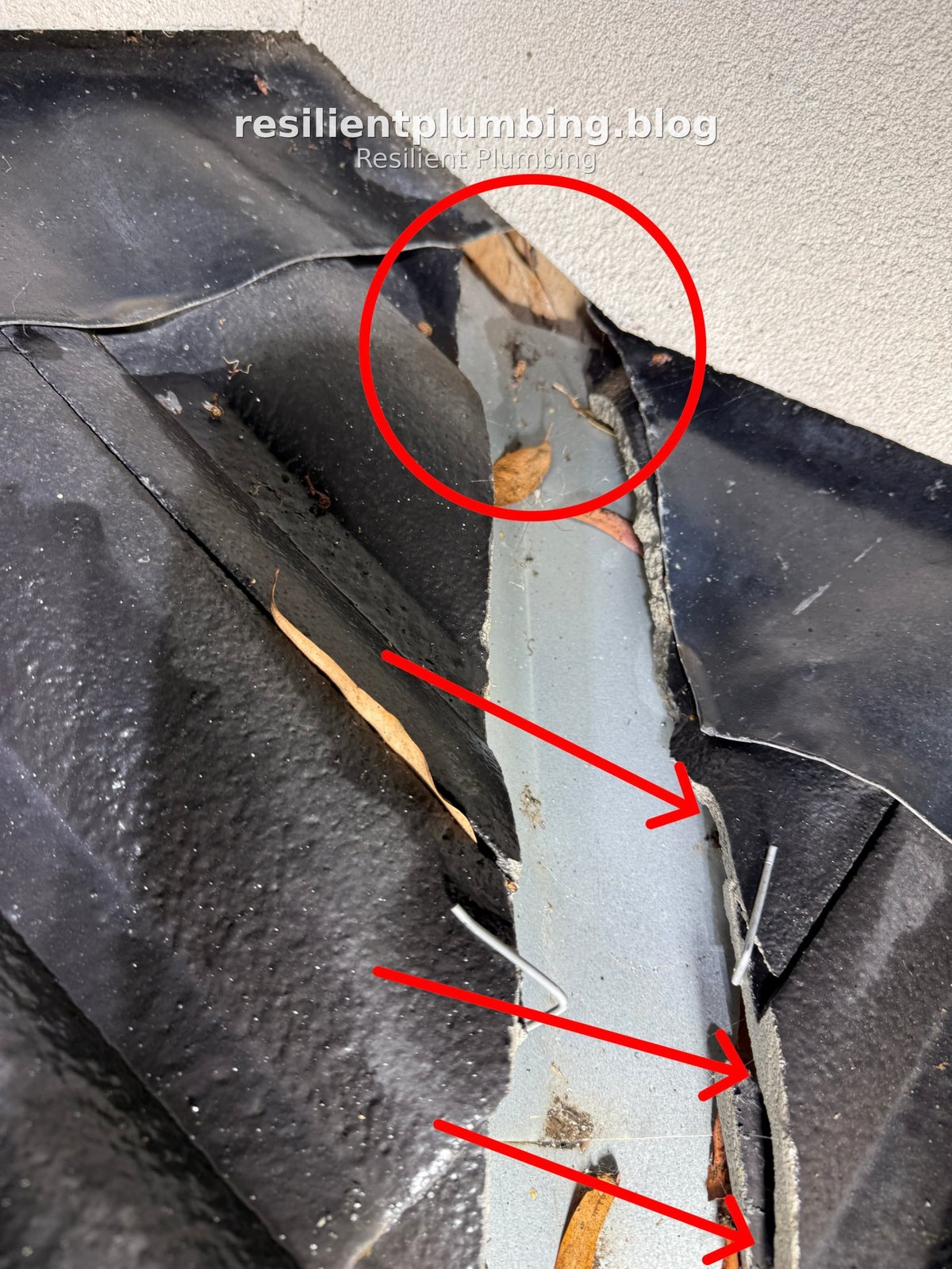
The flashing narrows and turns right where the water needs room
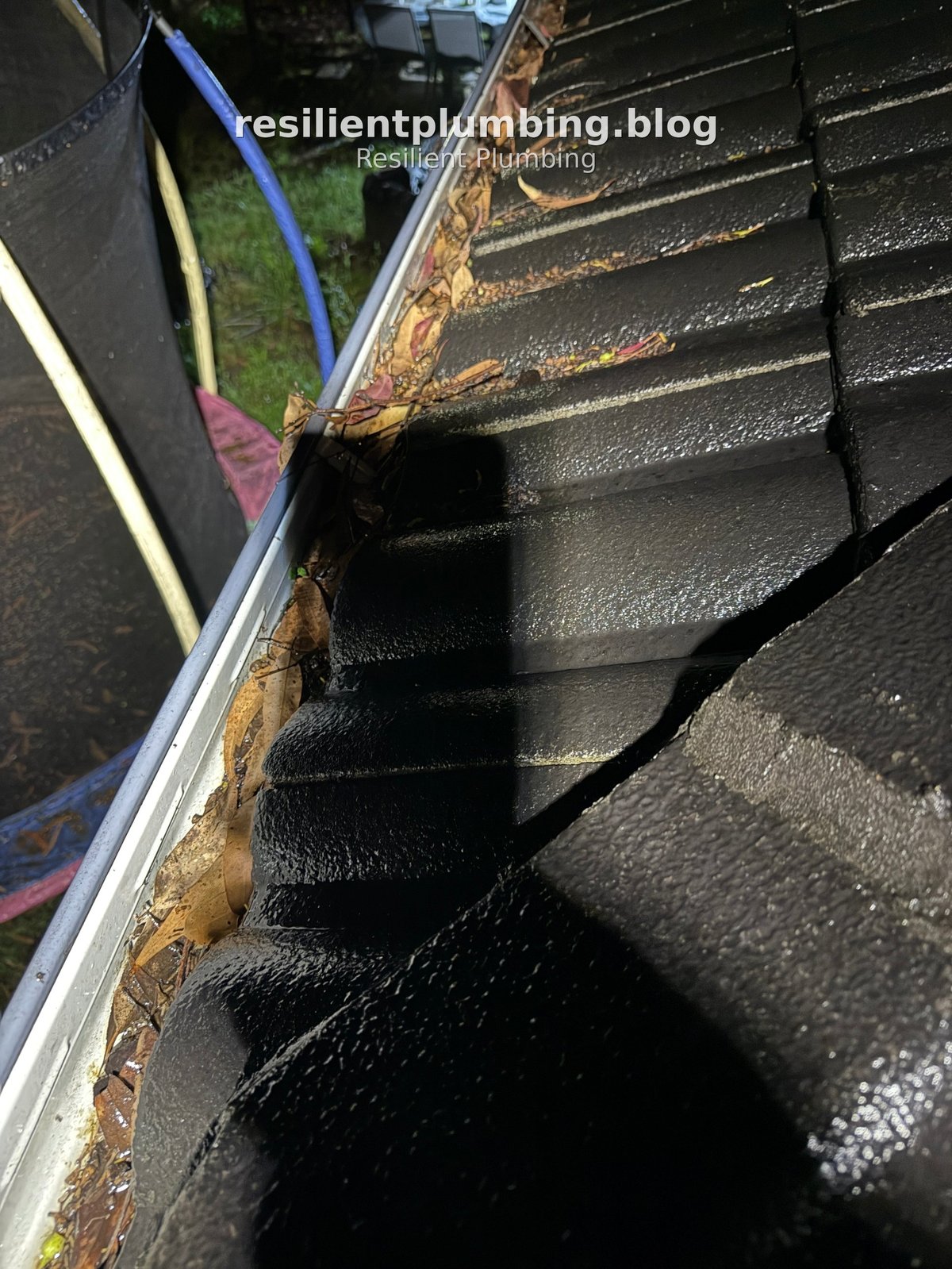
Gutter packed with leaves
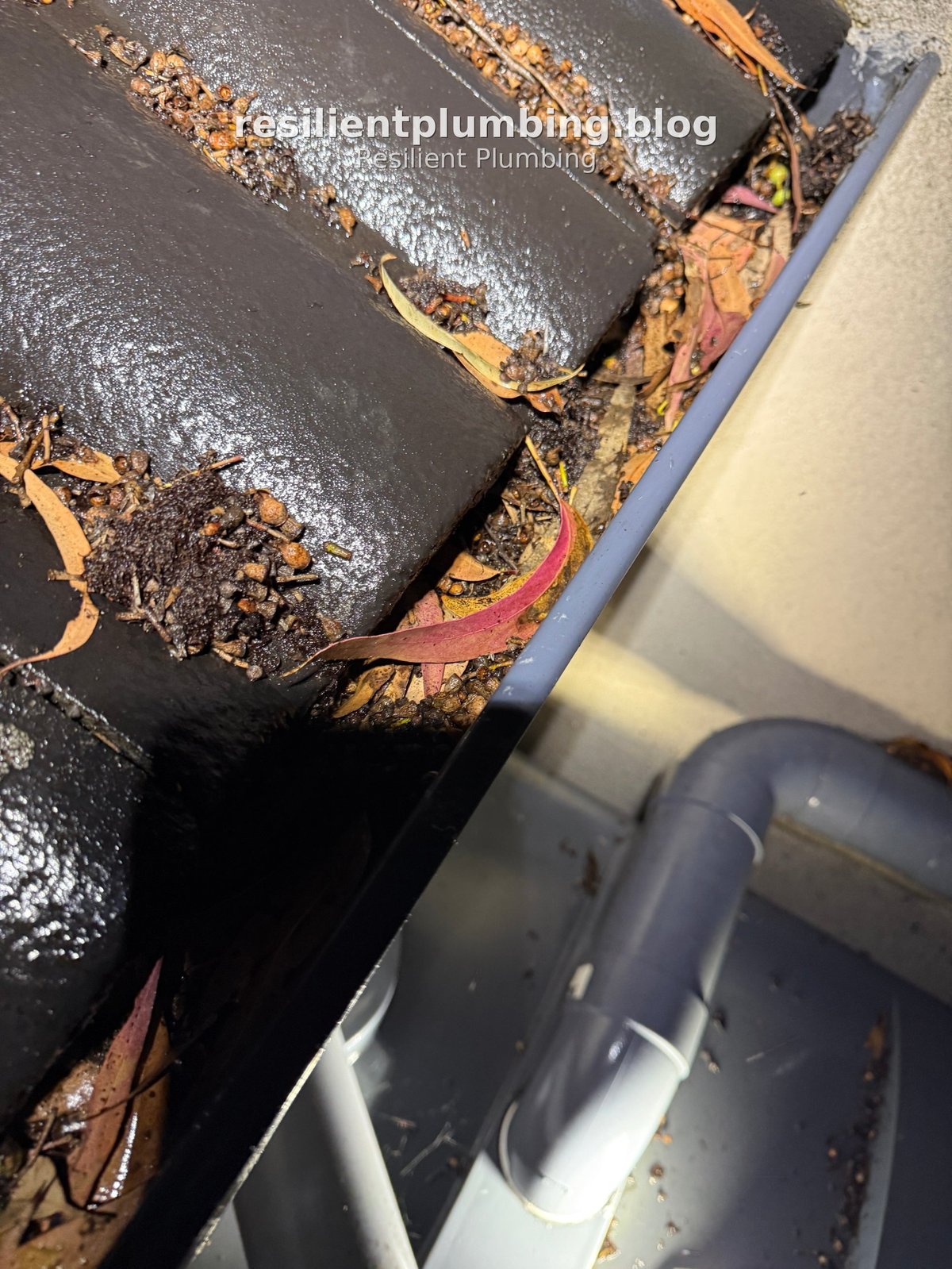
Leaves and gumnuts blocking the flow
The fix
- Move the downpipe outlet so the upper roof’s water no longer lands on the tiles above the valley.
- Re-bed the valley tiles so they sit properly and water stays in the valley.
- Dress the valley flashing tight so water can flow freely without being forced sideways.
- Clean the roof valleys and gutters, then keep them clean.
💡 If your ceiling starts leaking in a storm
- Put a bucket or towels under the drip and move furniture and valuables out of the way.
- Stay clear of a sagging or bulging ceiling, and keep away from any light fittings with water near them.
- Take a photo of the ceiling, and if you can safely see them from the ground, the gutters.
- Don’t climb onto a wet roof. Wet tiles are slippery and dangerous, especially at night. Leave it to us.
- Call an after-hours plumber and send the photos. Our guide on what to do before the plumber arrives has more tips.
Prevention: a clean-out costs far less than a ceiling
Most of this damage was avoidable. Leaves and debris build up slowly, and you only find out when a big storm arrives. A regular roof and gutter clean is a small job compared to repairing ceiling plaster, insulation and paint after water gets in.
- Get the gutters and valleys cleaned regularly, more often if gum trees overhang your roof. Many people book a clean before winter and again before the spring and summer storms.
- Check where your downpipes discharge. A downpipe emptying onto a lower roof is worth having looked at.
- Watch for warning signs: gutters overflowing in rain, plants growing in the gutters, or water stains on the ceiling near an inside corner.
🔧 How we can help
- After-hours emergency plumbing
- Gutter cleaning (single-storey homes)
- Valley flashing repairs
- Downpipe and stormwater checks
📍 Where we work
Melbourne’s eastern suburbs since 2015, including Ringwood, Croydon, Mitcham, Blackburn, Box Hill, Camberwell, Vermont, Doncaster, Donvale, Nunawading and Balwyn.
Common questions
Why does my ceiling only leak in heavy rain?
Small blockages and poor water paths cope in light rain but overflow in a downpour. A roof valley or gutter blocked with leaves, or a downpipe emptying onto the roof, can push water under the tiles only when the volume is high.
What is valley flashing?
It’s the metal channel under the tiles where two roof slopes meet. Rain from both slopes runs down it into the gutter. If it’s blocked, too narrow or badly shaped, water overflows and can leak into the ceiling.
How often should gutters be cleaned?
It depends on the trees around your home. Homes with gum trees overhanging the roof usually need it more often. Many owners have the gutters and valleys cleaned before winter and again before storm season.
Should I go up on the roof to check?
No. Wet roofs are slippery and dangerous, especially at night. Take photos from the ground and call a professional.
Do you come out after hours for a leaking ceiling?
Yes. We provide after-hours emergency plumbing across Melbourne’s eastern suburbs. Send us a photo of the leak and your gutters so we know what to bring.
Video transcript
“Late last night, in pouring rain, we got a call. Water was coming through the ceiling. But the problem wasn’t the ceiling. It was up on the roof, in the valley. One: leaves and mud blocked the bottom of the valley, so the water overflowed and ran inside. Two: this downpipe dumps the whole upper roof’s water straight onto the tiles. In a storm, it gets under them. Three: the flashing narrows and changes direction, and the gutters were packed with leaves. The fix: move the downpipe outlet, re-bed the valley tiles, dress the flashing tight, and keep it clean. A roof and gutter clean costs far less than a new ceiling. And leave wet roofs to us. Send us a photo of your gutters.”
Ceiling leaking or gutters overflowing?
Send us a photo of the leak and your gutters, day or night. It helps us know what we’re dealing with before we arrive.
📞 Call 0432 704 268 Send Us a Photo