
💧 The leak you can’t see is usually the one that does the most damage. By the time a pipe inside your wall shows any obvious sign, it’s often been dripping for a while — slowly rotting timber, encouraging mould, and quietly eating away at your home. Here’s what to keep an eye out for.
Most plumbing emergencies make themselves known pretty quickly — a burst pipe, a blocked drain, a tap that won’t stop running. But a slow leak hiding inside a wall cavity? That one can stay quiet for a long time. And the longer it goes unnoticed, the worse the damage tends to be.
These two photos came from a job we attended in Melbourne’s eastern suburbs. The homeowner had no idea there was anything wrong until they noticed the paint on one wall was bubbling slightly. By the time we got in there, the timber framing was already dark with moisture, and there was active dripping coming from a corroded copper pipe joint.
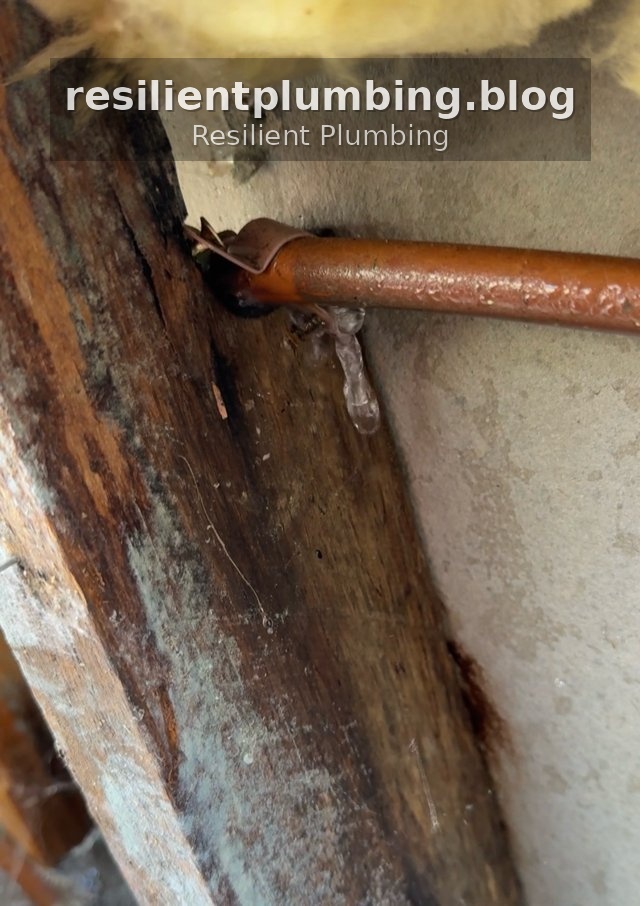
Active drip from a corroded copper pipe joint inside the wall cavity. The timber had already taken on significant moisture by the time we opened the wall.
Why Wall Cavity Leaks Are So Easy to Miss
Your hot and cold water pipes run through the wall framing of your home — mostly out of sight and out of mind. In older Melbourne homes, a lot of this pipework is original copper that’s been in place for decades. Copper is generally a solid material, but it’s not immune to corrosion, particularly where:
- Pipe joints have started to fail due to age or movement
- There’s contact with certain soils or materials that accelerate corrosion
- Pipes have been pinned or clipped in a way that causes stress over time
- There’s been a small knock or vibration from renovation work nearby
A slow drip from a joint or pinhole in a pipe doesn’t create the dramatic flood you’d immediately notice. The water just soaks into surrounding timber and insulation, and eventually works its way outward — by which point you might see a stain on the wall, soft plaster, or a faint musty smell.
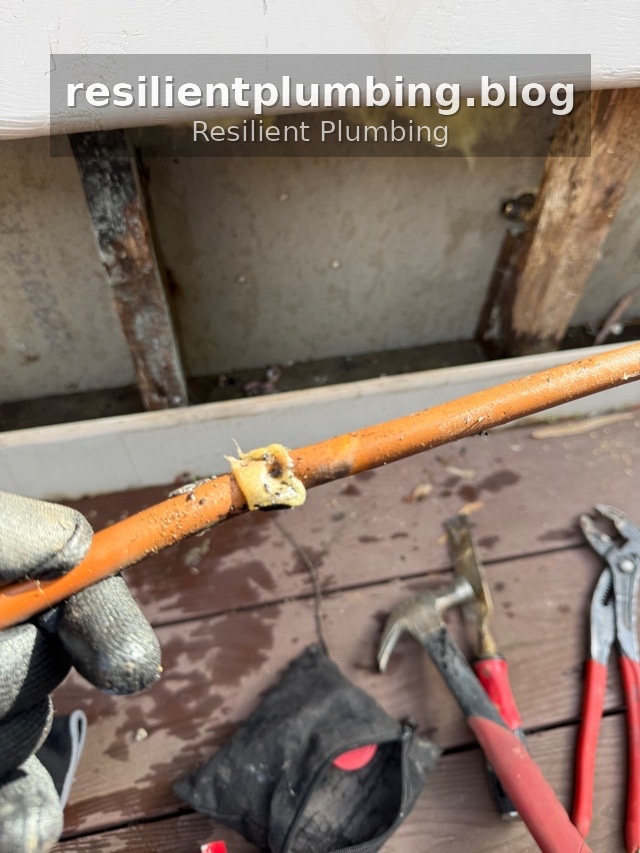
Close-up of the corroded joint showing the point of failure. This kind of leak doesn’t announce itself — it just keeps going until someone opens the wall.
Signs You Might Have a Leak in the Wall
None of these are definitive on their own, but if you’re seeing one or more of them, it’s worth getting someone to take a look:
🔍 Visual Signs
- Paint bubbling or peeling on an interior wall
- Damp or soft patches in plaster or gyprock
- Watermarks or discolouration on walls or ceilings
- Visible mould or mildew, especially low on a wall
- Skirting boards that have warped or started to lift
📊 Water Usage Signs
- Water bill higher than usual with no obvious explanation
- Water metre still ticking when everything in the house is off
- Drop in water pressure at taps that used to run fine
- Hot water running out faster than normal
💡 The Water Metre Test
If you suspect a hidden leak, try this: turn off every tap and water-using appliance in the house (dishwasher, washing machine, hot water system if possible), then go out to your water metre at the front footpath and watch the dial. If it’s still moving, water is going somewhere it shouldn’t be. It won’t tell you exactly where the leak is, but it does confirm something is happening — which is reason enough to call a plumber.
What Happens If It’s Left Too Long
The water damage itself is usually fixable. What makes wall cavity leaks genuinely painful is what the moisture does to everything around it — and how long a building trades job can take to sort out after the plumbing is repaired.
In the job shown in these photos, the leak had been going long enough that the timber frame had absorbed a significant amount of moisture. That meant the plumbing repair was just the first step — the homeowner then had to organise a builder to assess and replace affected framing, plus re-line the wall. It’s not a fun outcome, and it’s the kind of thing that’s much more manageable when it’s caught earlier.
Mould is the other concern. Once moisture gets into wall cavities, mould can establish fairly quickly in Melbourne’s climate — particularly in cooler months when condensation adds to the problem. Some mould species are more of a nuisance, others are genuinely a health concern, especially for anyone with respiratory issues.
⚠️ Worth knowing: If you’re buying or selling a home in Melbourne, a plumbing health assessment can pick up issues like these before they become a negotiating problem — or a nasty surprise after settlement. We do these regularly across the eastern and south eastern suburbs.
What We Do When We Find a Wall Leak
Once we’ve identified the location — using a combination of moisture metres, pressure testing, and in some cases thermal imaging — we’ll assess what’s needed to get access. Sometimes it’s a small section of gyprock. Sometimes it’s more involved.
We try to keep the opening as minimal as possible, repair or replace the affected pipework, and document everything so your building trades team (if needed) knows exactly what they’re working with. We’ll also give you an honest rundown of what condition the surrounding pipework is in — if one joint has failed in an older home, it’s worth knowing whether other sections are showing similar signs of wear.
When to Call
If something feels off — your water bill is creeping up, a wall smells faintly damp, or you can hear water running when you know everything is off — it’s worth getting it checked. These things don’t tend to sort themselves out, and the earlier a leak is found, the less damage there is to deal with.
We cover Melbourne’s eastern and south eastern suburbs. Give us a call or send a message through WhatsApp and we’ll take a look.
Think You Might Have a Wall Leak?
We’re available 24/7 including public holidays across Melbourne’s eastern and south eastern suburbs. Don’t wait until the damage gets worse — get in touch and we’ll sort it out.
📞 Call 0432 704 268 Get in Touch