
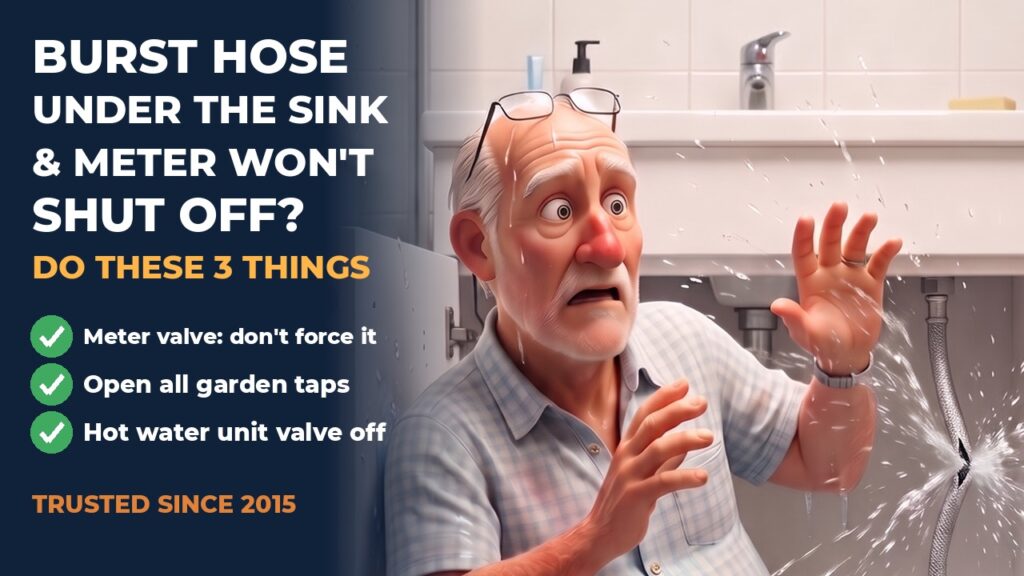
💧 Every cabinet where a tap is connected should have a mini isolation valve. When a flexi hose bursts, you can turn off that one fixture in seconds, right there under the sink, without running out to the water meter. Add a quick check of your flexi hoses every six months and you stop most floods before they start. And if there’s no valve and the meter won’t shut off? Turn the meter off as far as it’ll go, open all your garden taps to take the pressure off the house, and turn off the valve next to your hot water unit.
Col’s burst hose, and what Mick told him to do
The call: a burst hose, no tap in the cupboard, and a meter that won’t close
This one came from a real job. The flexi hose under a bathroom vanity burst and water sprayed everywhere. There was no isolation valve inside the cabinet, so there was nothing to turn off right there. The owner ran out to the water meter, but the old meter valve wouldn’t close all the way, and water kept running.
That’s the situation a mini isolation valve is made for. With one under the sink, this would have been a wet cupboard and a towel. Without one, every minute of running water spreads further into the floor, the walls and the rooms next door.
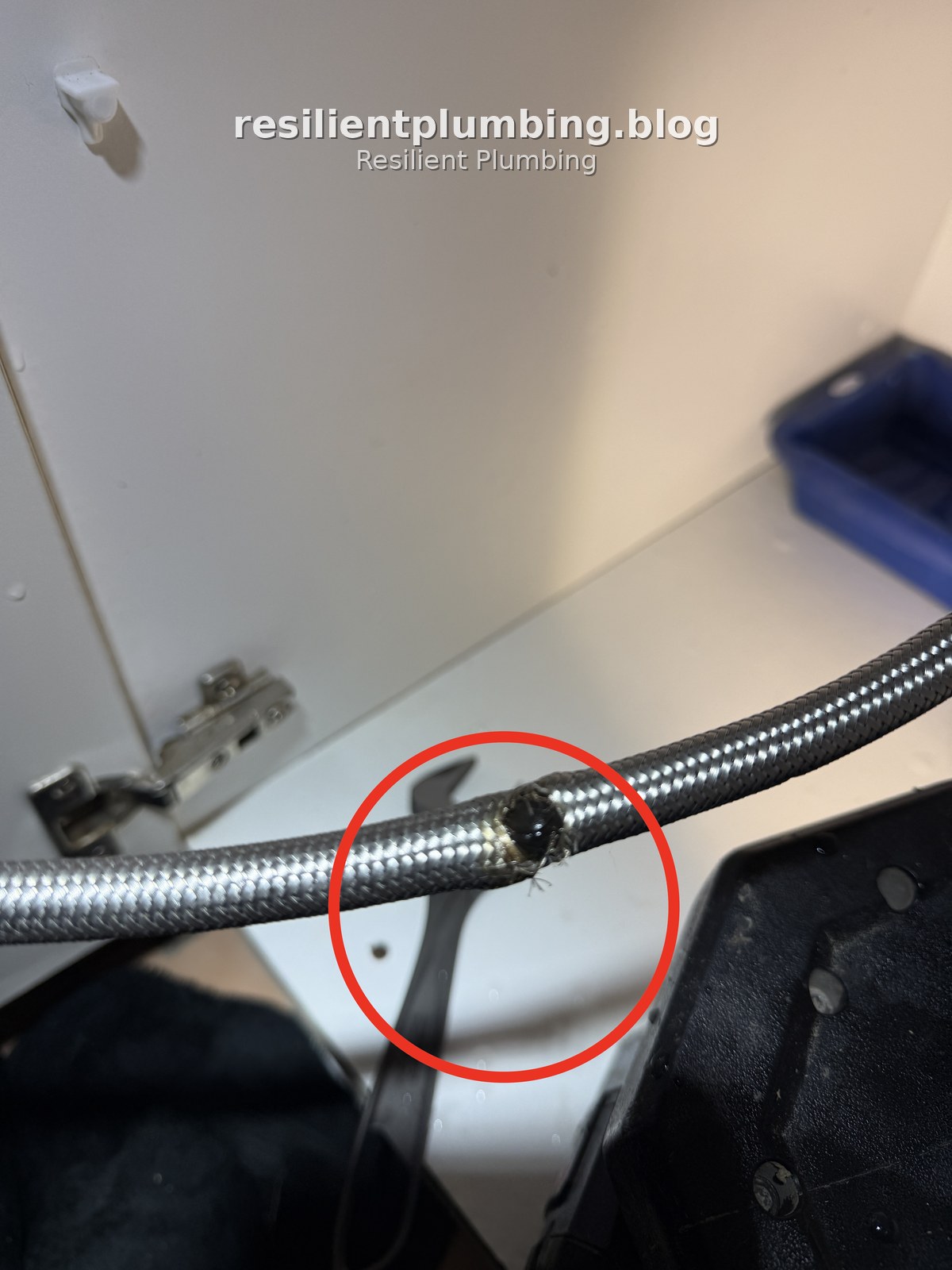
The burst flexi hose (circled)
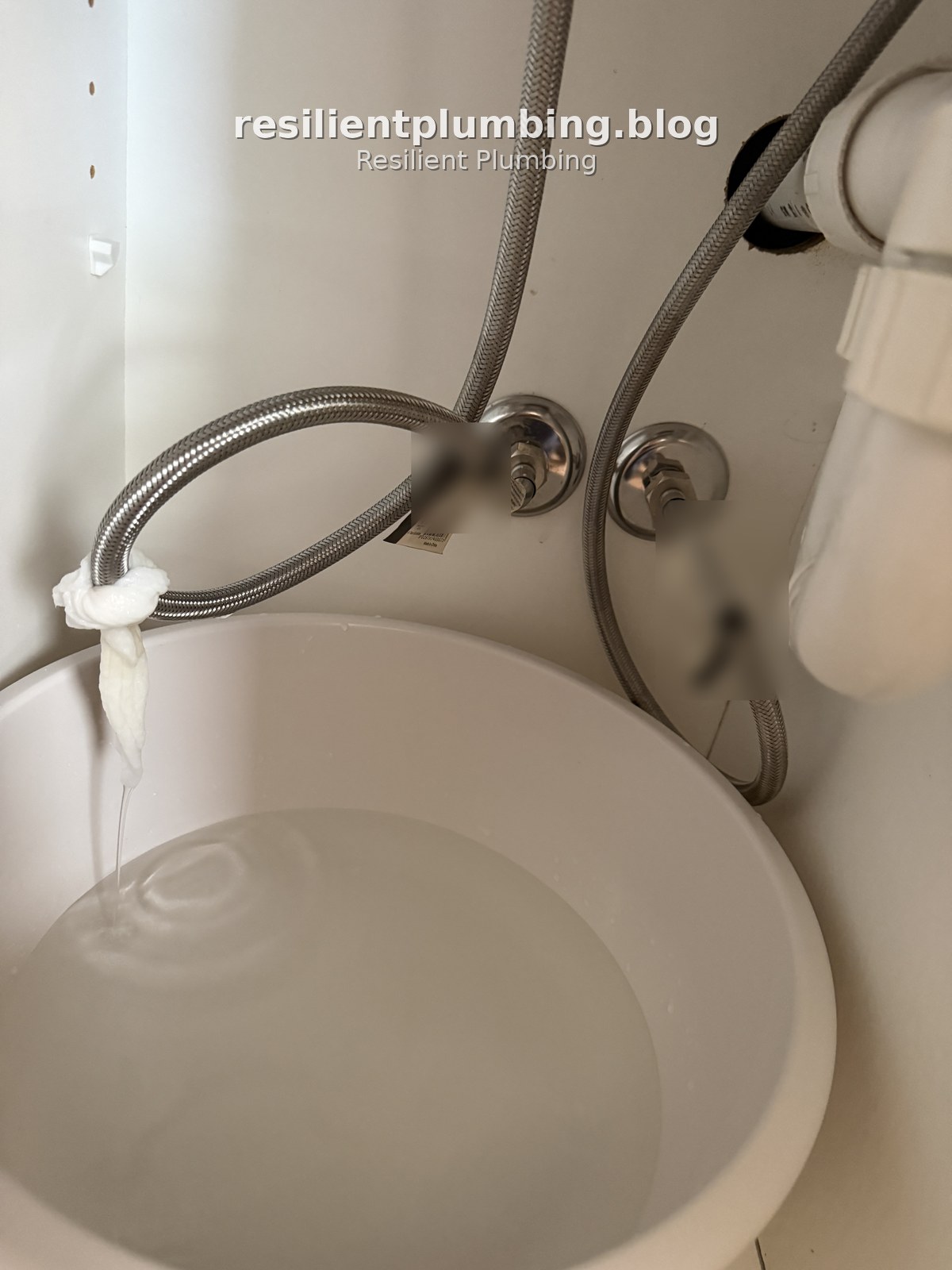
A towel and a bucket while the pressure comes down
Why flexi hoses matter: what the insurance data shows
A flexi hose (also called a braided hose or flexible plumbing hose) is a rubber hose wrapped in stainless steel braiding. It connects the water pipe in the wall to your tap. They’re cheap, quick to fit and found under almost every kitchen sink, vanity and laundry trough. If you’ve had plumbing work done in the last 20 years, you very likely have them.
In April 2025, Suncorp Insurance published a study on flexi hoses. Their findings:
- Out of more than 22,000 home water damage claims Suncorp handled in 2024, about one in ten was caused by a burst flexi hose.
- After inspecting customers’ flexi hoses for six months, they found about 30% needed replacing, an average of two hoses per home.
- A burst flexi hose left undiscovered for 24 hours can release enough water to fill a household swimming pool.
- Damage and repair costs climb during holiday periods (November to April), when people are often away. In open-plan homes, the water spreads further.
Most hoses fail because the outer braiding rusts and corrodes, or because the hose has been twisted, kinked or stretched. Some last 20 years. Others fail much sooner. Either way, that’s why a hose can look fine from a distance and still be close to bursting.
Why every cabinet needs a mini isolation valve
A mini isolation valve is a small valve fitted between the water pipe in the wall and the flexi hose. A quarter turn with a flat screwdriver (or a small handle, depending on the type) shuts off water to that one tap.
- Seconds, not minutes. You turn the water off where the leak is. No running outside to find the meter in the dark or the rain.
- The meter isn’t always reliable. Old meter valves can be stiff or not close all the way. The meter valve belongs to the water company, so don’t force it. It can snap.
- The rest of the house keeps running. Shut off one vanity and you still have the kitchen, the toilet and the shower.
- Easy repairs later. Replacing a hose or a tap becomes a simple job, without turning off the whole house.
We recommend them under every kitchen sink, bathroom vanity and laundry trough, one for the hot line and one for the cold.
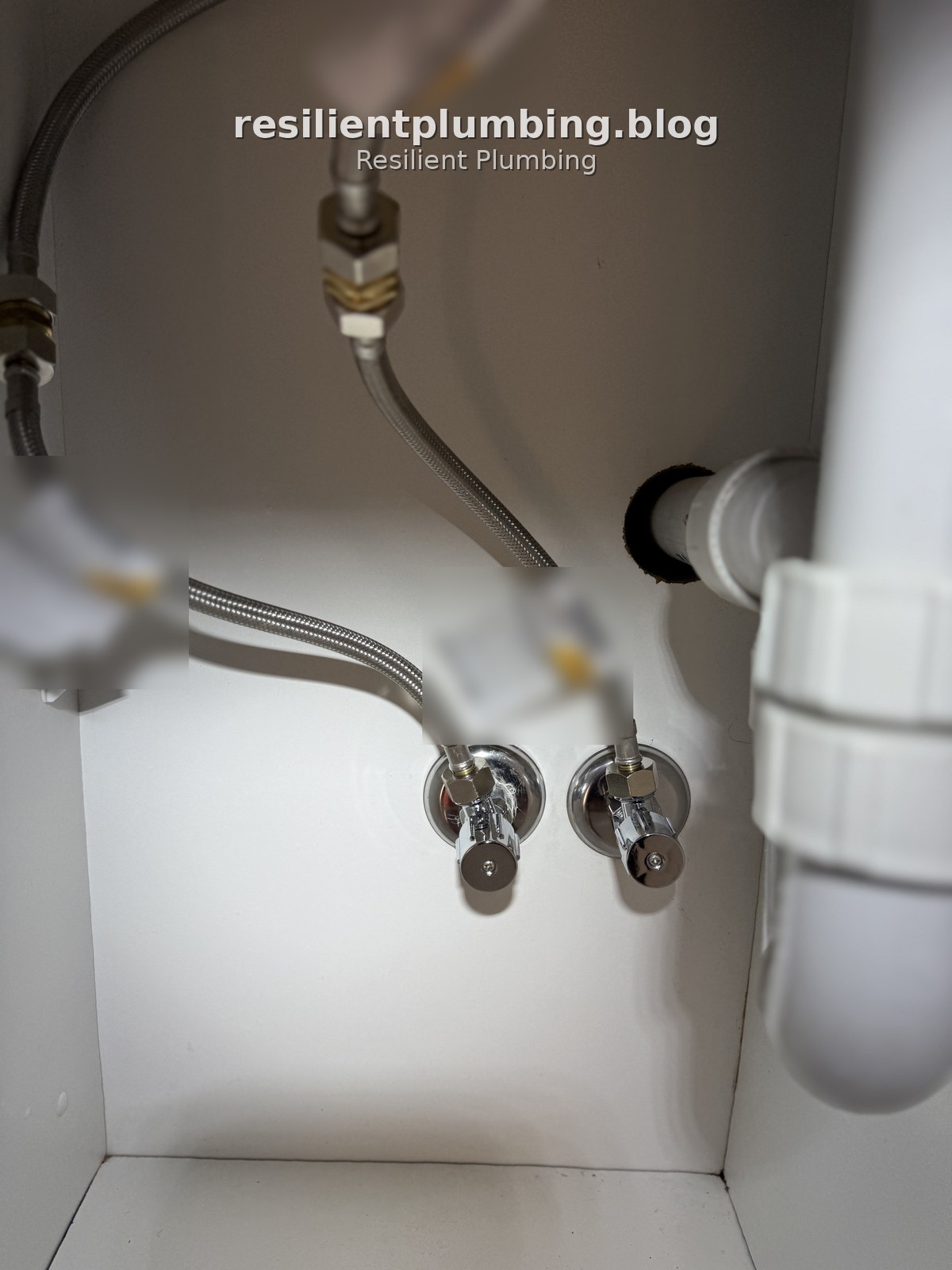
The fix: mini isolation valves + new flexi hoses
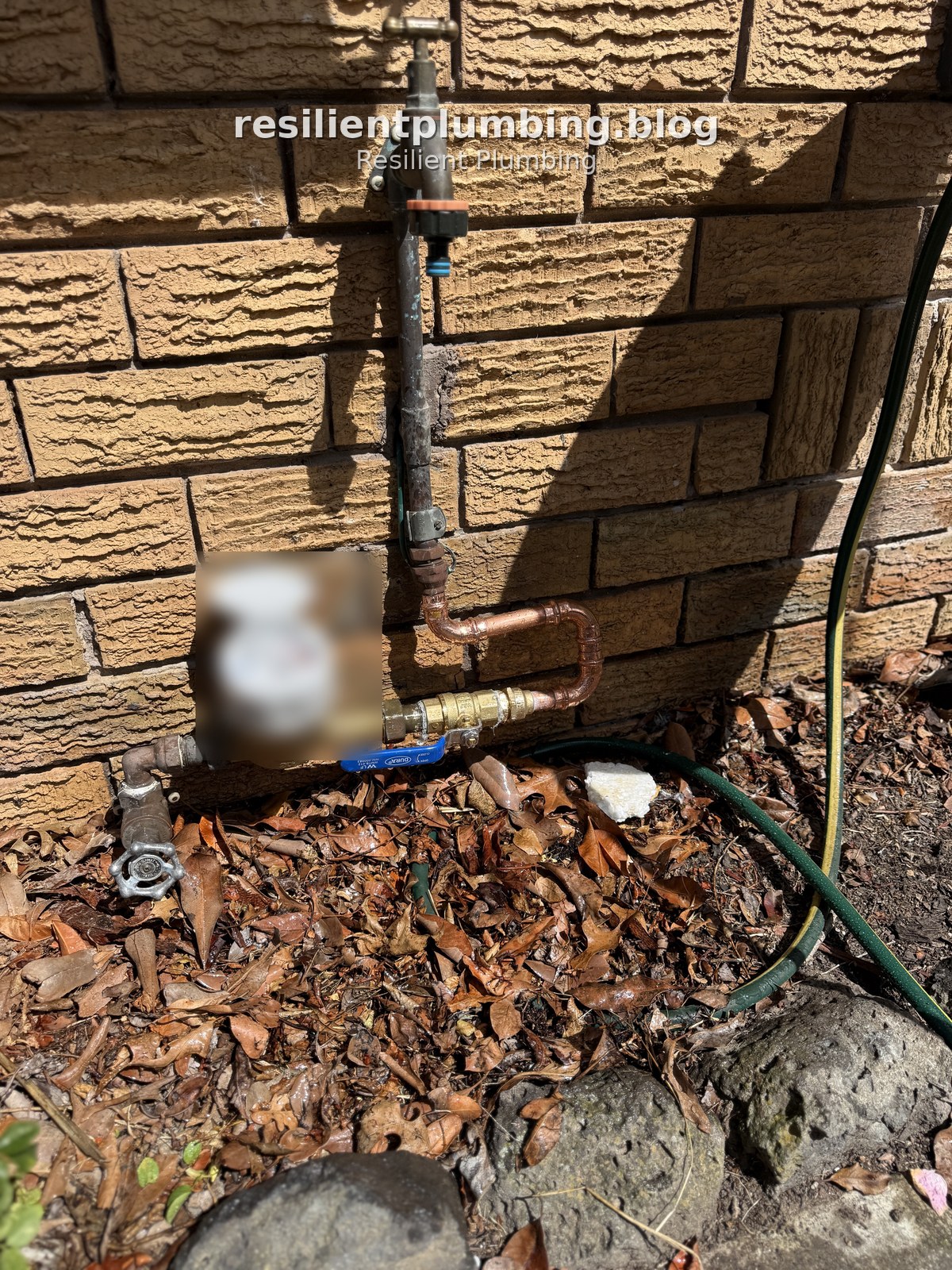
A sub-meter: your own shut-off valve next to it
Live in a unit or townhouse? Check for a sub-meter
Many units and townhouses have a sub-meter for each home. If your meter is a sub-meter, we can add your own shut-off valve next to it, so you’re not relying on an old meter valve in an emergency.
No isolation valve and the meter won’t shut off? Do these 3 things
If a hose bursts and there’s no valve under the sink, this is what Mick told Col in the video:
- Turn the meter valve off as far as it’ll go. Don’t force it. A stiff or broken meter valve is the water company’s to fix.
- Turn on all your garden taps outside. If the meter won’t close fully, opening the outside taps lets water escape outside instead of building pressure inside the house. It’s not a perfect fix, but it can take a lot of the pressure off the burst hose and cut the water reaching your floors.
- Turn off the valve next to your hot water unit. That’s the cold water inlet valve. It stops water feeding the hot side of the house.
Then a towel and a bucket do the rest. Less water, less damage. Move rugs and anything electrical away from the water, and take a photo of the hose for your plumber and your insurer.
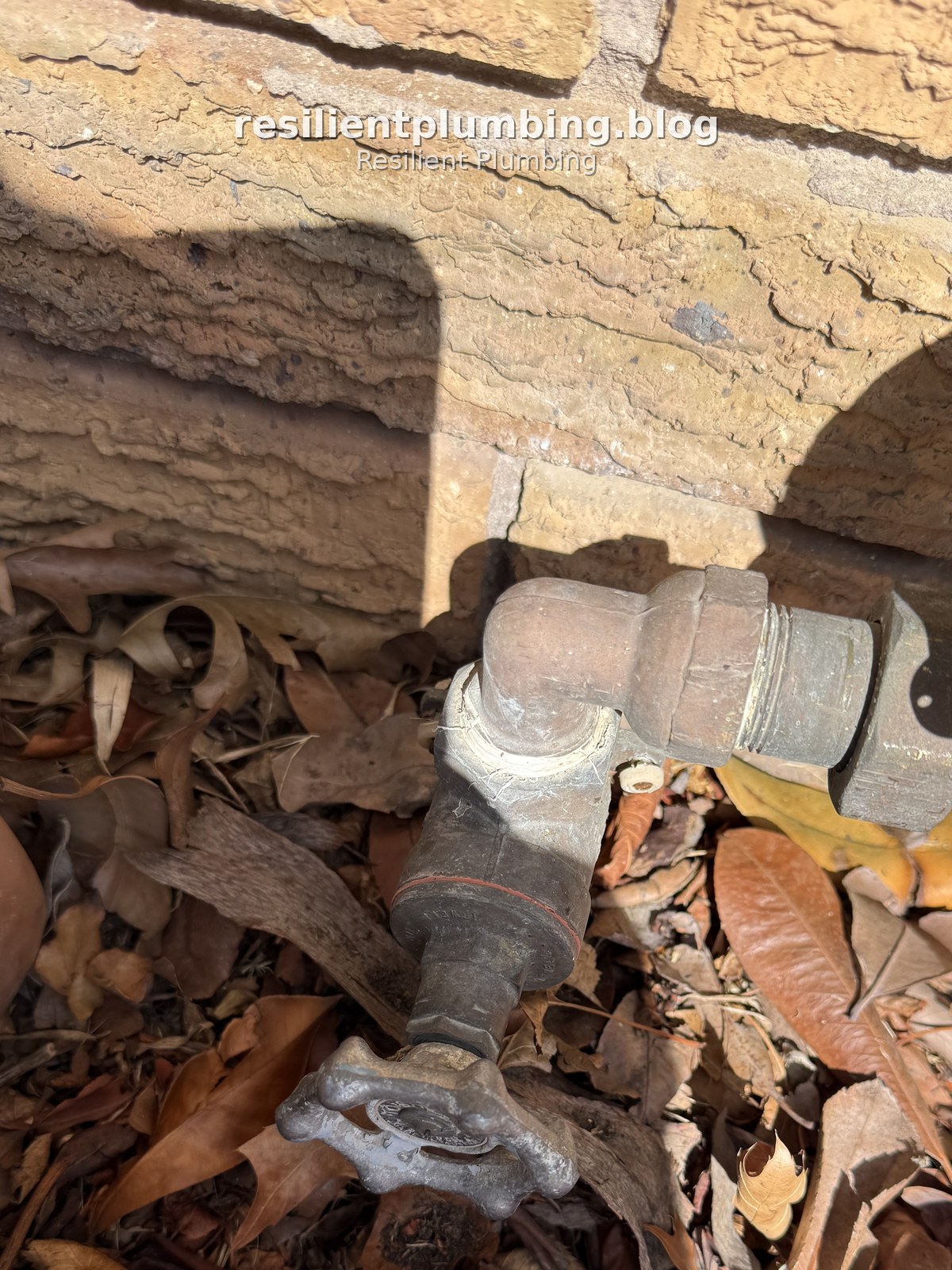
Step 1: the meter valve, as far as it’ll go
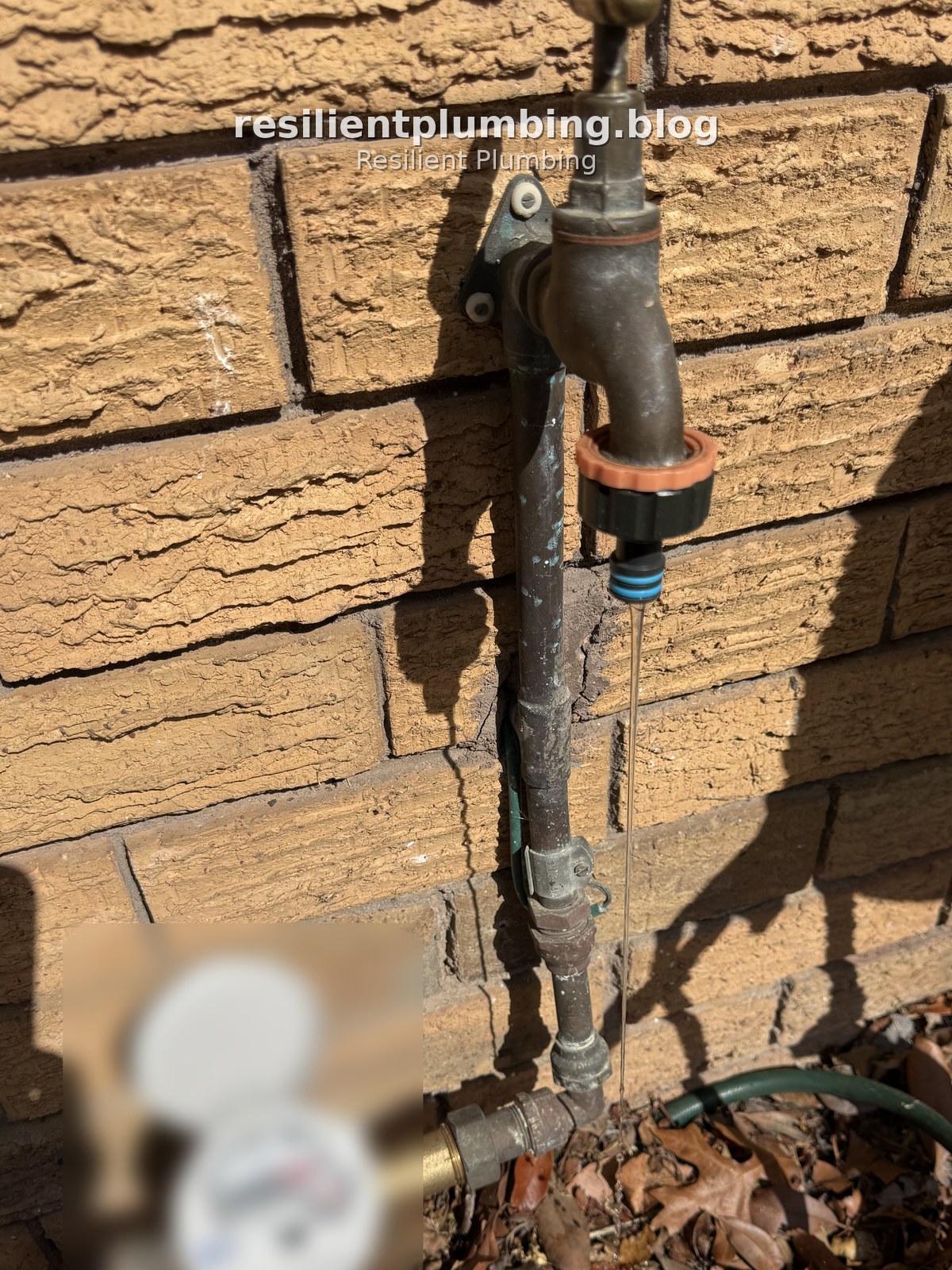
Step 2: open the garden taps to take the pressure off
💡 The 10-minute flexi hose check (every six months)
Suncorp’s Steven Hussey put it simply: “All it takes is 10 minutes every six months”. Open each cabinet under the kitchen sink, vanities and laundry trough and look for:
- Fraying or broken wires in the braiding
- Rust or corrosion on the braiding or the fittings
- Kinks, twists or stretching, especially where the hose bends sharply
- Green or white staining on the fittings
- Drips, damp patches or swelling on the cabinet floor
- Whether you have mini isolation valves at all, and whether they still turn
Spot any of these? Send us a photo. And before you go away on holidays, turn the water off at the mains. For more emergency tips, see what to do before the plumber arrives and why small leaks shouldn’t wait.
🔧 How we can help
- Emergency plumbing, weekends and after hours
- Mini isolation valves under sinks, vanities and laundry troughs
- Flexi hose checks and replacement
- Shut-off valves next to sub-meters
- Burst pipe repair
📍 Where we work
Melbourne’s eastern suburbs since 2015, including Ringwood, Croydon, Mitcham, Blackburn, Box Hill, Camberwell, Vermont, Doncaster, Donvale, Nunawading and Balwyn.
Common questions
What is a mini isolation valve?
A small valve fitted between the water pipe in the wall and the flexi hose under a sink, vanity or laundry trough. Turning it off stops water to that one tap, so you can deal with a burst hose in seconds without turning off the whole house.
Do I need an isolation valve under every sink?
We recommend one on the hot and cold lines in every cabinet where a tap is connected: kitchen sink, bathroom vanities and laundry trough. It’s the fastest way to stop water if a flexi hose bursts, especially if your water meter is hard to reach or doesn’t close properly.
How often should I check my flexi hoses?
Every six months. Suncorp Insurance recommends a 10-minute check under each sink for fraying, rust, corrosion, kinking or twisting. If you see any of these, have the hose replaced.
What should I do if a flexi hose bursts and there’s no isolation valve?
Turn the water meter valve off as far as it will go without forcing it. If water is still running, turn on all your outside garden taps to take the pressure off the house, and turn off the valve next to your hot water unit. Then contain the water with towels and a bucket and call a plumber.
My water meter won’t turn off. Should I force it?
No. The meter valve belongs to the water company and an old one can snap if forced. Turn it as far as it goes, use the steps above, and report the faulty meter valve to your water company.
How long do flexi hoses last?
It varies. According to Suncorp, some flexi hoses work for 20 years while others corrode and fail much sooner, depending on quality and how they were installed. That’s why regular checks matter more than the age of the hose.
Video transcript
Col: “Mick! A hose burst under the bathroom sink, and there’s no tap in the cupboard! I turned the meter tap, but it’s still running!” Mick: “Don’t panic, Col. Do these three things first. One: turn the meter valve off as far as it’ll go. Don’t force it. Two: turn on all your garden taps outside. That takes the pressure off the house. Three: turn off the valve next to your hot water unit. A towel and a bucket do the rest. Less water, less damage. Then we fit mini isolation valves and new flexi hoses under the vanity. And if your meter is a sub-meter, we can add your own shut-off valve next to it. Burst flexi hose? Send us a photo first.”
Source: Suncorp Group, “Ticking time bomb under the sink” media release, 29 April 2025 (based on more than 22,000 Suncorp Insurance home water damage claims in 2024 and six months of flexi hose inspections).
Worried about your flexi hoses? Send us a photo first.
A photo of the hoses and valves under your sink tells us what’s there and what needs replacing.
📞 Call 0432 704 268 Send Us a Photo