

🚽 Clearing a blocked drain is the easy part. What matters is what happens before and after. We check the water company’s sewer plan first, find the real cause with a drain camera, clear it with a high-pressure jet, then show you what we found and send the photos, the location and our notes with your invoice. If the blockage is in the water company’s sewer, we report it for you and pass on the reference number.
Mick walks through the real call-out
The call: a completely blocked sewer drain on a Saturday
On a Saturday we were called to a home where the sewer drain outside, next to the toilet, was completely blocked. A blocked sewer is unpleasant and can’t wait, but rushing straight in with the jetter isn’t the whole job. Here’s the process we follow every time.
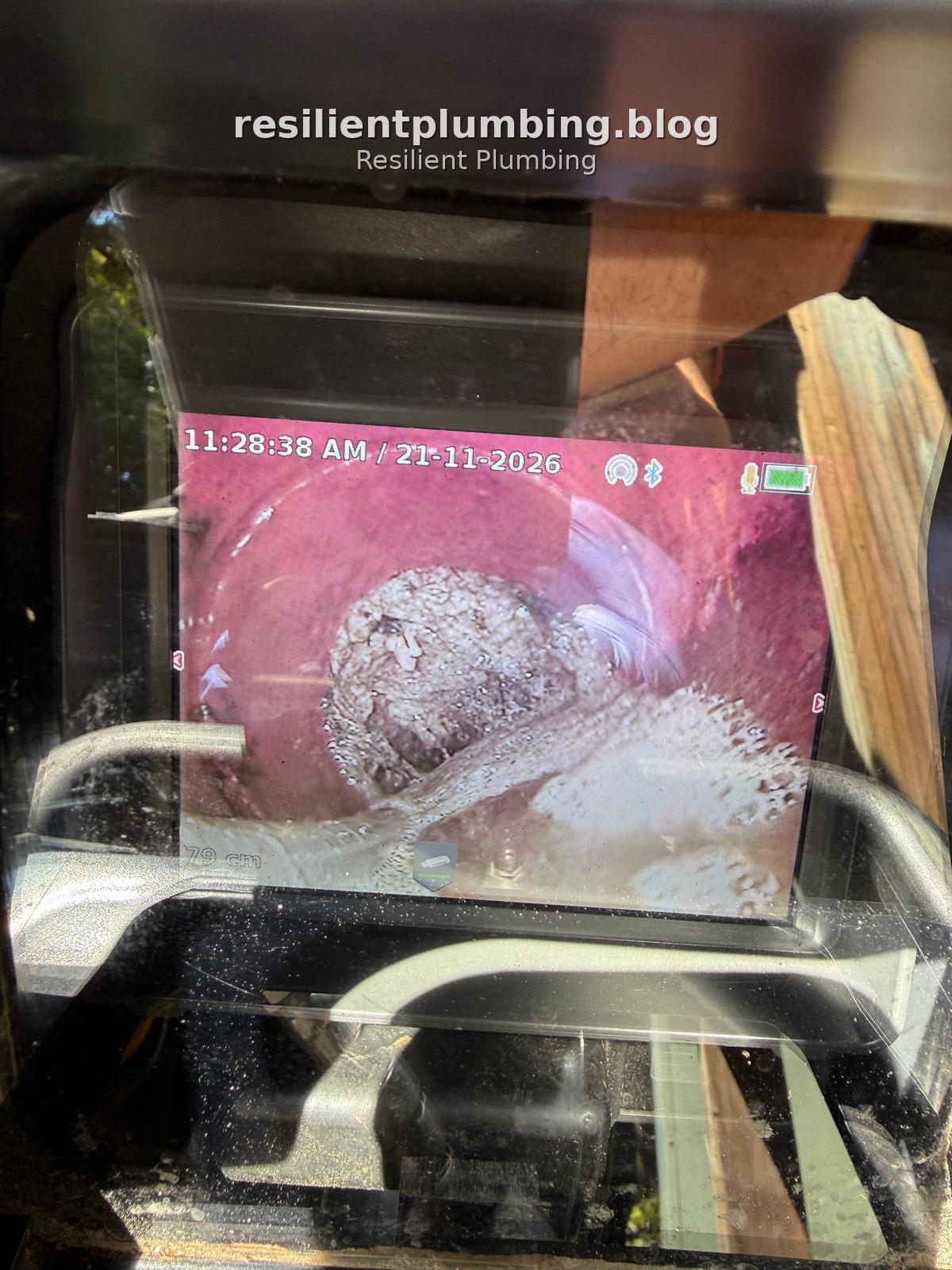
On the camera monitor: the blockage
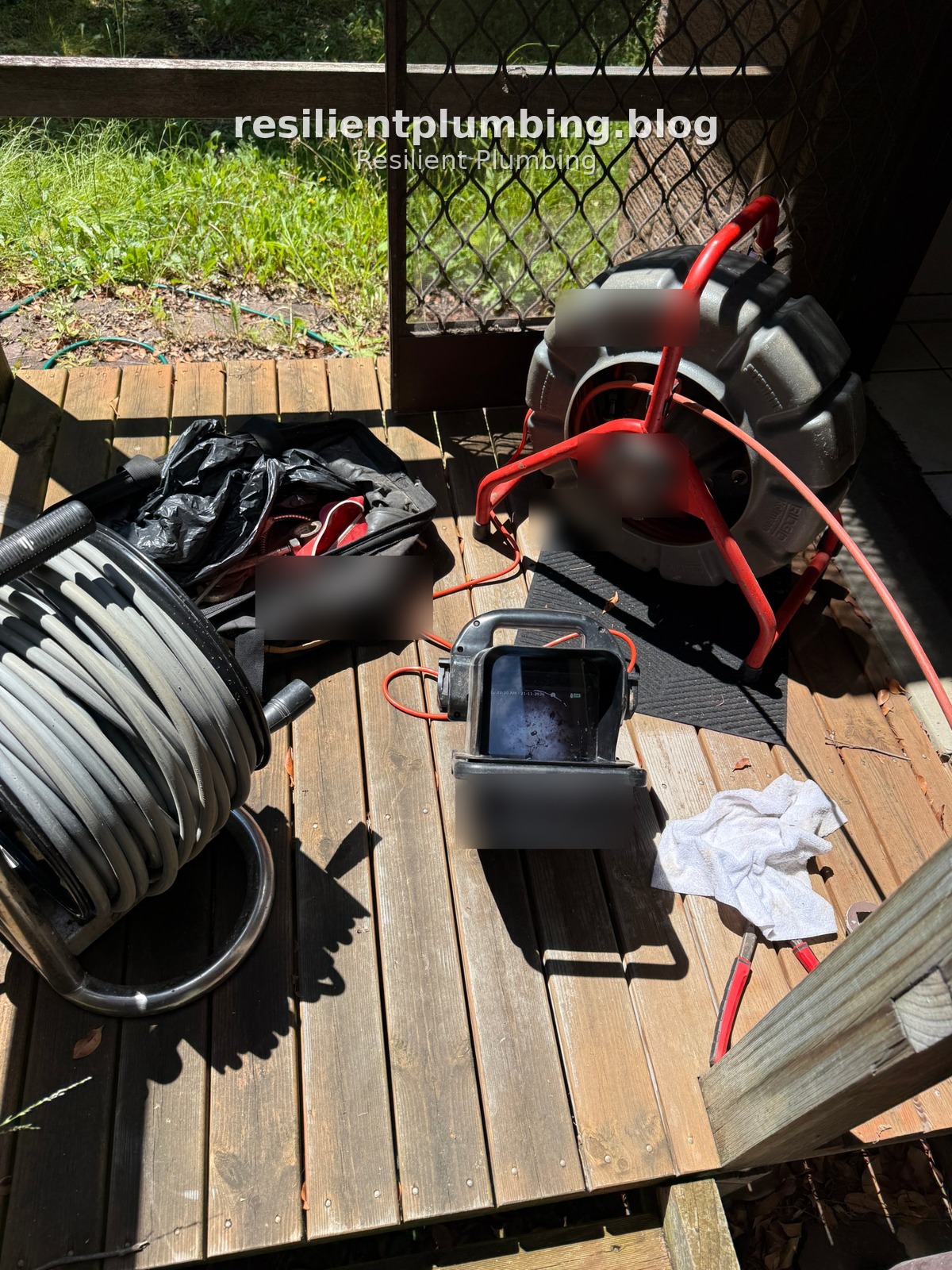
Drain camera and jetter set up on site
Step 1: Check the sewer plan before we start
Before touching the drain, we check the water company’s sewer plan for the property. In Melbourne’s east that’s usually Yarra Valley Water or South East Water. The plan shows where your private sewer pipes run and where they connect to the water company’s sewer main.
Knowing this makes a big difference. It tells us where the inspection opening (I.O.) should be, which way the pipes run, and where the line between your pipes and theirs sits.
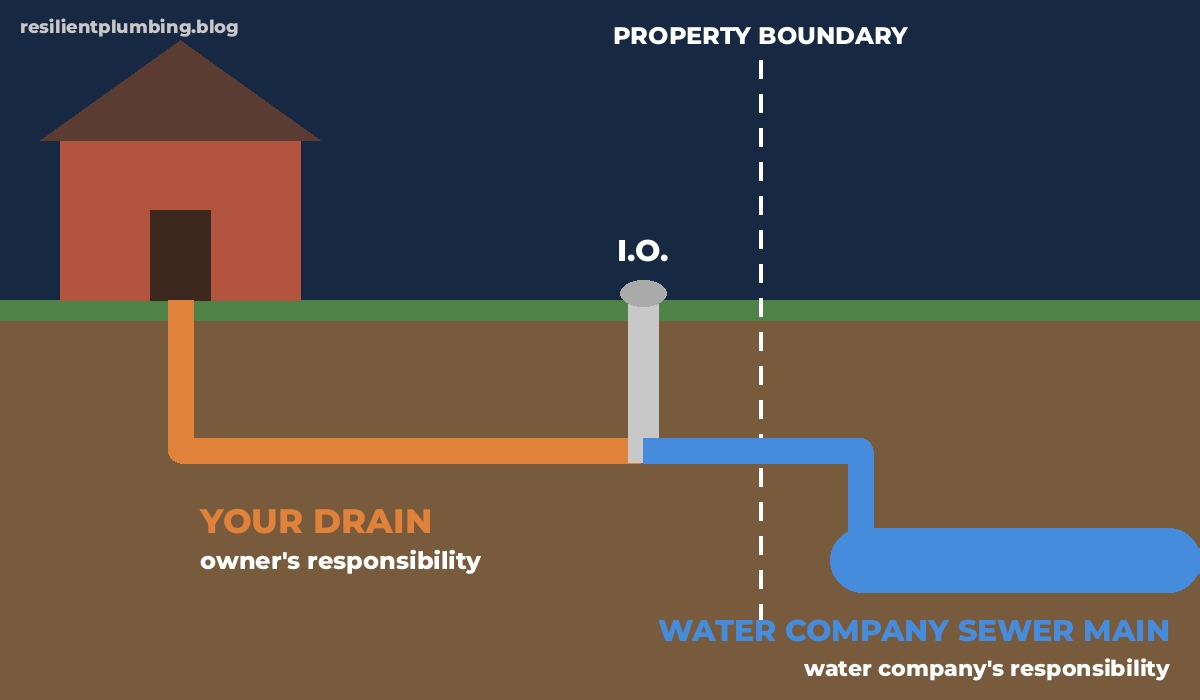
Your drain vs the water company’s sewer main
Who’s responsible for which pipe?
For Yarra Valley Water, the owner is responsible for the private pipes on the property up to the inspection opening (I.O.), or up to 1 metre from the property boundary, whichever is less. The sewer main beyond that is the water company’s. Other water companies have similar rules, so it’s worth checking with yours.
Step 2: If it’s the water company’s sewer, we report it for you
Sometimes the blockage isn’t in your drain at all. It’s in the water company’s sewer main. When that happens, we report it to the water company straight away so their crew can come out and fix it, and we give you the reference number.
Keep that number. It’s how you follow up the repair, and it’s what you’ll need if you want to ask the water company about any costs. (Each water company has its own rules on reimbursement, so ask them directly.)
Step 3: Find the real cause with a drain camera
On this job, the problem was in the property drain. Our drain camera showed an old clay pipe with cracked, damaged joints, and tree roots growing in at 4 to 6 points along the line.
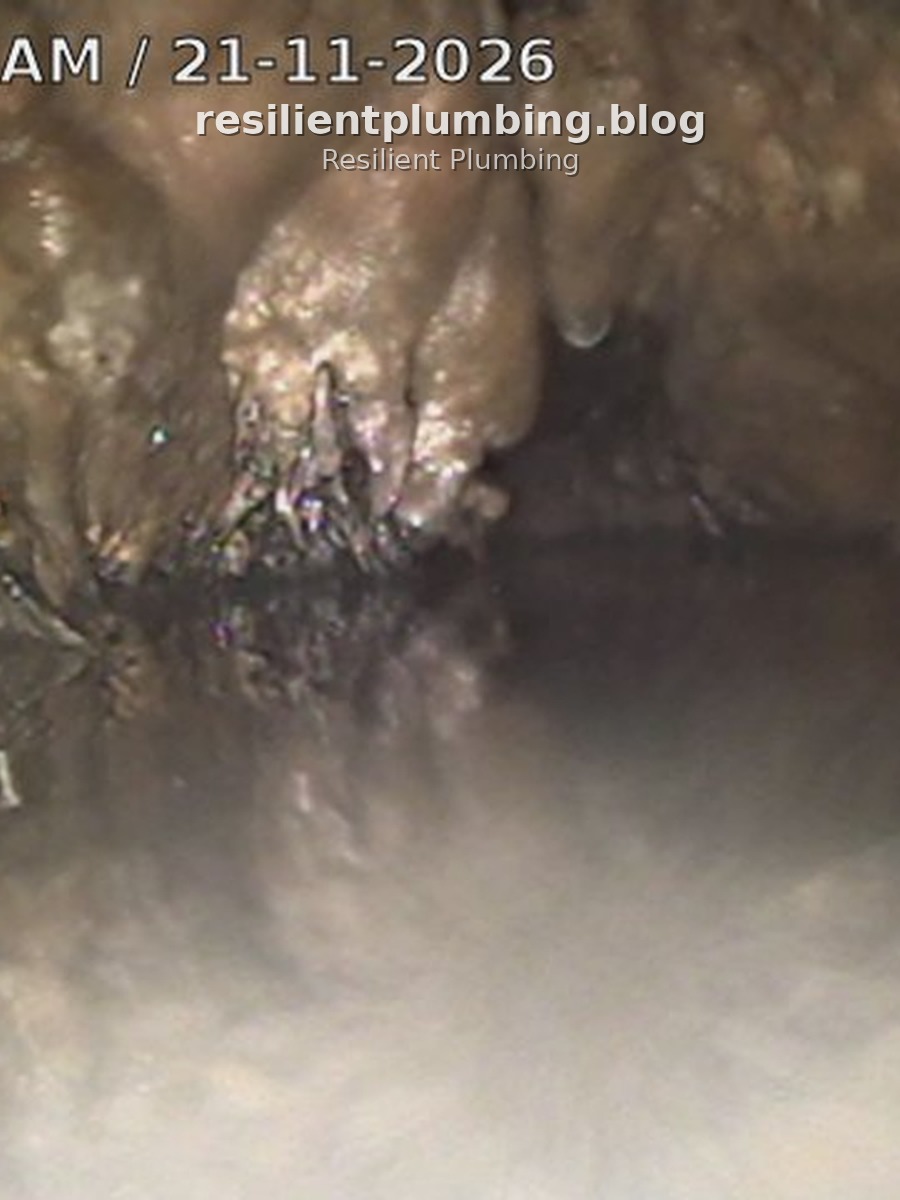
Damaged joint in the old clay pipe
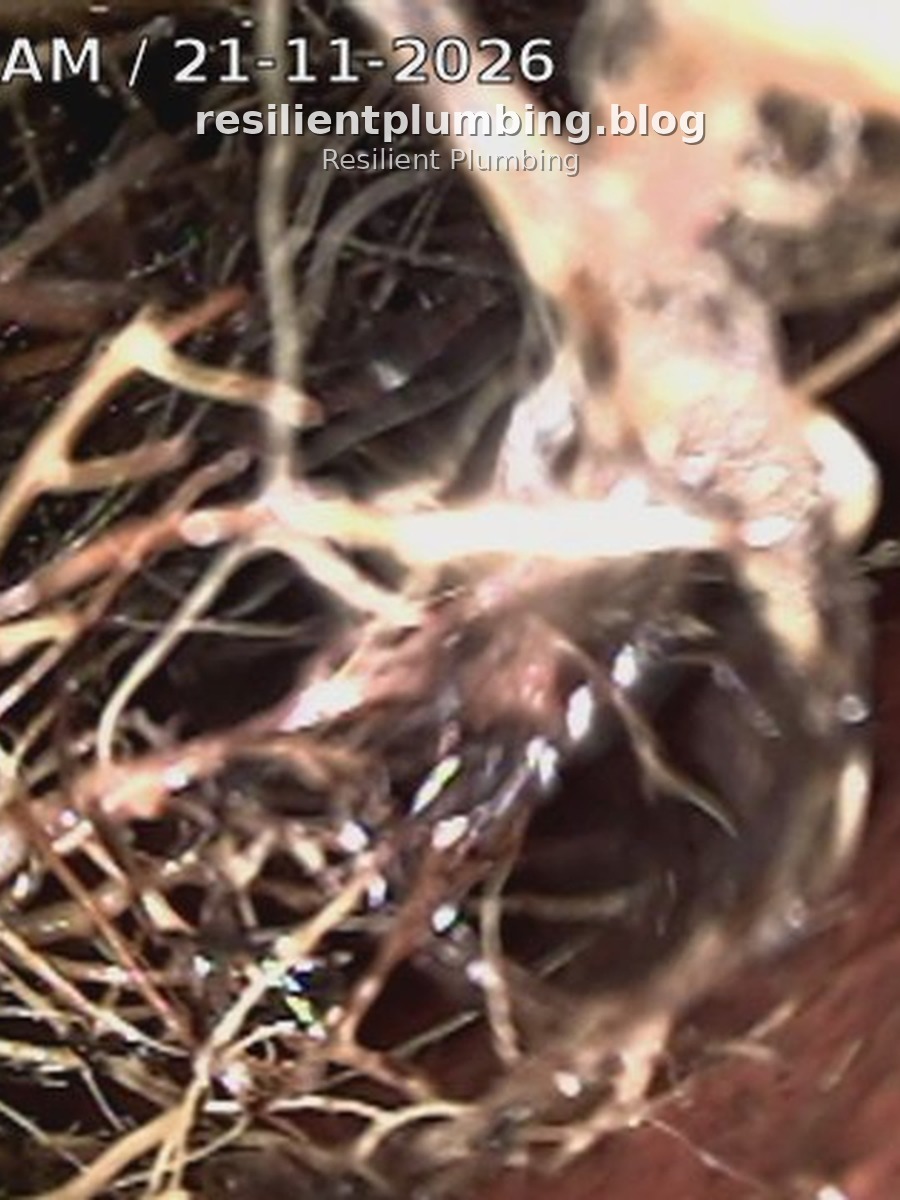
Tree roots growing into the pipe
Step 4: Clear it with a high-pressure jet
We cleared the blockage and the roots with a high-pressure water jet, then checked the toilet was flushing properly.
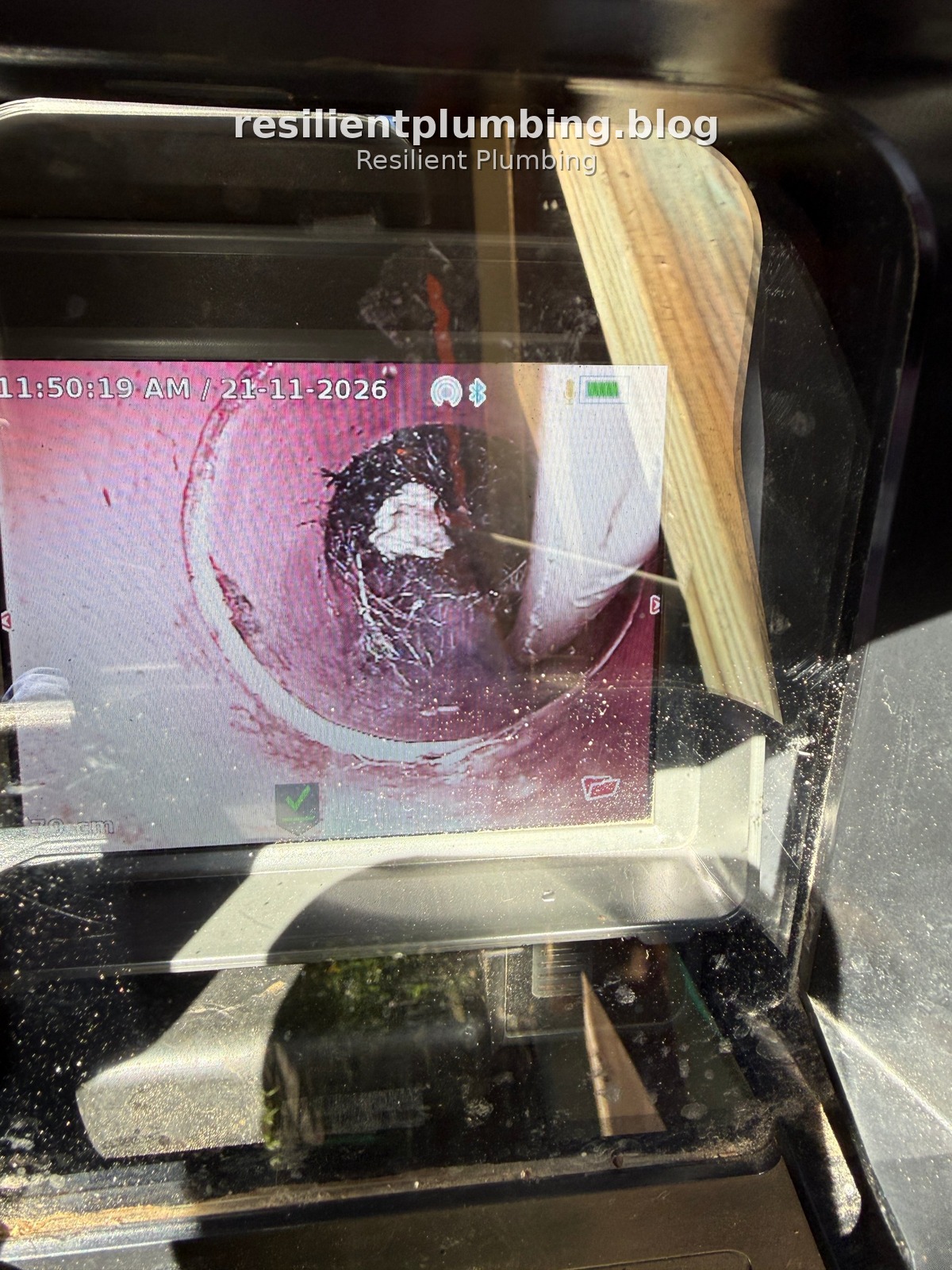
Roots in the line on the monitor
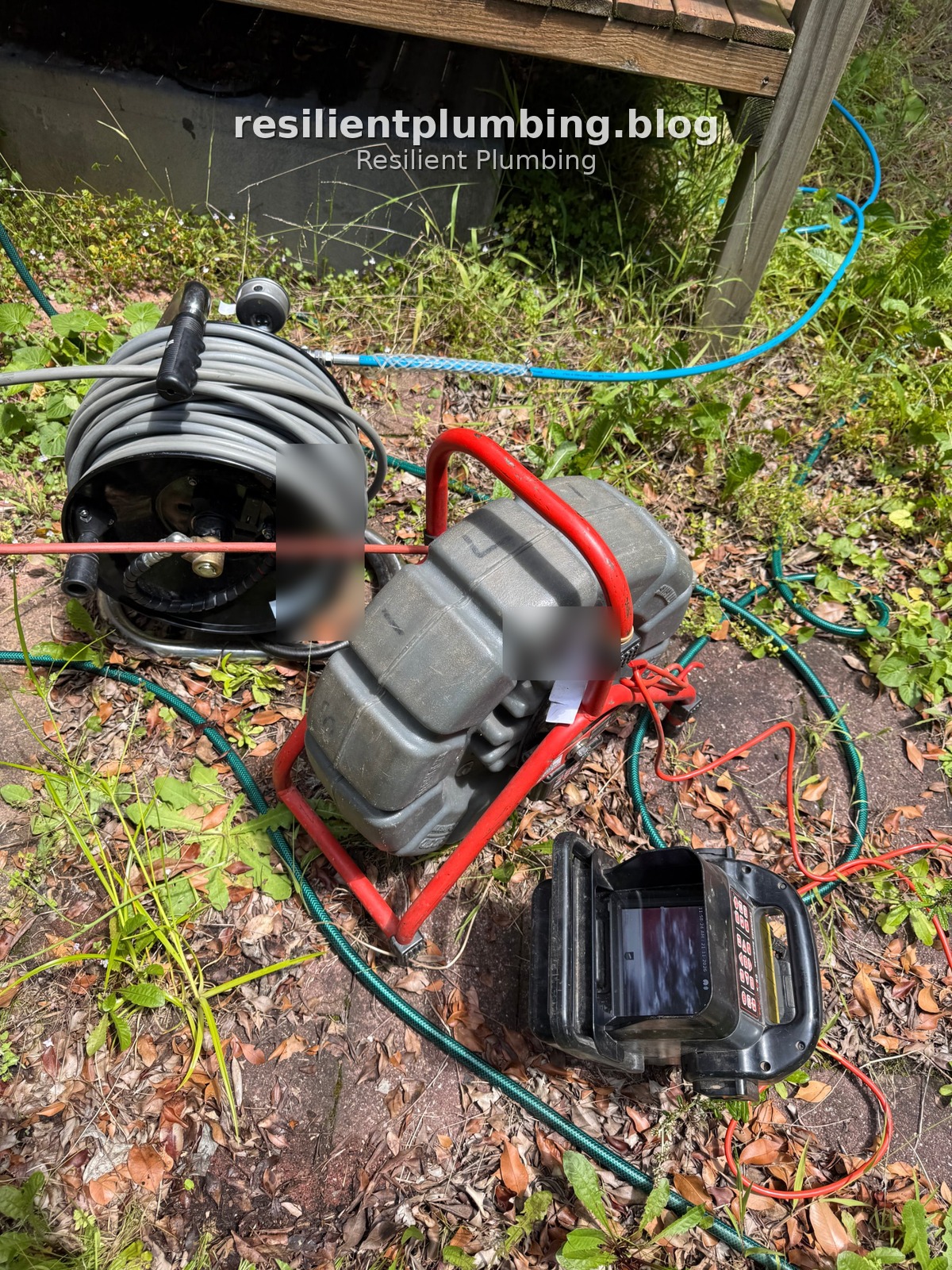
High-pressure jetter
Step 5: Show you, explain it, and put it in writing
This is the part a quick “unblock and go” job skips. We show you the problem on the spot, explain your options, and then send the details with your invoice:
- A step-by-step job description of what we did
- Findings and recommendations: where the problem is, what we found, and what we’d suggest next
- Time-stamped photos of the problem spots (16 on this job)
That record is useful later: for your next plumber, for an insurance or water company enquiry, for a landlord or property manager, or simply to remember what’s going on under your garden.
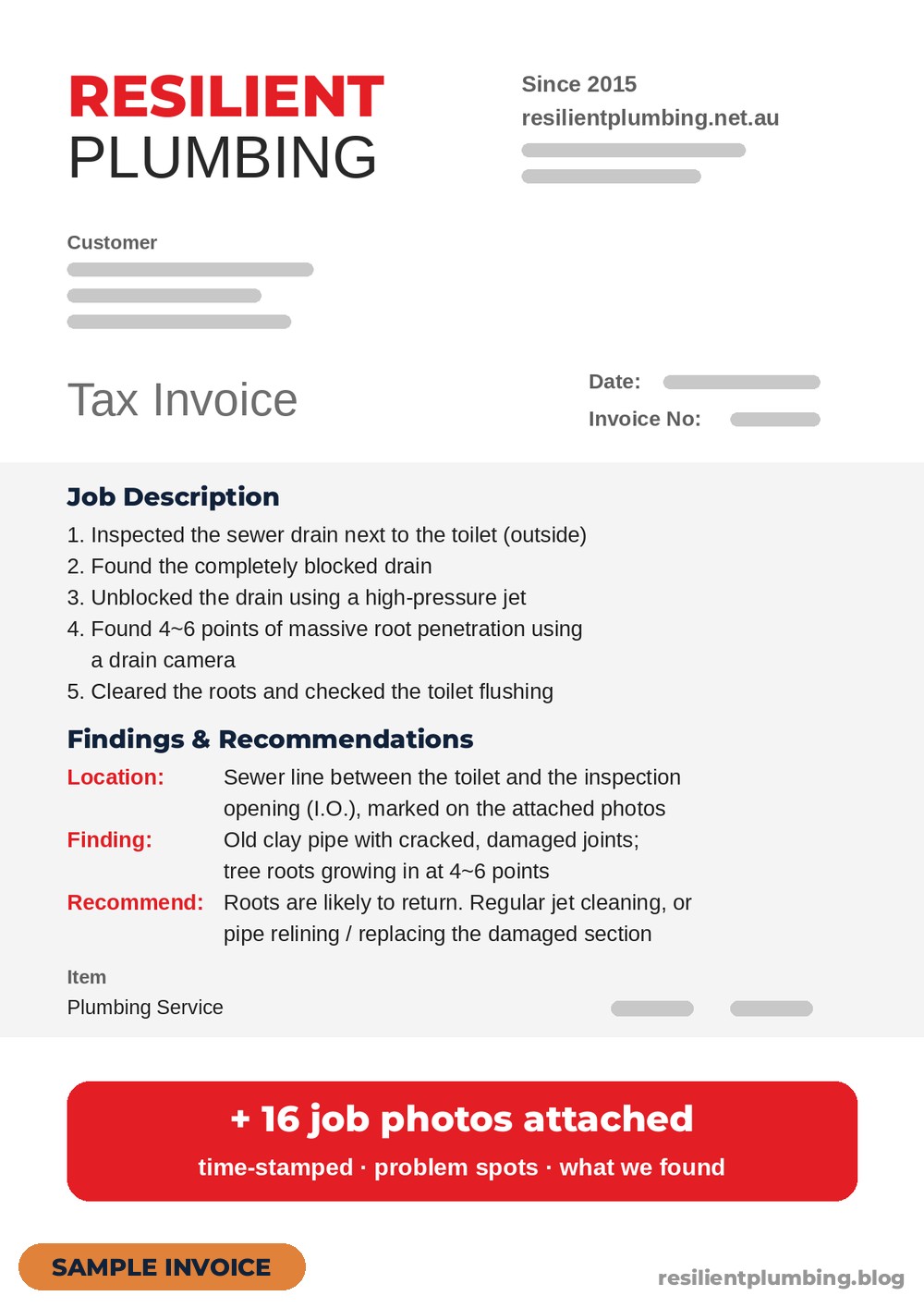
Sample invoice: job description and findings (details hidden)
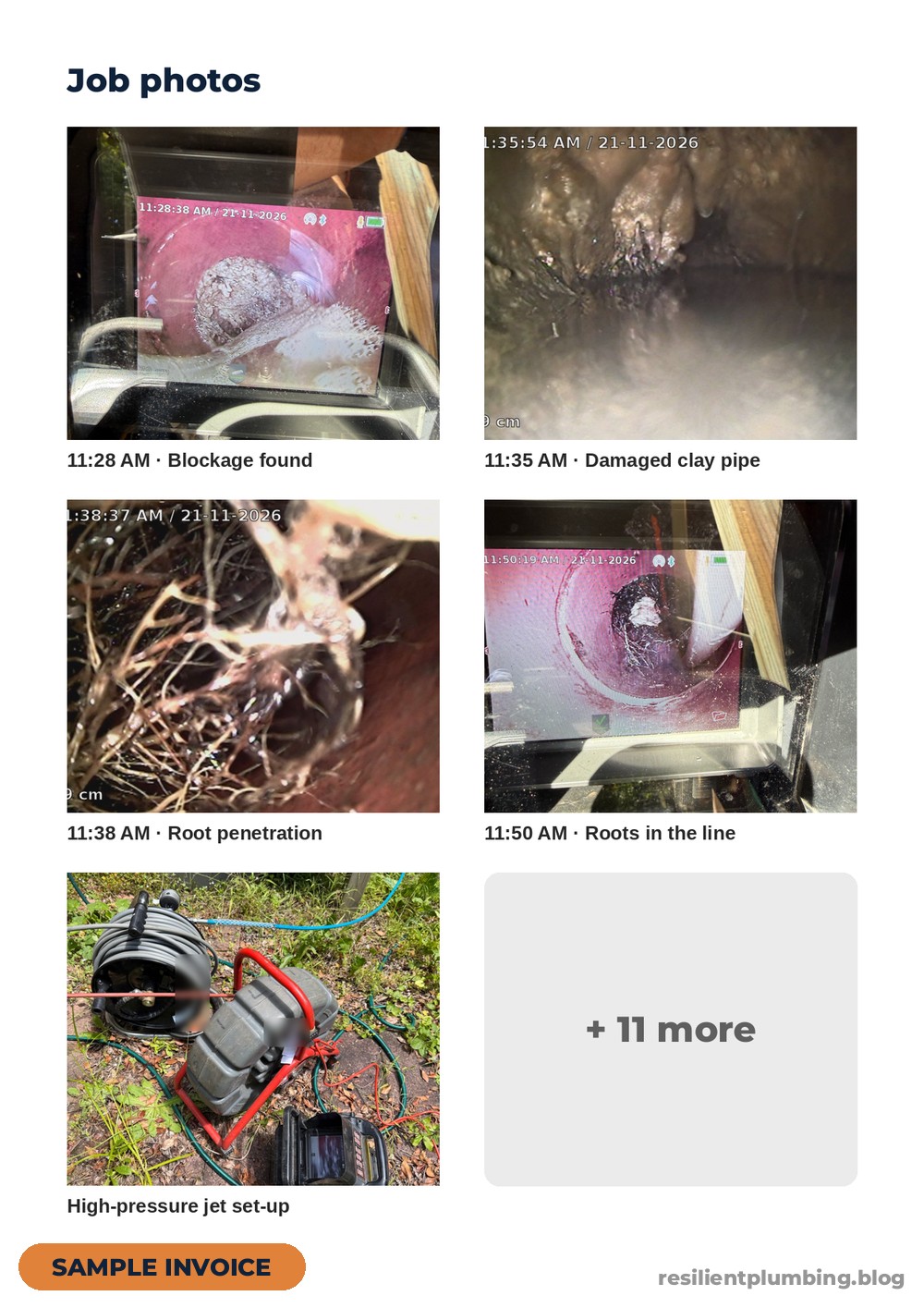
Sample invoice: the photo pages
Why do tree roots keep coming back?
Older homes often have clay sewer pipes. Over the years the joints crack and shift, and tree roots find their way in through the gaps, chasing water. A high-pressure jet clears them out, but while the cracks are still there, roots can grow back.
Common options, depending on the pipe and the budget, are:
- Regular jet cleaning to keep the line clear
- Pipe relining to seal the damaged section from the inside
- Replacing the damaged section of pipe
The camera photos and the location in your invoice make it much easier to plan the right option and compare quotes.
💡 If your sewer drain blocks
- Stop using water: hold off on flushing, showers and the washing machine.
- Check the overflow relief gully outside (the small grated drain near the house). If it’s overflowing, the sewer is blocked.
- Keep children and pets away from any overflow, and wash your hands after touching anything wet.
- Avoid pouring chemical drain cleaners into a blocked sewer. They rarely shift roots and can make the job harder and less safe.
- Take a photo or a short video and send it to a plumber. Our guide on what to do before the plumber arrives has more tips.
🔧 How we can help
- Emergency plumbing, weekends and after hours
- Drain clearing and camera inspection
- Reporting water company sewer faults for you
- Photos and notes with every invoice
📍 Where we work
Melbourne’s eastern suburbs since 2015, including Ringwood, Croydon, Mitcham, Blackburn, Box Hill, Camberwell, Vermont, Doncaster, Donvale, Nunawading and Balwyn.
Common questions
Who is responsible for a blocked sewer: me or the water company?
It depends where the blockage is. For Yarra Valley Water, the owner looks after the private pipes up to the inspection opening, or up to 1 metre from the property boundary, whichever is less. Beyond that, the sewer main is the water company’s responsibility.
What is a sewer plan, and why check it first?
A property sewerage plan shows where your private sewer pipes run and where they connect to the water company’s main. Checking it first helps us find the inspection opening, follow the right line and tell whether the problem is in your pipes or theirs.
What is the water company reference number for?
When the blockage is in the water company’s sewer, we report it and give you the reference number. You use it to follow up the repair with the water company and to ask about any costs.
Why does my drain keep blocking with tree roots?
Roots get in through cracked or shifted joints, which are common in old clay pipes. Jetting clears them, but they can grow back while the cracks remain. Regular jet cleaning, relining or replacing the damaged section are the usual options.
What do I get with your invoice?
A step-by-step description of the work, our findings and recommendations including where the problem is, and time-stamped photos of the problem spots, so you have a clear record for later.
Video transcript
“On Saturday, we got a blocked drain. Clearing it is the easy part. Here’s what we do before and after. First, we check the water company’s sewer plan to see where your drain meets their main. Sometimes the blockage isn’t in your drain at all. It’s in their sewer. Then we report it straight away and give you the reference number to follow it up. On this job, the problem was in the property drain. The camera found it. Tree roots growing in through cracks in an old clay pipe. We cleared the roots with a high-pressure jet. We show you on the spot, explain your options, and send photos, the location and our notes with your invoice. Blocked drain? Send us a photo first.”
Blocked drain? Send us a photo first.
A photo or short video of the drain or the overflow gully helps us know what we’re dealing with before we arrive.
📞 Call 0432 704 268 Send Us a Photo