
🔧 Tap running rusty or tea-coloured? That’s your hot water unit telling you something’s going on inside the tank — here’s what it means, and when it’s time to stop patching it up.
What Brown Water Is Actually Telling You
Most Melbourne homes still run a gas storage hot water system — a steel tank with a glass lining and a sacrificial anode rod inside, whose whole job is to corrode instead of the tank walls. Problem is, that lining and anode don’t last forever. Once they’ve worn through, the bare steel starts rusting from the inside out, and that rust doesn’t just sit there — it flakes off into the water sitting in the tank. First place you’ll see it is the hot tap.
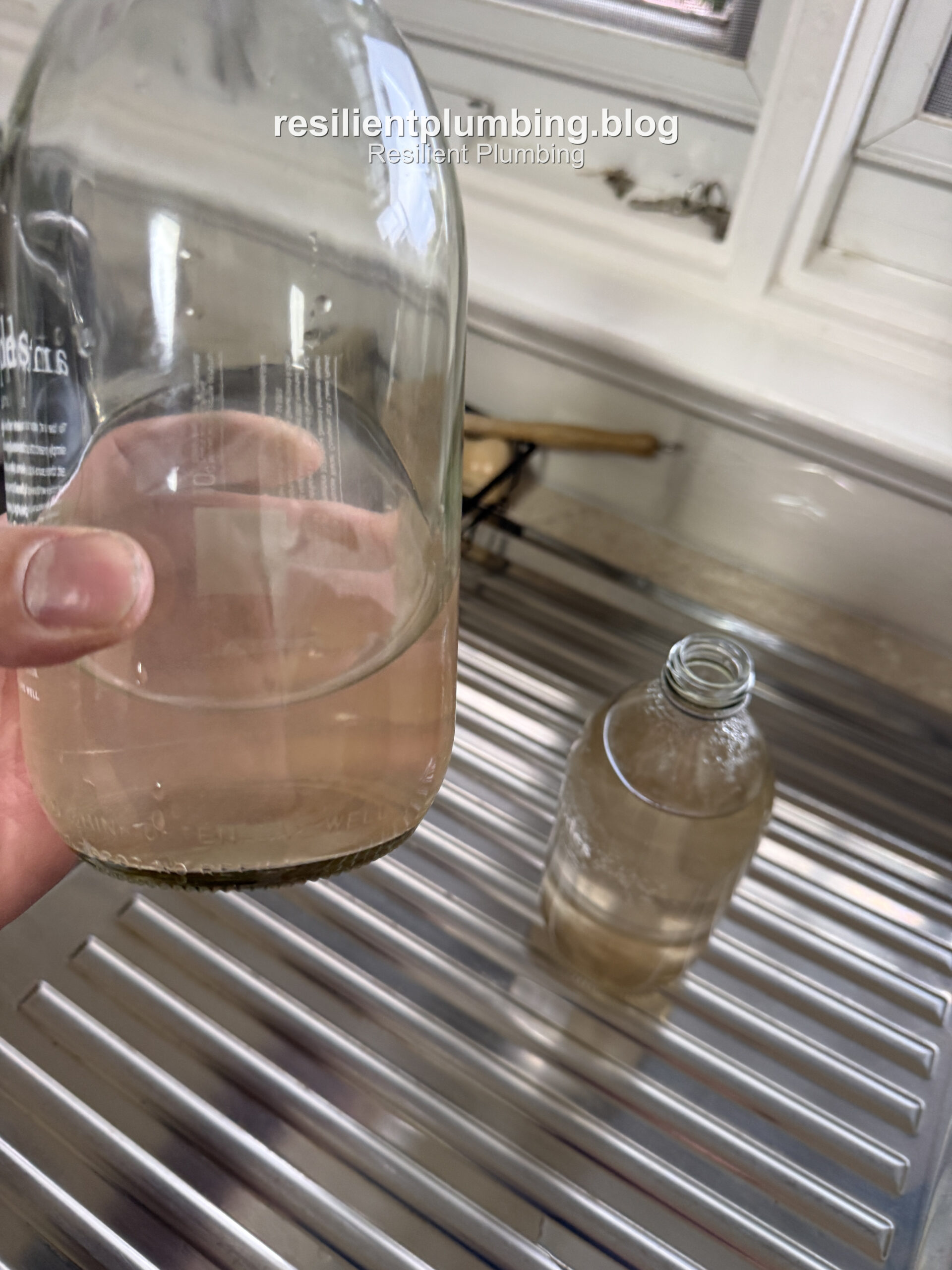
Water straight from the tap — the deeper the colour, the more corrosion sitting inside the tank.
A Recent Job in Vermont
We had a call out to a place in Vermont a little while back — the homeowner had noticed their hot water running a solid rusty brown, even after leaving the tap running for a few minutes trying to clear it.
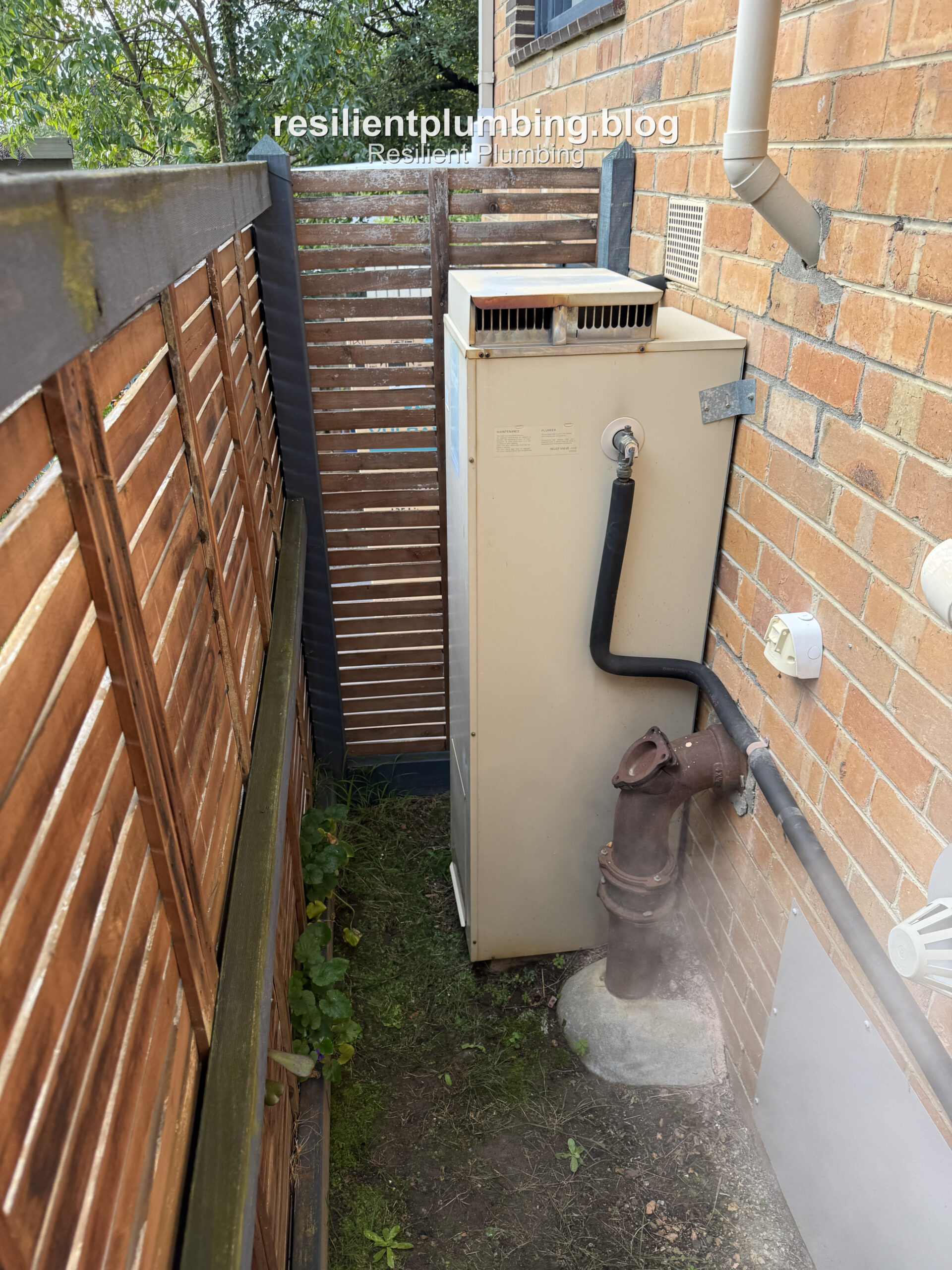
The old 135L gas storage unit, tucked down the side of the house.
We drained a sample straight from the tank’s own drain valve to see what we were dealing with, and the water that came out told the whole story.
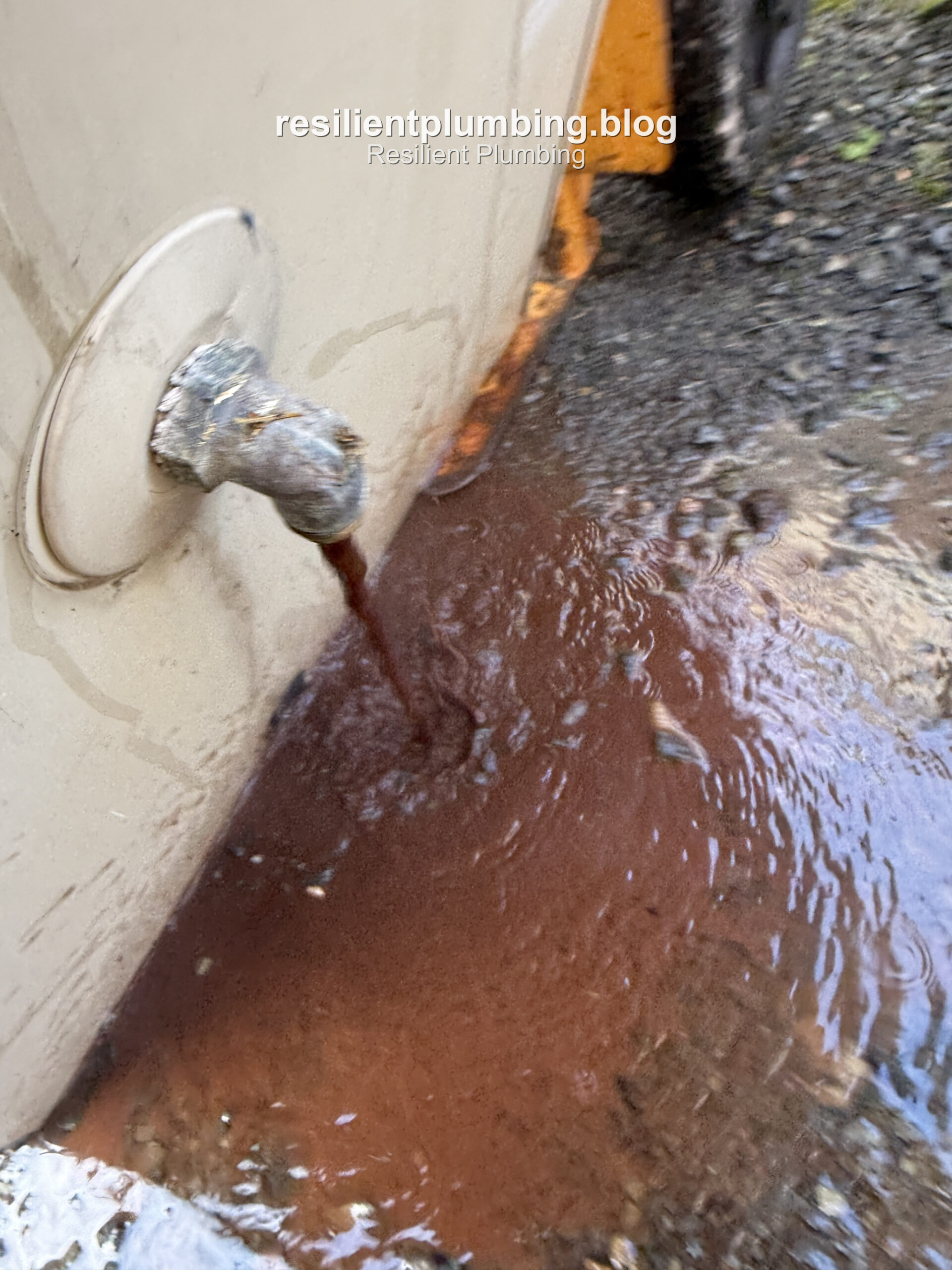
Deep rust-red water straight from the tank’s drain valve — no mistaking that for anything but a tank on its way out.
A look at the data plate confirmed it — this tank was manufactured back in November 1995. Call it thirty years old, against a typical service life of 10 to 12 years for a storage system. At that age, you’re not looking at something you can flush or patch; the corrosion’s had decades to do its work, and the tank itself is compromised.
So we replaced it — a new compliant 135-litre gas storage unit, updated pipework, and a tempering valve set correctly to current standards. Every gas connection got tested before we called it done, because a fast install isn’t worth much if it’s not a safe one.
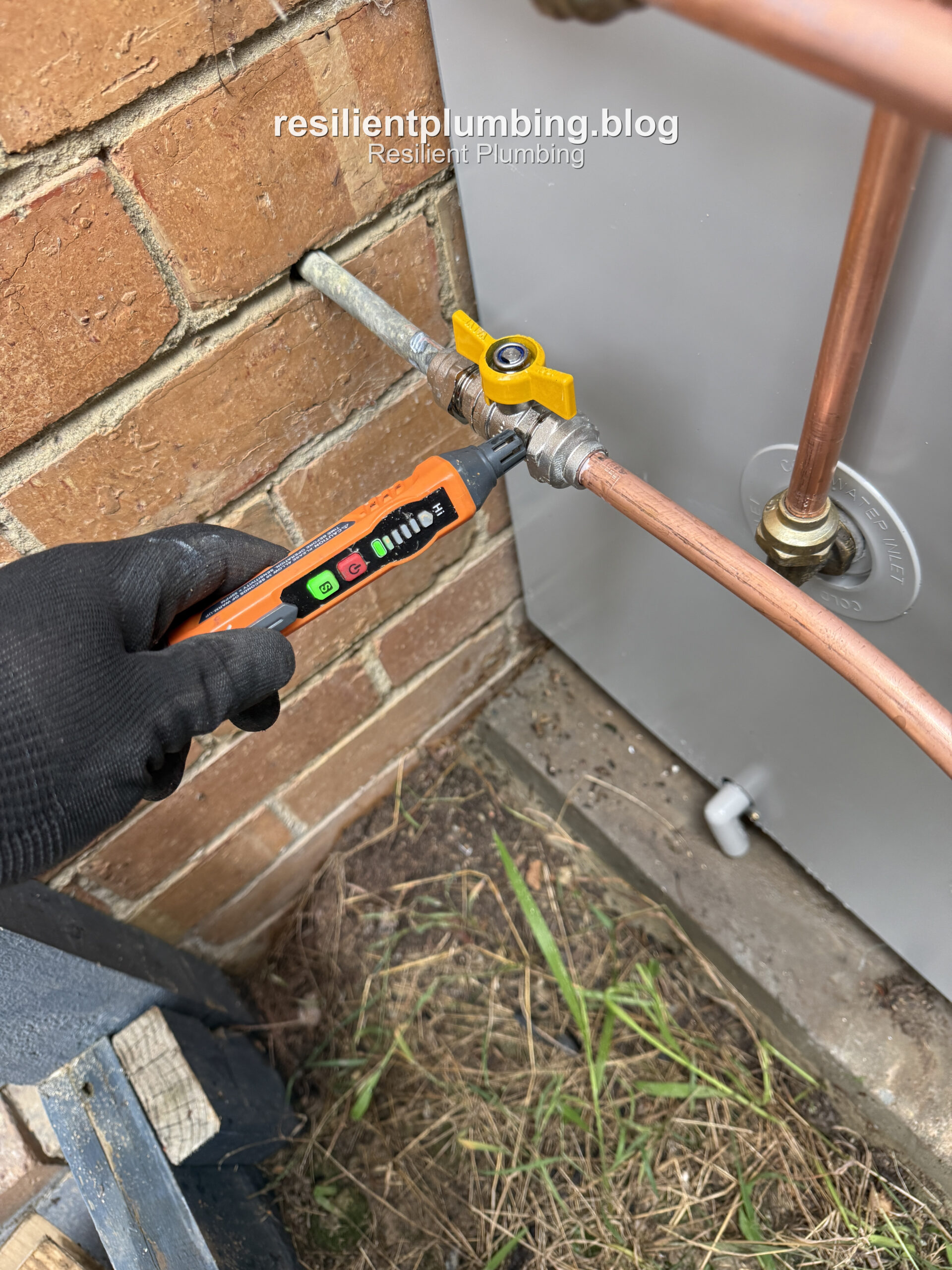
Testing every gas connection before we call the job done.
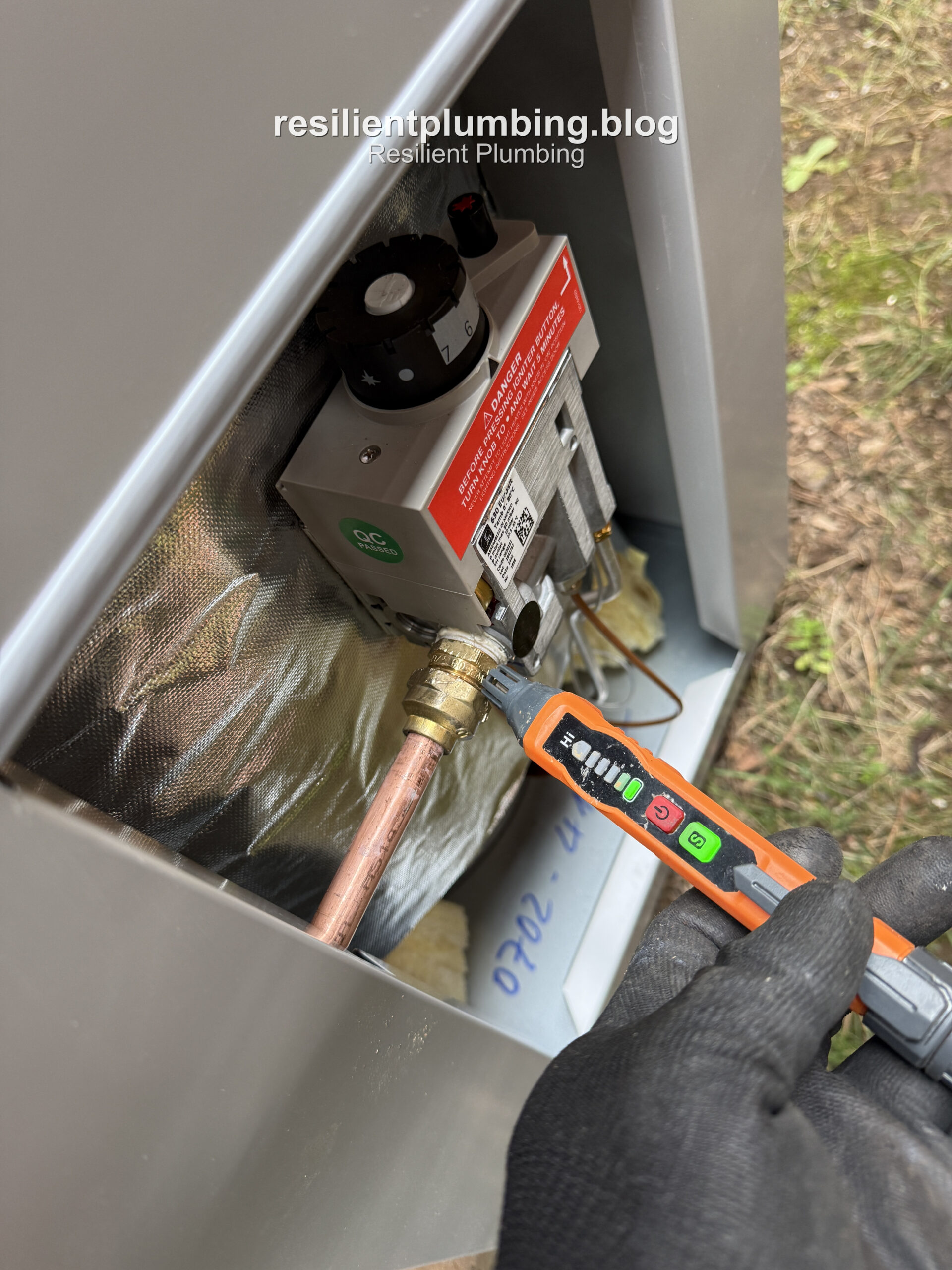
Same again at the gas control valve — no shortcuts on safety checks.
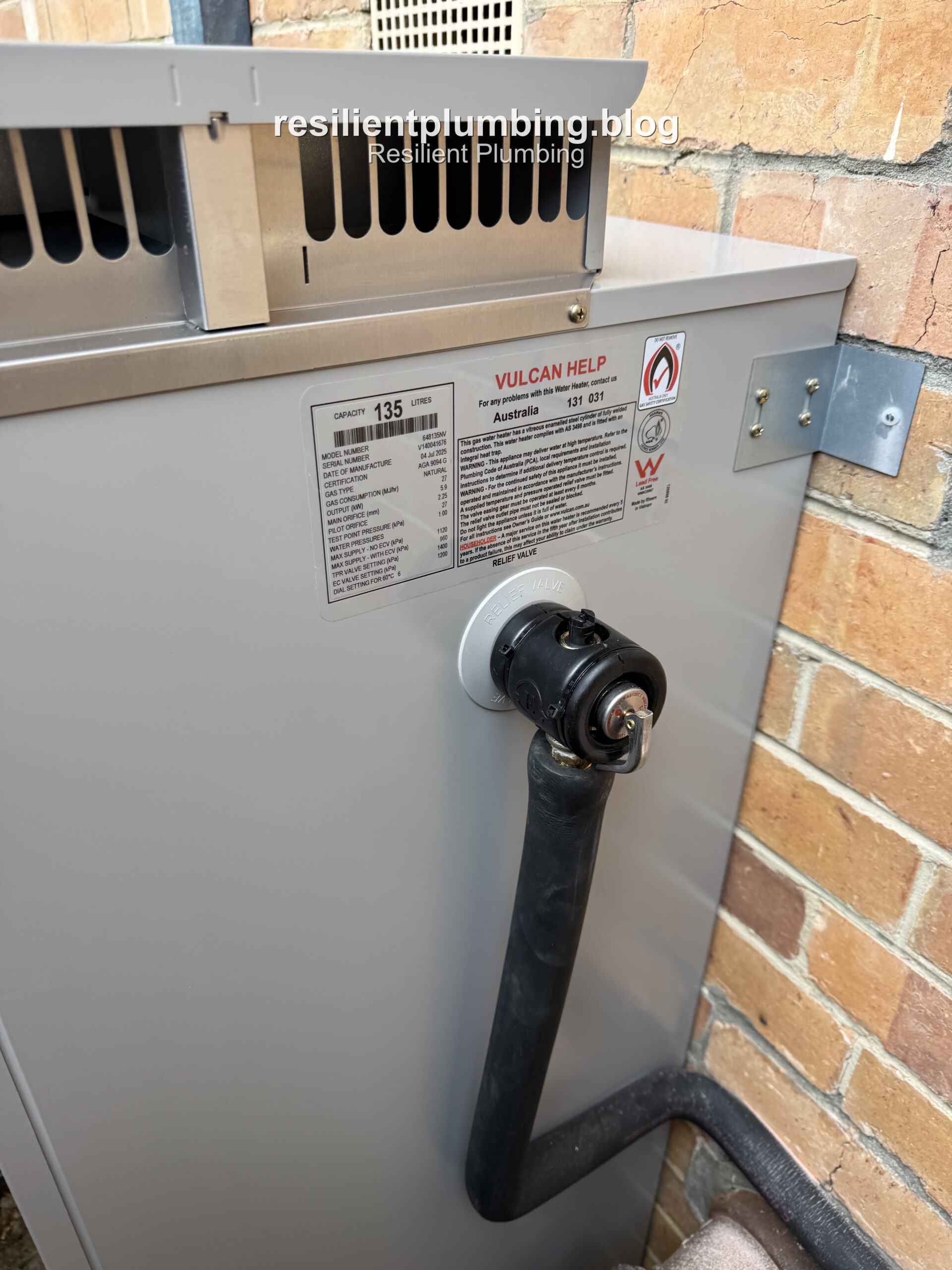
New unit, new data plate — 135L gas storage, fully compliant.
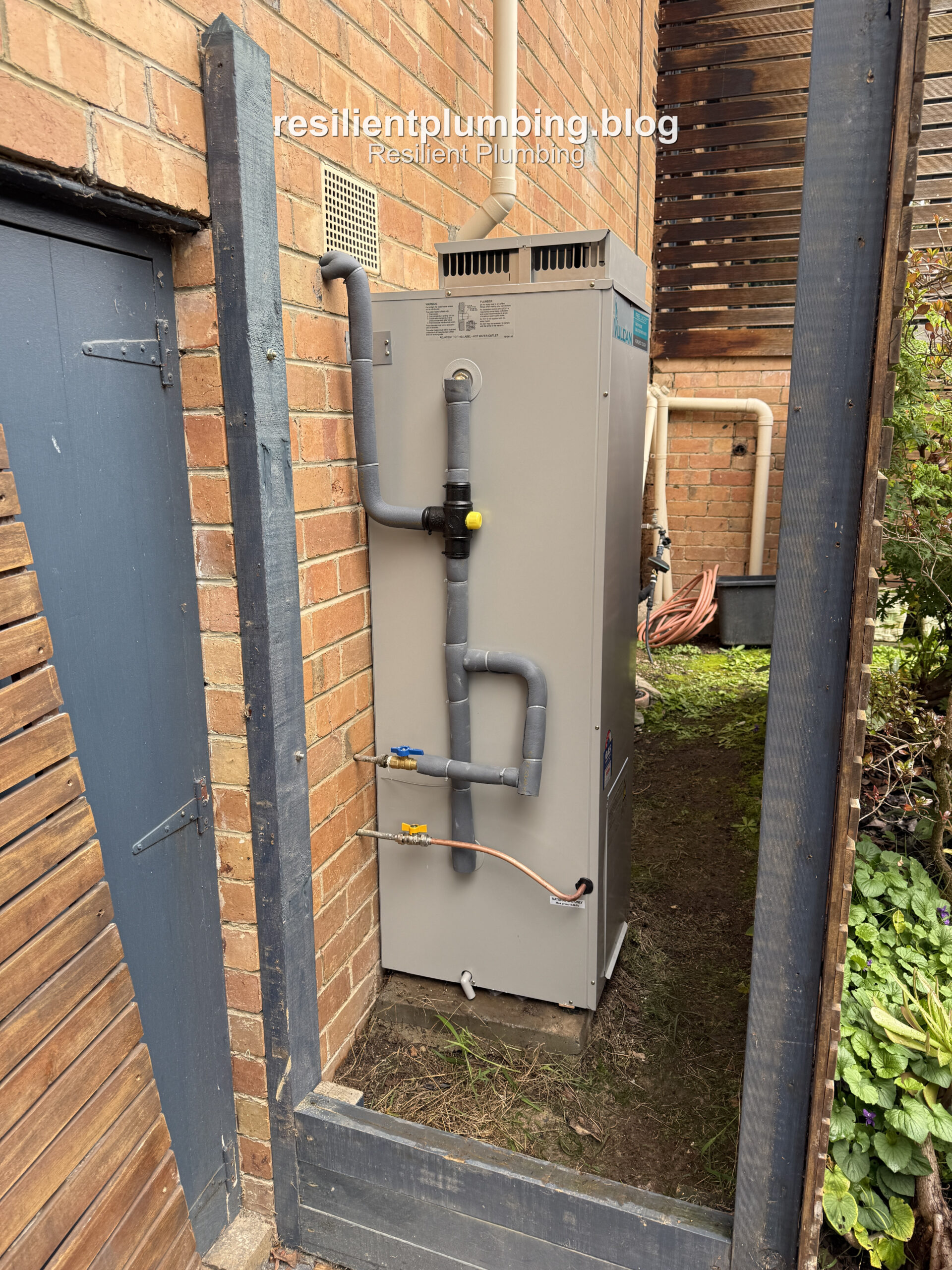
Job done — new compliant 135L gas storage unit, sitting where the old one used to be.
Signs It’s Time to Replace, Not Repair
- Age — check the data plate on the side or back of the unit. Anything past 10–12 years is on borrowed time.
- Rusty, tea-coloured, or metallic-tasting hot water, particularly first thing in the morning.
- Water that doesn’t run clear even after a few minutes at the tap.
- Banging, rumbling, or popping noises when the unit fires up — usually sediment baked onto the bottom of the tank.
- Damp patches, rust staining, or pooling water around the base of the unit.
- Inconsistent temperature, or hot water running out faster than it used to.
- A creeping rise in your gas bill with no other explanation.
💡 Why It’s Not Worth Waiting On
A tank that’s corroding on the inside doesn’t fail gradually and give you fair warning — it can rupture without notice, and 135 litres finding its way across a laundry or garage floor is a genuinely expensive mess to clean up. Older units are also running well below the efficiency of what’s available now, so you’re paying more on gas to heat water in a tank that’s already on its way out.
Servicing Vermont and the Surrounding Suburbs
At Resilient Plumbing, we check the tank’s age, drain and inspect a water sample — then give you a straight answer on whether it’s a repair, or a replacement, with pricing upfront before any work starts. If a unit does let go overnight, we’re on call 24/7 across Vermont and Melbourne’s eastern and south-eastern suburbs.
Hot Water Running Brown?
Don’t wait for it to fail on its own timeline — give us a call and we’ll take a proper look.
📞 Call 0432 704 268 Get in Touch