
🌳 If your drains keep blocking — even after you’ve had them cleared — tree roots are one of the most common reasons we get called out in Melbourne’s eastern suburbs. Here’s what’s actually going on underground, and what your options are.
It sounds strange that something growing slowly in the ground can cause a complete drain blockage — but tree roots are remarkably persistent. They don’t smash their way in. They find the tiniest gap and work their way through it over time. By the time you notice a problem, the root mass inside the pipe can be surprisingly large.
This is one of those issues that’s really common in Melbourne’s older suburbs — Croydon, Ringwood, Bayswater, Knox, Wantirna, and similar areas where established gardens and large trees have had decades to grow. But it can happen in newer homes too, especially if there are fast-growing species planted near the drain line.
Why Do Tree Roots End Up Inside Drains?
Roots grow toward moisture and nutrients — and your underground drain pipes are full of both. Even a pipe in perfect condition releases a small amount of moisture through its joints. Roots detect this and grow toward it.
The entry points are almost always:
- Rubber ring joints — the most common entry point in older clay or concrete pipes. The rubber can harden and shrink slightly over time, leaving a small gap.
- Cracks in the pipe — caused by ground movement, age, or soil pressure. A hairline crack is all a root needs.
- Poorly connected sections — pipes that have shifted slightly over the years due to soil movement or tree root pressure itself.
- Older clay-ware pipes — very common in Melbourne homes built before the 1980s. These pipes have more joints and are more susceptible to cracking than modern PVC.
Once a root tip finds its way in, it grows toward the water flow inside the pipe. Over time, it branches out into a dense mat that catches toilet paper, debris, and grease — and eventually blocks the drain entirely.
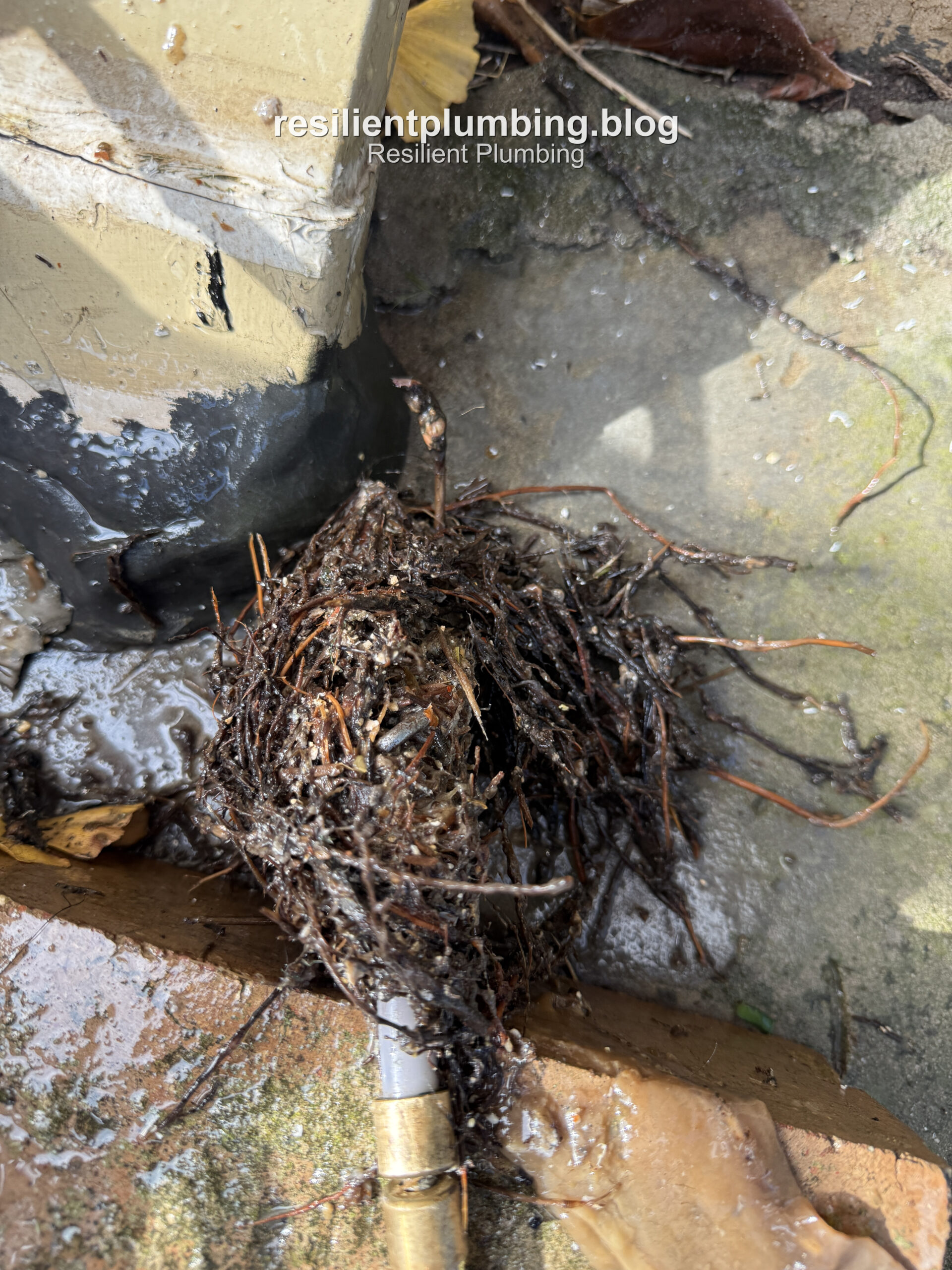
Root mass found inside an underground drain — this is what CCTV shows us before we start work.
Signs You Might Have Tree Roots in Your Drain
These issues don’t always mean roots — but they’re worth paying attention to, especially if you’ve got large trees anywhere near your property:
🚨 Warning Signs
- Drains that block repeatedly — cleared, then block again a few months later
- Slow draining across multiple fixtures (not just one sink)
- Gurgling sounds from the toilet or floor drain when water drains elsewhere
- Sewage smell from drains or the yard
- Wet patches or unusually lush grass over where the drain line runs
- A drain that was fine for years but has recently started playing up
The gurgling is worth mentioning — it happens because roots partially blocking the pipe create a back-pressure effect. Air gets pushed back up through the trap. It’s one of those signs that’s easy to dismiss, but if it keeps happening, it’s telling you something.
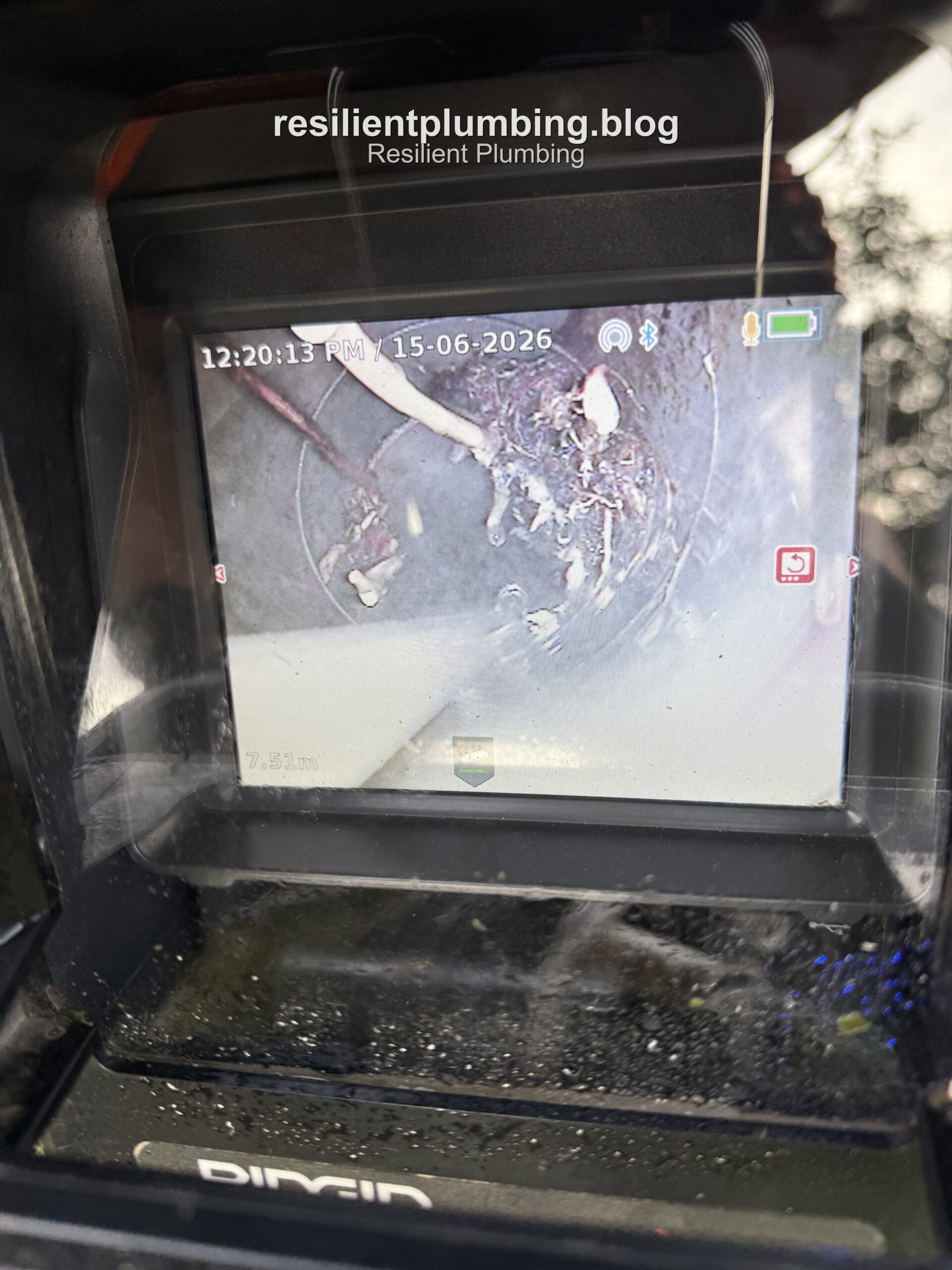
CCTV inspection lets us see exactly what’s in the pipe before deciding on the best approach.
How We Find Out What’s Going On
The only way to know for certain what’s inside your drain is a CCTV drain inspection. We run a waterproof camera through the pipe and watch the footage in real time. It shows us:
- Whether roots are present — and how much of the pipe they’re occupying
- Where exactly in the pipe the roots are entering
- The condition of the pipe itself — whether it’s cracked, collapsed, or just has minor joint infiltration
- Whether there are other issues (grease, scale, pipe offset) alongside the roots
This matters because it changes what we recommend. A light root intrusion through a joint in an otherwise sound pipe is a very different situation to a root mass growing through a cracked section of pipe that’s also starting to collapse.
💡 Worth Knowing
CCTV inspection also tells us which tree is responsible — the roots are usually traceable back to a specific tree by their location in the pipe. That’s useful if the drain runs along a boundary and you need to have a conversation with a neighbour about a shared tree.
What Are the Solutions?
There’s no one-size-fits-all answer here. What’s appropriate depends on how bad the root intrusion is, what condition the pipe is in, and whether the root entry point can be properly sealed. Here’s a rundown of the main options:
🔫 High-Pressure Water Jetting
A high-pressure jet cuts through the root mass and flushes it out of the pipe. This clears the blockage and restores flow. It doesn’t stop roots from growing back — but it’s often the first step, and in some situations it buys a good amount of time before they return.
🔩 Pipe Relining
A resin-impregnated liner is inserted into the existing pipe and cured in place, forming a new pipe within the old one. It seals the joints and cracks where roots were entering — without digging. This is often the preferred fix when the pipe structure is still basically intact but the joints are compromised.
⛏️ Excavation & Pipe Replacement
When the pipe itself is in poor condition — collapsed sections, major cracks, severe offset at joints — relining may not be suitable. In those cases, excavating and replacing the damaged section is the right call. It’s more disruptive, but it fixes the problem at the source.
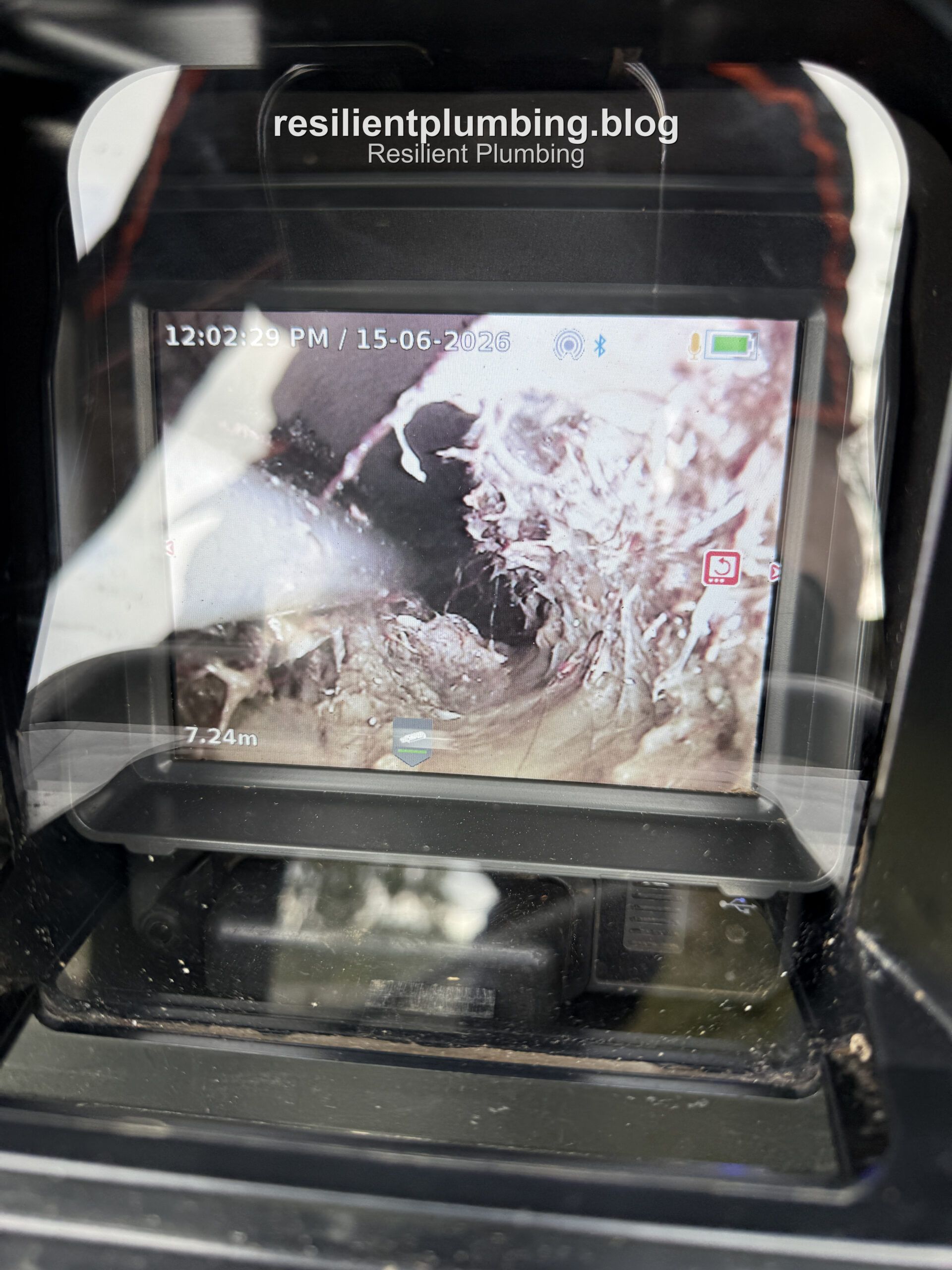
Excavated drain showing root entry through a cracked pipe joint — this section needed replacement.
Will Cutting Down the Tree Fix It?
Not necessarily — and not immediately. Tree roots can remain active in the soil for years after a tree is removed. They’ll keep seeking moisture, and the root mass already inside the pipe doesn’t disappear just because the tree above ground is gone.
Removing a problem tree can slow down future root growth in that area, but you’d still need to deal with what’s already in the pipe. And if the entry point isn’t sealed, other roots from nearby plants can find their way in over time.
What About Chemicals or Root Killers?
There are products on the market that claim to kill tree roots in drains. We’re a bit cautious about recommending these as a primary solution. They can slow root regrowth after a clear, but they don’t address the entry point — the crack or joint gap that let the roots in. And some products, if overused, can affect the surrounding soil and nearby plants.
They’re not harmful as part of a maintenance routine, but they’re not a substitute for actually fixing the pipe.
💡 Recurring Blockages Are a Red Flag
If you’ve had the same drain cleared more than once and it keeps blocking, it’s worth getting a CCTV inspection rather than just clearing it again. Clearing roots without addressing the entry point is a temporary fix — the roots will be back. Finding out why they keep getting in is what leads to a lasting solution.
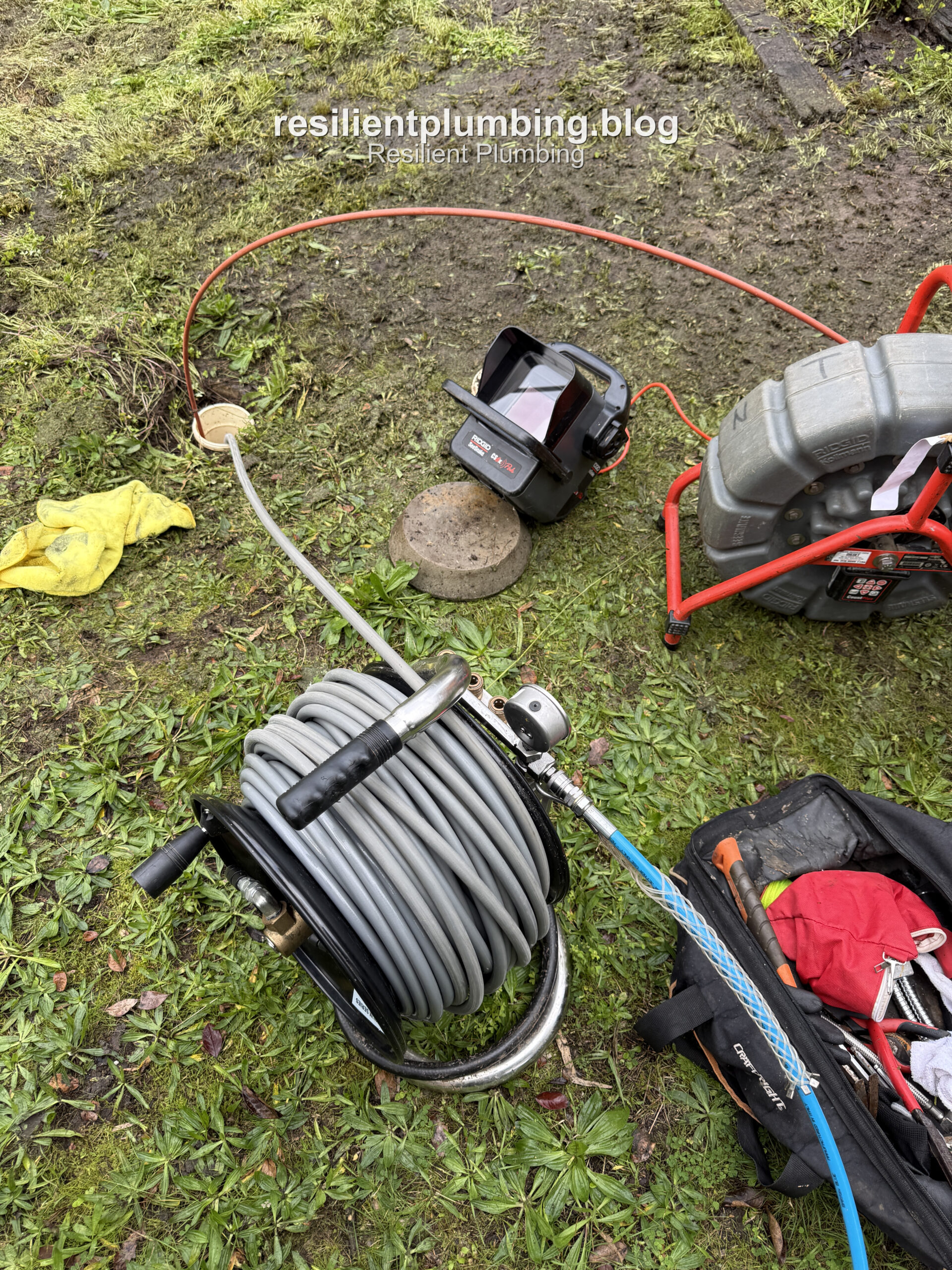
High-pressure jetting after CCTV inspection — we know what we’re dealing with before we start.
A Quick Note on Melbourne’s Older Suburbs
A lot of homes in the eastern suburbs — particularly anything built before the 1980s — have clay-ware or concrete drain pipes. These aren’t bad pipes, but they have more joints than modern PVC, and those joints are where roots tend to get in. If your home is in that era and you’ve never had a drain inspection, it’s not a bad idea to get one done at some point — not because something is necessarily wrong, but just to know what you’re working with underground.
We’ve done inspections where everything looked fine and there was nothing to worry about. We’ve also done them and found root intrusion that the homeowner had no idea about. Either way, you know where you stand.
Blocked Drain or Roots in the Pipe?
We cover Melbourne’s eastern and south-eastern suburbs — CCTV inspection, high-pressure jetting, and honest advice on what actually needs fixing.
📞 Call 0432 704 268 Get in Touch