
💧 Flexible hoses are one of the most common causes of serious water damage in Melbourne homes — and they almost never give you a warning before they go. A quick look under your sink every year or two is all it takes to catch a problem before it turns into a flood.
This is what a burst flexible hose looks like — and why acting early matters.
I get called to a lot of jobs where the homeowner didn’t even know they had flexible hoses under the sink — let alone that those hoses were overdue for replacement. By the time they find out, there’s usually water damage involved.
So this one’s a bit of a public service announcement. If you’ve got a kitchen, bathroom, laundry, or toilet in your home (and you do), you’ve got flexible hoses. Here’s what to look for, and what can be done about it before something goes wrong.
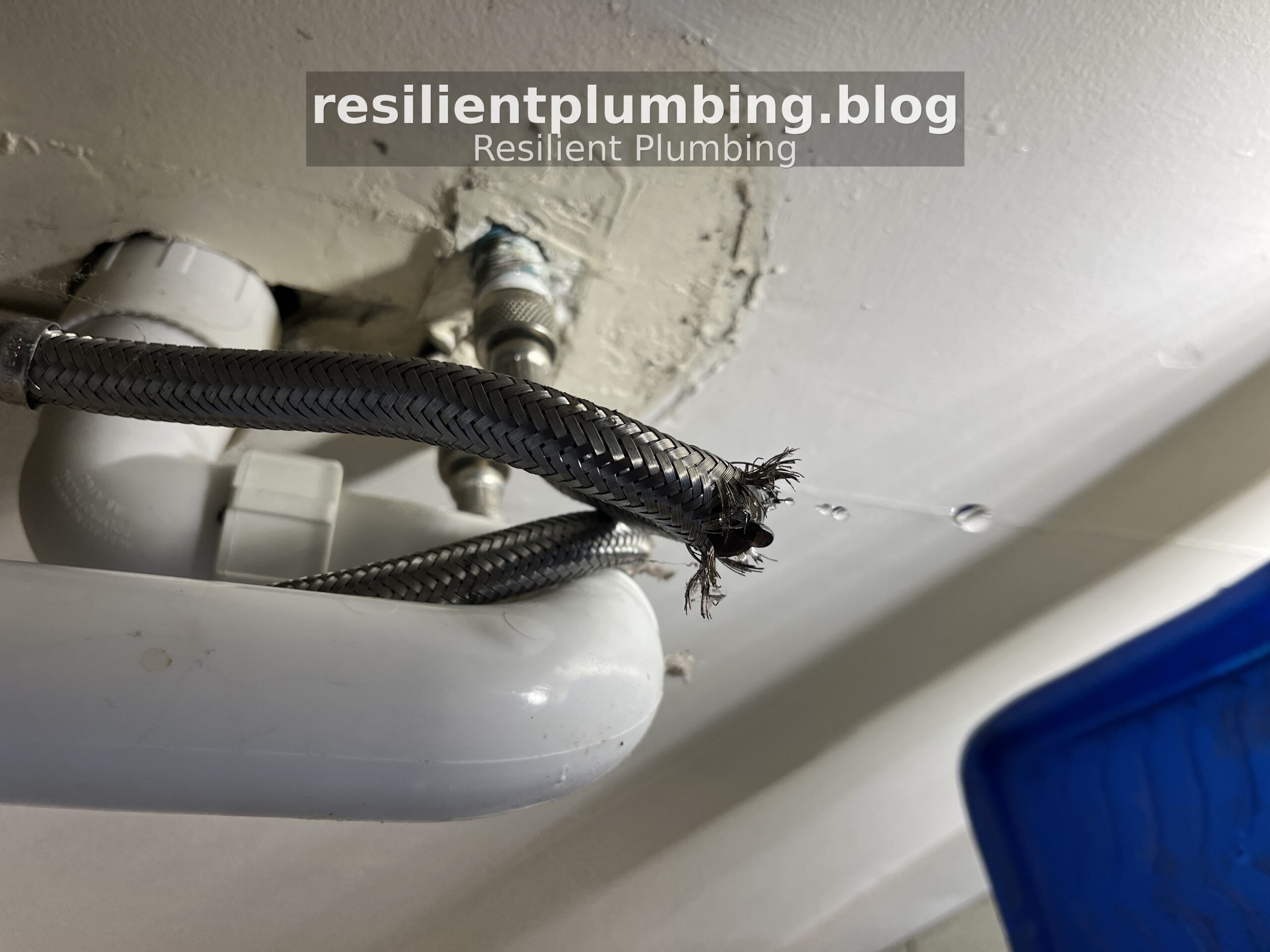
The braided stainless steel flexible hoses connecting the tap to your water supply — easy to miss, but important to check.
What Are Flexible Hoses?
Flexible hoses (sometimes called “flexi hoses” or “braided hoses”) are the short, corrugated metal hoses that connect your taps, toilets, and appliances to the water supply pipes in the wall or floor. They’re usually 300–500mm long and have a braided stainless steel outer layer over a rubber or polymer inner tube.
You’ll find them pretty much everywhere in a typical Melbourne home:
🚿 Where you’ll find them
- Kitchen sink (hot and cold)
- Bathroom basin (hot and cold)
- Toilet cistern (cold only)
- Laundry trough and washing machine taps
- Dishwasher inlet
- Hot water unit connections
- Shower mixer (behind the wall, sometimes)
⚠️ Why they matter
- Always under full mains water pressure
- The rubber inner tube degrades over time
- When they burst, water flows continuously
- Often hidden in cabinets — not noticed until too late
- Insurance claims from hose failures are extremely common
- Most are never inspected or replaced proactively
How Long Do Flexible Hoses Last?
This is the tricky part. There’s no hard “use by” date stamped on a hose, and plenty of hoses look perfectly fine on the outside right up until they fail. As a rough guide, hoses older than 10 years are generally considered to be on borrowed time — but I’ve seen hoses fail much sooner, especially cheaper ones or those installed in areas with higher water pressure or hard water.
The real issue is that the braided outer layer doesn’t actually hold the water — it just gives the hose its shape and some burst resistance. The inner rubber tube is what does the work, and rubber breaks down slowly and silently. By the time the outer braid starts to rust or peel, the inner tube is usually already compromised.
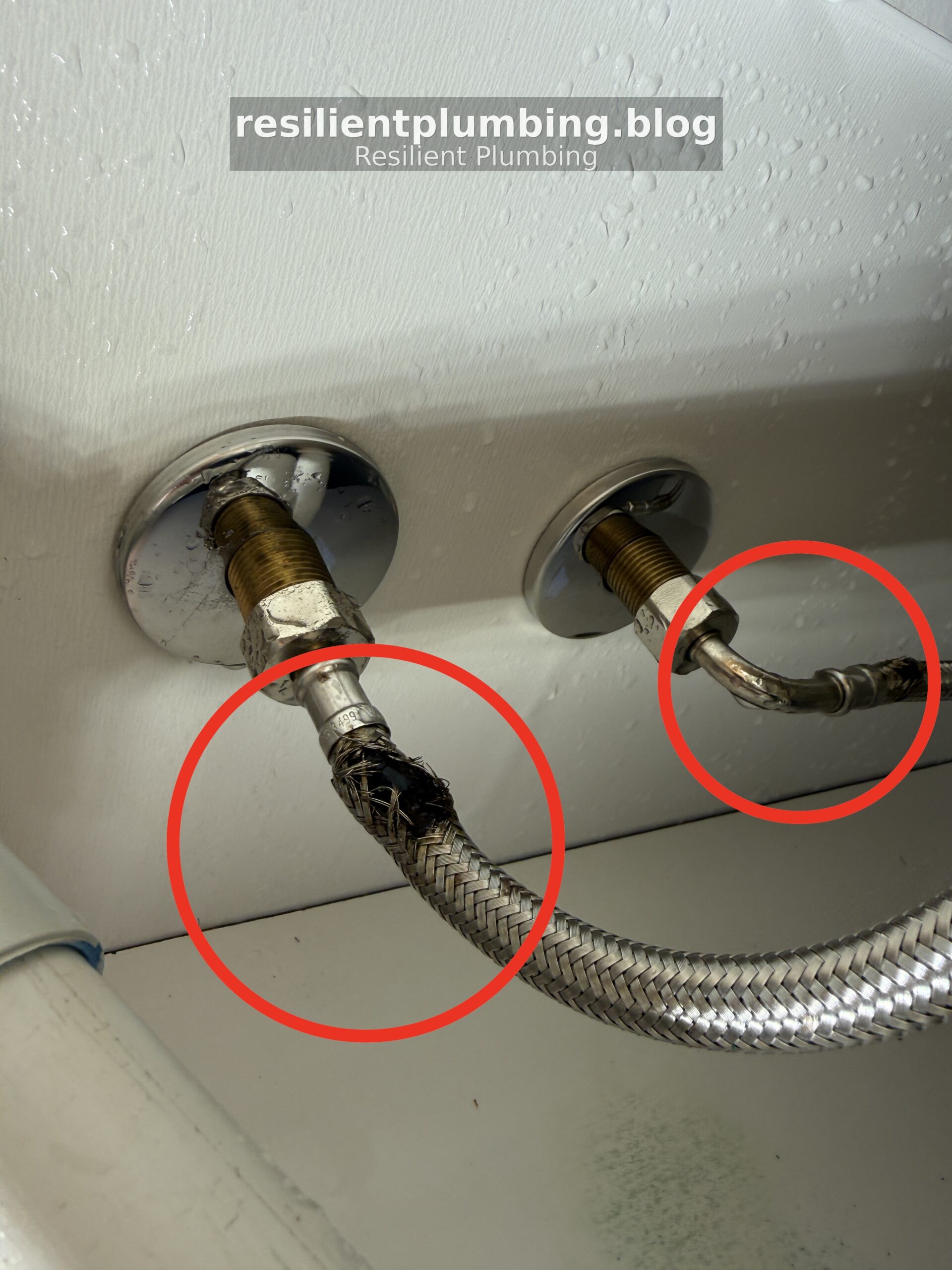
Visible corrosion on the braiding and swelling near the fittings — classic signs a hose is past its useful life.
What to Look for When You Inspect Them
Open up the cabinet under your kitchen sink and have a look. Here’s what you’re checking for:
🔍 Signs a flexible hose needs replacing
- Rust or corrosion on the braiding or fittings — even small spots
- Swelling or bulging anywhere along the hose body (a sign the inner tube is under stress)
- Kinks or sharp bends — especially if the hose has been pinched by pipes or cabinetry
- Discolouration or staining on the cabinet floor underneath (can mean a slow weep)
- Brittleness or cracking on older rubber-coated hoses (pre-2000s style)
- Unknown age — if you’re not sure how old they are and neither is anyone else, that’s reason enough
- Any visible moisture around the fittings at either end
If any of those apply, it’s worth having them looked at. And if they look fine but are over 10 years old, a replacement is still a reasonable thing to consider — particularly in a kitchen or bathroom where a burst hose could cause significant damage.
Replacing a Flexible Hose — What’s Involved
Replacing a flexible hose is a licensed plumbing job in Victoria. It sounds like a small job — and it usually is — but it does involve working on pressurised water supply lines, and in most cases it also means turning off the water supply to that area first.
That’s where isolation valves come in.
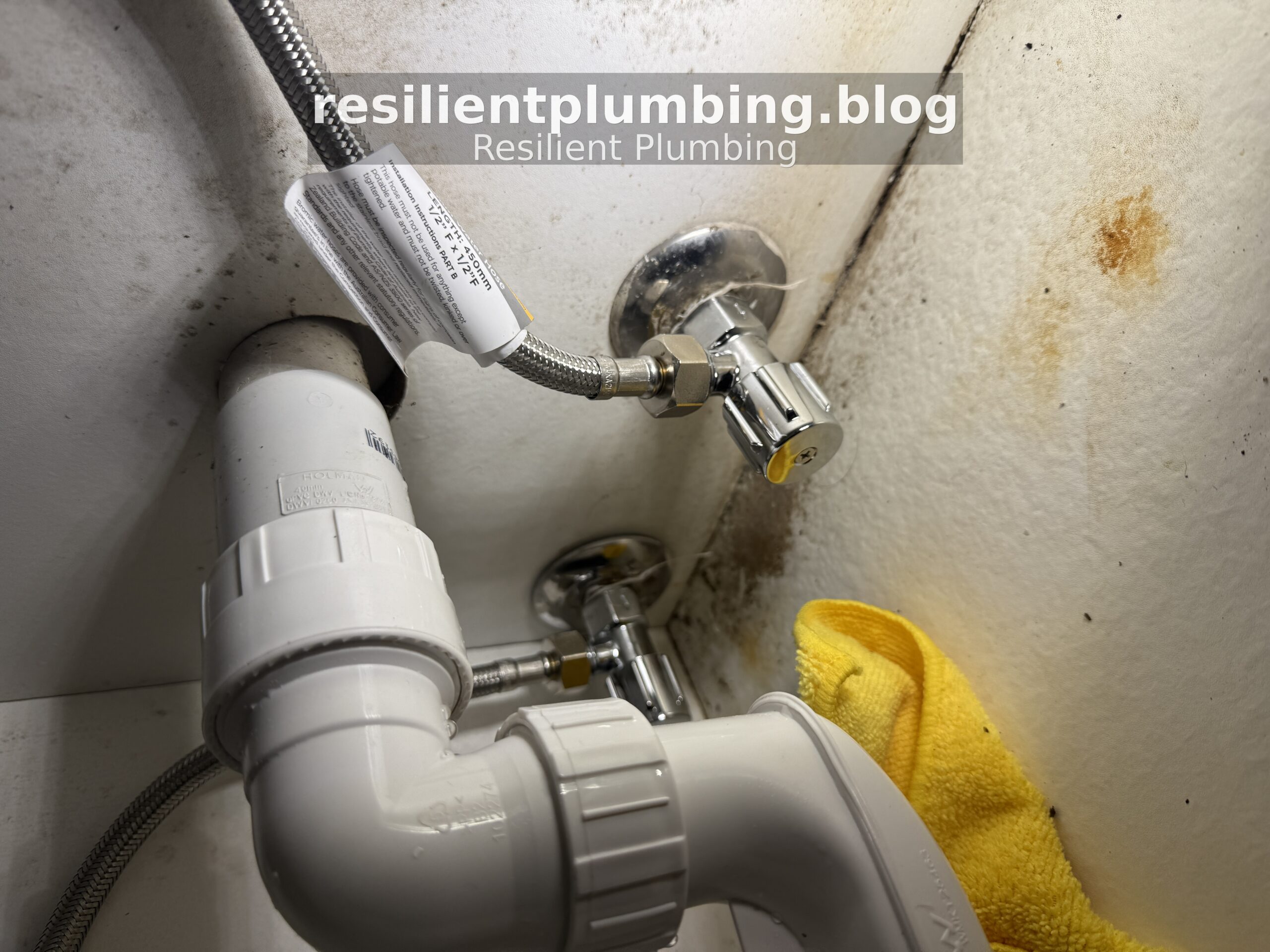
Installing a quarter-turn isolation valve directly under the sink — makes future servicing and emergencies far easier to manage.
Why Isolation Valves Matter (Especially in Cabinets)
A lot of older Melbourne homes have flexible hoses connected directly to a supply line coming out of the wall or floor — with no isolation valve between the two. If the hose starts leaking or needs replacing, you have to turn off the water to the whole house (at the metre) just to work on one tap.
Installing a proper quarter-turn isolation valve right at the wall outlet — before the flexible hose — changes the situation completely. From that point on, you can isolate just that one fixture in seconds. No running out to the footpath, no disrupting the whole house. Just turn the valve, do the work, turn it back.
✅ With an isolation valve
- Turn off just that one fixture
- Rest of house stays on
- Plumber can work without disruption
- In an emergency, you can shut it off yourself
- Future hose replacements are simpler
❌ Without an isolation valve
- Whole house must be turned off at the metre
- Affects everyone in the home
- If a hose bursts, water flows until someone gets to the metre
- Adds complexity to every future service
- Increases flood risk and damage potential
When I’m replacing a flexible hose and there’s no isolation valve there already, I’ll usually fit one at the same time. It’s a small extra step that makes a real difference down the track.
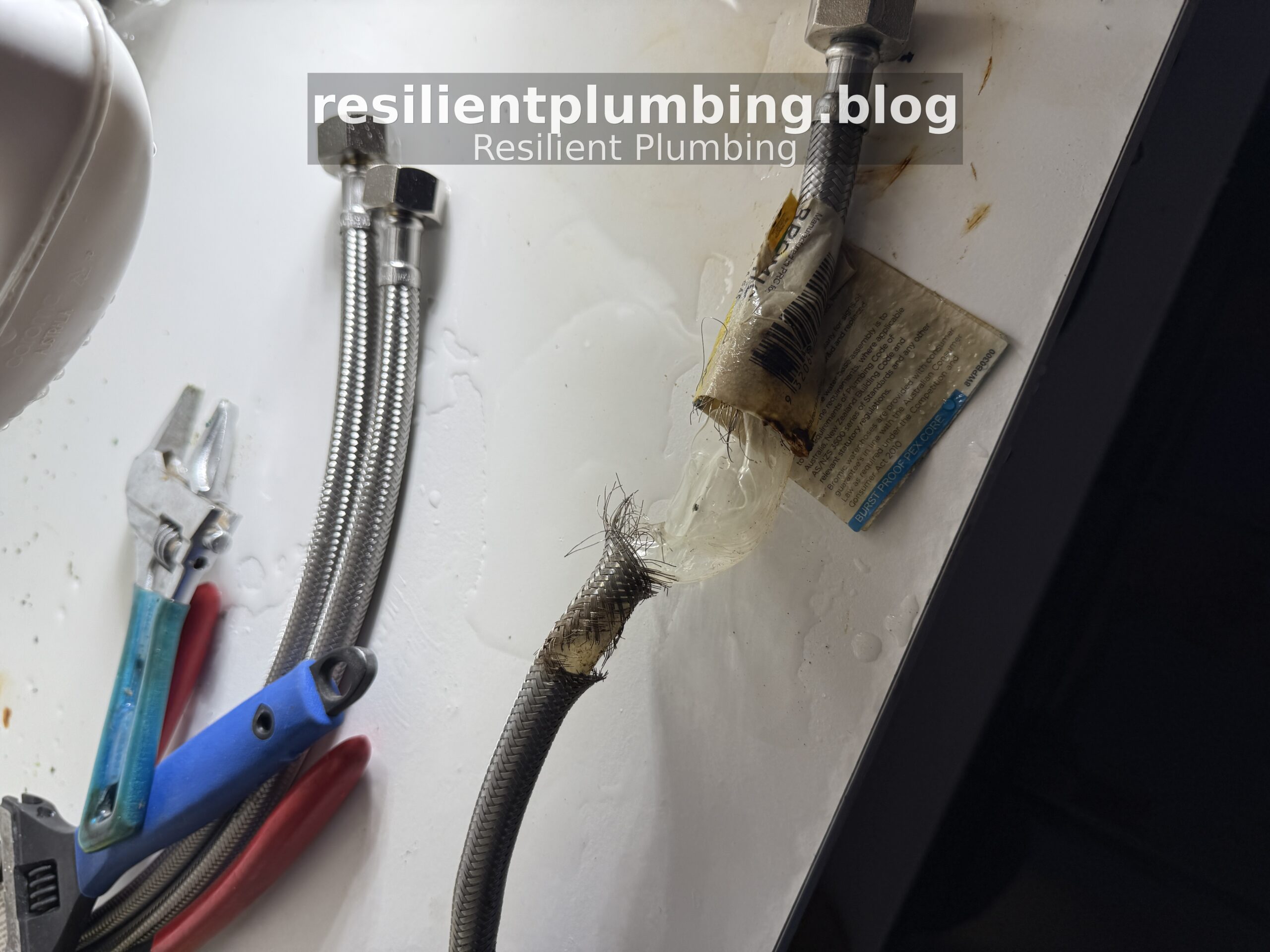
New hose, new isolation valve — properly fitted and tested. This is what it should look like under the sink.
What Type of Hose Gets Used?
Not all flexible hoses are equal. The ones I use and recommend are 304 or 316 grade stainless steel braided hoses with brass fittings — they hold up better against corrosion and pressure over time compared to cheaper alternatives. Some hoses on the market have low-grade braiding or plastic fittings that deteriorate much faster.
For toilet cisterns, a cold-water rated hose is used. For hot water connections (kitchen, basin, laundry), you need a hose rated for hot water — not all of them are, and using the wrong one shortens its life significantly.
💡 Worth knowing if you’re buying a home
If you’re purchasing a property and the building inspection doesn’t specifically call out the age and condition of flexible hoses, it’s worth asking. A lot of inspections only look at visible plumbing — they won’t always open every cabinet and check every hose. A plumbing health assessment can give you a much clearer picture of what’s there and what’s worth addressing.
The Plumbing Health Assessment Angle
Flexible hose inspection is actually one of the things I go through during a plumbing health assessment. Along with checking hot water, water pressure, drainage, and any visible pipework, looking at the age and condition of flexible hoses under every sink, basin, and toilet gives a good picture of the overall risk profile of the plumbing in a home.
If you’re not sure what’s under your sinks, or you’ve just moved into a place and have no idea what the plumbing history is like, it can be a useful thing to get done — especially in older homes where the hoses may have never been replaced.
Not Sure About the Hoses in Your Home?
We’re happy to take a look — whether it’s a single hose you’re unsure about or a full check of the property. Servicing Melbourne’s Eastern and South Eastern suburbs, 24/7.
📞 Call 0432 704 268 Get in Touch